Introduction
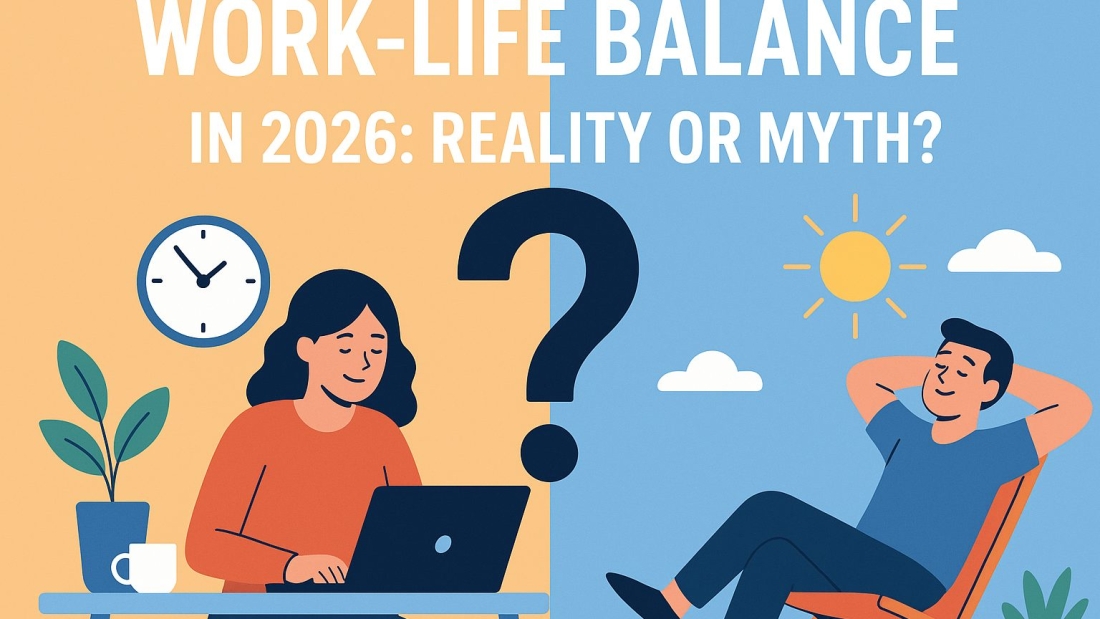
Let’s be honest — “work-life balance” is one of the most talked-about topics today. Everyone wants it, few think they actually have it. With remote jobs booming and AI taking over tasks, 2026 feels like the year where balance should finally be real… right?
Well, the truth is a little messy.
What Exactly Is Work-Life Balance?
Work-life balance simply means giving your work and personal life the time, energy, and focus they deserve — without one destroying the other.
Why Everyone Talks About It
Because burnout isn’t fun. No one wants to live just to finish deadlines and collapse into bed every night.
The Future of Work in 2026
The way we work has transformed dramatically.
Remote, Hybrid & Flex — The New Norm
People are ditching long commutes and choosing flexibility. Now work can happen:
- From home
- At a café
- On a vacation (maybe 👀)
But mixing home and work also means boundaries get blurry.
Rise of AI & Automation in Work-Life
AI is doing the boring stuff — scheduling, emails, and some heavy tasks.
Good news: more free time.
Bad news: expectations are higher. 😬
Free time can quickly become “do more!” time.
The Changing Definition of “Success”
We’re done with the “work 24/7 to win” mindset.
From Hustle Culture to Healthy Living
In 2026, success = health, happiness, passion + making money.
People prefer slow mornings over loud motivational speeches.
Technology: A Blessing or a Curse?
Tech keeps us connected to work — literally everywhere.
Always Online – The Hidden Trap
Smartphones = mini offices in our pockets.
Even when you’re chilling… Ping! “Urgent Email!”
That pressure? Yeah, it’s real.
Smart Tools for Smart Balance
Thankfully, tools like:
- Focus timers
- Auto-reply systems
- Wellness apps
…help us log off and breathe.
Mental Health Takes Center Stage
This isn’t just a trend anymore — it’s priority.
Burnout is Real
Stress, insomnia, constant pressure — people are demanding better lifestyles.
Companies Prioritizing Wellness
Businesses are finally taking action:
- Therapy support
- Mental health days
- Digital detox hours
Happy employees = productive employees. Simple!
Gig Economy & Freelancing
Freelancers enjoy freedom — choosing clients, hours, even pajamas.
But… income isn’t always stable, and “holidays” can still mean laptop nearby.
Freedom with Pressure
Being your own boss sounds fun until deadlines chase you at 2 AM. 😬
Corporate Policies Evolving
Companies are changing to keep employees happy.
4-Day Work Week
More countries and companies are testing it.
Result? People are more focused & less tired.
Paid Wellness Time & Sustainable Scheduling
Breaks aren’t guilt trips anymore — they’re encouraged.
How Work-Life Balance Differs by Generation
Different age groups = different expectations.
Gen Z Demands Flexibility
They value:
- Passion-driven work
- Boundaries
- No toxic bosses ✋
Millennials Striving for Stability
Rent, kids, bills — they crave balance but also financial security.
Practical Tips for Better Work-Life Balance in 2026
Here’s what actually helps:
- Set boundaries (log off at a set time)
- Plan downtime like it’s important (because it is!)
- Use tech wisely (not as a chain)
- Say “No” — you’re allowed
- Move your body — even a small walk helps
- Unplug weekends — no Slack, no guilt
Is It Really Achievable?
Short answer: Yes — but only if you protect it.
Work-life balance in 2026 is possible — but it’s a choice we have to keep making, every day.
Some days will be chaotic. Some will feel perfect.
Balance doesn’t mean equal time — it means a healthy life.
Final Thoughts
So, is work-life balance in 2026 a reality or a myth?
Well… it’s somewhere in between.
The tools exist. Flexibility exists.
But if we don’t set personal boundaries, the myth wins.
It’s not about working less.
It’s about living more. ✨