

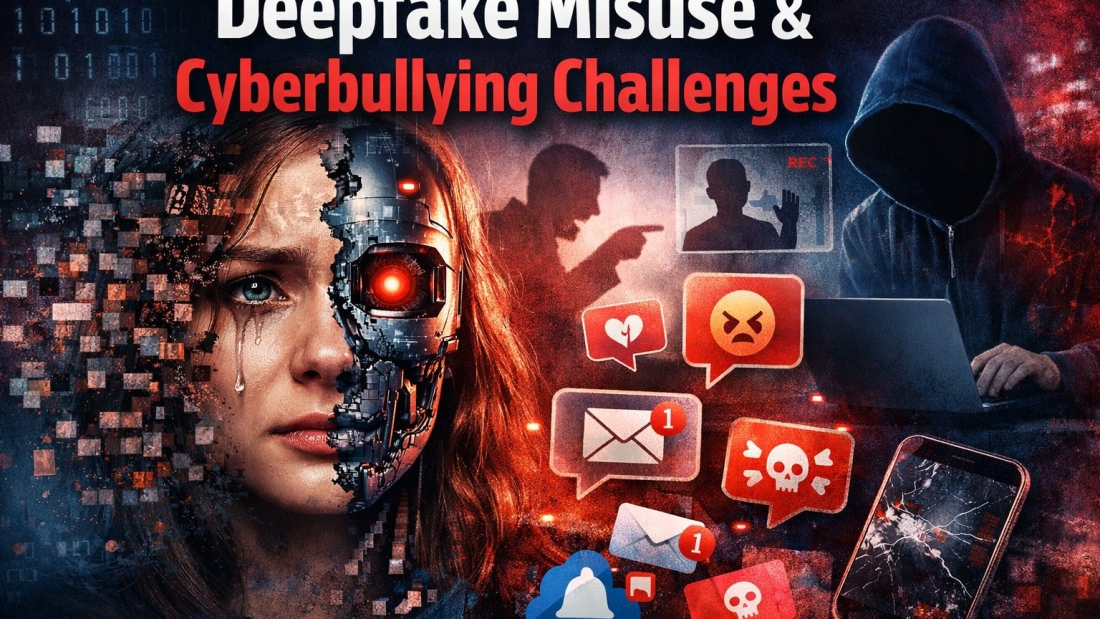
Introduction to Deepfakes and Cyberbullying
The internet was supposed to connect us, empower us, and give everyone a voice. But like every powerful tool, it comes with a darker side. One of the fastest-growing threats today is the combination of deepfake misuse and cyberbullying. When artificial intelligence meets online harassment, the damage becomes deeper, faster, and far more personal.
What Are Deepfakes?
Deepfakes are AI-generated images, videos, or audio clips that make people appear to say or do things they never did. At first glance, they look real. That’s the scary part. A video can show your face, your voice, and your expressions—yet none of it is actually you.
Understanding Cyberbullying in the Digital Age
Cyberbullying is harassment that happens online through social media, messaging apps, forums, or videos. Unlike traditional bullying, it doesn’t stop when you go home. It follows you everywhere, 24/7, often anonymously.
Now imagine cyberbullying powered by fake but believable content. That’s where deepfakes take things to a whole new level.
How Deepfake Technology Works
AI and Machine Learning Behind Deepfakes
Deepfakes rely on artificial intelligence trained on massive amounts of data—photos, videos, and audio clips. The AI learns how a person looks, talks, and moves, then recreates it digitally.
Role of Generative Adversarial Networks (GANs)
GANs work like a game between two AIs. One creates fake content, the other tries to detect it. Over time, the creator gets so good that the fake becomes nearly impossible to spot. Think of it like a forger who improves every time they’re caught.
The Rise of Deepfake Misuse
From Entertainment to Exploitation
Deepfakes started as fun experiments—movie scenes, memes, voiceovers. But misuse quickly followed. Today, deepfakes are used for harassment, blackmail, revenge, and humiliation.
Why Deepfakes Are Hard to Control
The tools are cheap, accessible, and improving fast. You don’t need to be a tech genius anymore. A laptop and an app are often enough. That’s what makes this problem so difficult to contain.
Deepfakes as a New Tool for Cyberbullying
Fake Videos, Real Damage
A single fake video can destroy a reputation in minutes. Once shared, it spreads like wildfire. Even if proven false later, the emotional and social damage often stays.
Emotional and Psychological Impact on Victims
Victims report anxiety, depression, panic attacks, and even suicidal thoughts. Seeing “yourself” doing something shameful—even knowing it’s fake—can deeply shake your sense of identity.
Types of Deepfake-Related Cyberbullying
Non-Consensual Explicit Content
This is one of the most common and harmful uses. Faces—mostly of women—are placed into explicit videos without consent. It’s digital abuse, plain and simple.
Fake Statements and Character Assassination
Deepfakes can show someone making racist, offensive, or illegal statements. The goal? Ruin careers, relationships, and credibility.
Impersonation and Identity Theft
Fake audio or video calls can trick people into sharing private information or money. Cyberbullying blends into cybercrime here.
Who Is Most at Risk?
Women and Girls
Studies show women are disproportionately targeted, especially with explicit deepfakes. It’s a gendered form of digital violence.
Teenagers and Students
Young people live online. That makes them vulnerable. A fake video shared at school can lead to long-term trauma.
Public Figures and Influencers
Celebrities, politicians, and content creators are easy targets because so much data about them is publicly available.
Psychological and Social Consequences
Mental Health Challenges
Victims often experience stress, shame, fear, and helplessness. Many withdraw from social media—or from life itself.
Social Isolation and Loss of Trust
When you can’t trust what you see or hear, trust erodes everywhere. Friends, colleagues, even family may doubt the truth.
Legal and Ethical Challenges
Gaps in Existing Laws
Many countries lack specific laws addressing deepfakes. Traditional defamation laws often fall short in digital cases.
Freedom of Speech vs Digital Harm
Where do we draw the line? That’s the ethical debate. Protecting expression is important, but not at the cost of human dignity.
Role of Social Media Platforms
Platform Responsibility
Platforms host the content, profit from engagement, and shape online culture. They must take responsibility for rapid removal and victim support.
Content Moderation Challenges
Billions of posts daily make moderation hard. AI helps, but it’s not perfect—yet.
Detecting Deepfakes
AI-Based Detection Tools
Ironically, AI is also the solution. Detection tools analyze facial movements, blinking patterns, and audio inconsistencies.
Human Awareness and Digital Literacy
Technology alone isn’t enough. Users must learn to question what they see. Critical thinking is our first defense.
Preventing Deepfake Cyberbullying
Education and Awareness
Schools, universities, and workplaces must educate people about deepfakes and online safety.
Stronger Platform Policies
Clear rules, fast takedowns, and serious consequences can discourage misuse.
Legal Reforms
Governments need updated cyber laws that recognize deepfake abuse as a serious offense.
What Can Individuals Do?
Protecting Personal Digital Identity
Limit public sharing, use privacy settings, and watermark content when possible.
Responding to Deepfake Abuse
Document everything, report immediately, seek legal advice, and reach out for mental health support. You are not alone.
The Future of Deepfakes and Online Safety
Technology vs Technology
As deepfakes evolve, so will detection. It’s an ongoing race.
Building a Safer Digital World
Safety will come from collaboration—tech companies, governments, educators, and users working together.
Conclusion
Deepfake misuse and cyberbullying challenges represent one of the most serious digital threats of our time. What makes it dangerous isn’t just the technology—it’s how easily it can be weaponized against ordinary people. Combating this issue requires awareness, empathy, smarter laws, and responsible technology. The internet doesn’t have to be a hostile place. But keeping it human will take effort from all of us.