

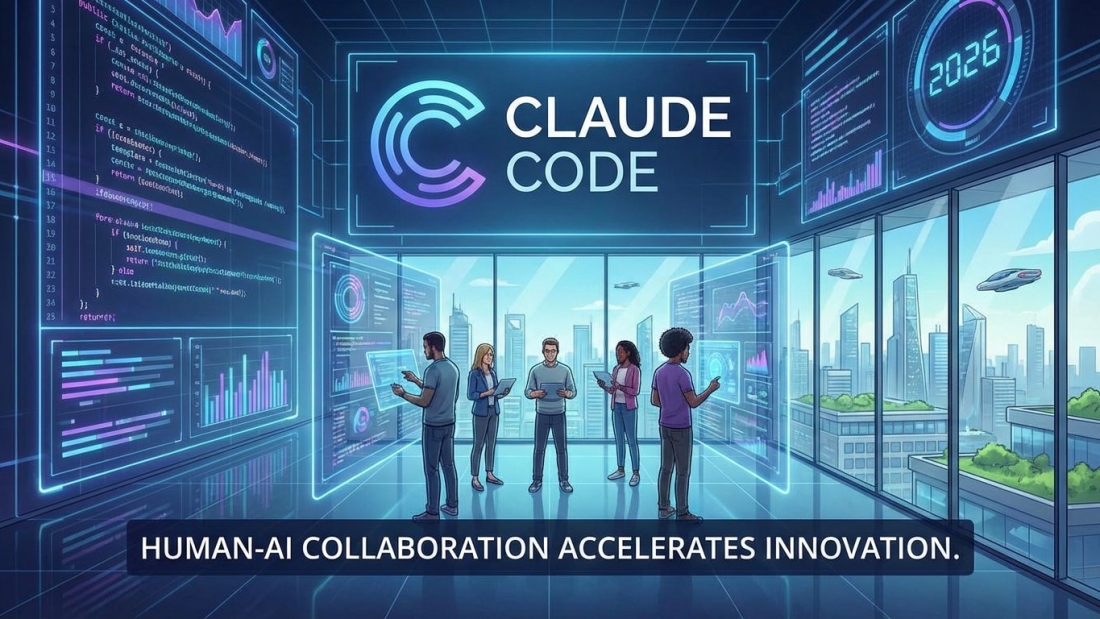
The Rise of AI-Powered Development Tools
Software development has always evolved alongside technological breakthroughs. In 2026, one of the biggest shifts shaping the industry is the rapid rise of AI-powered development tools. These tools are no longer limited to suggesting lines of code or correcting syntax errors. Instead, they function more like collaborative partners capable of helping developers design, build, and improve software faster than ever before.
Among these innovations, Claude Code has emerged as a powerful tool that is changing the way developers interact with code. Instead of acting like a simple autocomplete assistant, it works as an intelligent system that understands entire codebases and assists with real development tasks. This shift marks a significant transformation in how software is built. Developers are increasingly relying on AI to handle repetitive tasks while focusing their energy on solving bigger technical challenges.
Modern software systems are becoming larger and more complex every year. Organizations manage massive repositories with thousands of files, multiple services, and countless dependencies. Understanding and maintaining such systems requires enormous effort. AI tools like Claude Code are designed to reduce this burden by analyzing project structures and helping developers navigate complicated architectures.
The impact of these tools is already visible across the technology industry. Companies are pushing for faster product releases, quicker bug fixes, and more efficient engineering workflows. AI-driven development assistants provide a solution by improving productivity and reducing manual effort. Developers are no longer expected to write every line of code themselves. Instead, they guide intelligent systems that help implement ideas and automate routine processes.
From Simple Autocomplete to Intelligent Coding Agents
The journey of AI in programming began with very basic capabilities. Early development environments offered autocomplete features that predicted the next few characters of a word. These tools were useful but limited in scope. As machine learning technologies improved, coding assistants started suggesting entire lines of code based on patterns learned from large datasets.
Claude Code represents the next step in this evolution. Instead of predicting code fragments, it acts as an intelligent coding agent that understands context and performs tasks across entire projects. This means developers can describe a feature or problem, and the system can analyze relevant files, propose solutions, and implement updates in multiple parts of the codebase.
This shift dramatically changes the way developers approach their work. Programming is no longer just about writing instructions manually. It increasingly involves guiding AI systems that assist with building software components. The developer becomes more like an architect who defines the vision, while the AI handles much of the detailed implementation.
The change may feel subtle at first, but its impact is significant. Intelligent coding agents reduce the time required for routine development tasks and make it easier to work with large systems. This capability is especially important as modern software projects grow more complex and interconnected.
Why Developers Are Embracing AI Coding Tools
Developers tend to adopt tools that make their work faster and more efficient. AI coding assistants have quickly gained popularity because they address some of the most common frustrations in software development. Writing repetitive boilerplate code, searching through large repositories, and debugging minor issues can consume a large portion of a developer’s time.
Claude Code helps eliminate many of these pain points by providing deep insight into codebases and automating repetitive tasks. Developers can ask the system to generate code structures, suggest improvements, or explain complex sections of an application. This ability makes it easier to work with unfamiliar frameworks or large projects.
Another reason for the growing adoption of AI coding tools is the speed at which they help developers learn. Programmers often need to work with new languages, libraries, or technologies. AI assistants can provide examples, explanations, and implementation suggestions in real time. This significantly shortens the learning curve and enables engineers to become productive more quickly.
The result is a more efficient development environment where engineers can focus on solving meaningful problems rather than spending hours on routine tasks. As AI capabilities continue to improve, these tools are becoming essential components of modern software engineering workflows.
What Claude Code Actually Is
The Core Technology Behind Claude Code
Claude Code is an AI-powered development assistant designed to operate within real programming environments. Unlike traditional chat-based AI tools, it is capable of interacting directly with code repositories and development tools. This ability allows it to perform practical tasks such as editing files, running commands, and analyzing project structures.
At its core, Claude Code relies on advanced language models trained to understand both natural language and programming languages. These models can interpret instructions written in plain English and translate them into meaningful coding actions. Instead of producing isolated snippets of code, the system evaluates the broader project context before making changes.
This approach makes Claude Code far more powerful than earlier coding assistants. Developers can assign tasks such as implementing a feature, fixing bugs, or restructuring a module. The AI system then analyzes the relevant files, determines the necessary changes, and applies them across the codebase.
Because the system operates within the actual development environment, it can perform tasks similar to those handled by human engineers. This includes reading project files, identifying dependencies, generating code updates, and preparing commits or pull requests. The result is a development assistant that functions almost like a team member working alongside programmers.
Agentic AI and Autonomous Coding Workflows
One of the defining characteristics of Claude Code is its use of agentic AI, which means the system can perform sequences of actions to complete complex tasks. Rather than responding with a single answer, the AI follows a step-by-step process similar to how developers solve problems.
For example, when asked to implement a new feature, Claude Code may begin by exploring the project files to understand the current structure. It then identifies the components that need to be modified and generates the necessary code updates. After making these changes, the system can run tests to verify that the implementation works correctly.
If errors appear during testing, the AI can analyze the problem and adjust the code accordingly. This iterative process continues until the task is completed successfully. By handling multiple steps automatically, Claude Code reduces the amount of manual effort required from developers.
This approach supports a new style of development often referred to as prompt-driven programming. Instead of writing every line of code manually, developers describe what they want the software to do. The AI system interprets these instructions and generates the implementation while the developer reviews and refines the results.
Key Features That Make Claude Code Powerful
Full Codebase Awareness
One of the most impressive capabilities of Claude Code is its ability to understand large codebases. Traditional AI tools often struggle with limited context windows, meaning they can only analyze small sections of code at a time. Claude Code is designed to overcome this limitation by exploring entire repositories and mapping their structure.
This capability allows the AI to identify relationships between different parts of a project. It can recognize how modules interact, track dependencies, and locate the files that need modification when implementing new features. For developers working on large applications, this ability significantly reduces the time required to understand the architecture of a system.
Full codebase awareness also improves the accuracy of the AI’s suggestions. Because the system understands the broader project context, it can generate code that aligns with existing patterns and design decisions. This results in updates that integrate more smoothly with the rest of the application.
Multi-File Editing and Automated Refactoring
Software development often requires making changes across multiple files at once. A small modification to a core function may affect numerous modules, configuration files, and test scripts. Managing these updates manually can be tedious and error-prone.
Claude Code addresses this challenge by coordinating updates across multiple files simultaneously. When developers request a change, the system identifies all affected components and applies the necessary updates consistently. This reduces the risk of missing dependencies or introducing inconsistencies in the codebase.
The tool is also highly effective at refactoring tasks. Refactoring involves restructuring existing code to improve readability, maintainability, or performance without changing its behavior. Claude Code can analyze existing structures and suggest cleaner implementations, making large-scale refactoring projects more manageable.
Command-Line Integration for Developers
Many developers prefer working in command-line environments because they offer speed and flexibility. Claude Code integrates directly into these environments, allowing programmers to interact with the AI through familiar workflows.
This integration makes it possible to run commands, inspect logs, and modify files without leaving the terminal. Developers can ask the AI to analyze build failures, explain error messages, or update configuration files. The seamless interaction between the AI system and development tools ensures that Claude Code fits naturally into existing engineering processes.
Claude Code vs Traditional Coding Assistants
Comparison with GitHub Copilot and Other AI Tools
While several AI coding assistants exist, Claude Code stands out because of its ability to perform complex development tasks rather than simply suggesting code snippets.
| Feature | Claude Code | Traditional AI Coding Assistants |
|---|---|---|
| Code generation | Yes | Yes |
| Full repository analysis | Yes | Limited |
| Multi-step task execution | Yes | Rare |
| File editing & command execution | Yes | Usually not |
| Automated pull request creation | Yes | Limited |
Traditional coding assistants are helpful for generating code quickly, but they usually rely on developers to handle the surrounding workflow. Claude Code goes further by actively participating in the development process and assisting with the entire lifecycle of a task.
How Claude Code Accelerates Development
Turning Issues Into Pull Requests Automatically
One of the most valuable features of Claude Code is its ability to transform issue descriptions into working code updates. In many development teams, tasks begin as tickets that describe bugs or feature requests. Engineers must interpret these descriptions, locate the relevant files, and implement the necessary changes.
Claude Code can automate much of this process. Developers can instruct the system to review a ticket and implement the required functionality. The AI analyzes the repository, updates the appropriate files, and prepares a pull request for review. This workflow reduces the time required to move from problem identification to implementation.
Automating Testing and Debugging
Testing and debugging are critical steps in maintaining reliable software systems. However, they can also consume a significant amount of developer time. Claude Code helps streamline these processes by generating test cases, running test suites, and identifying failures automatically.
When an issue appears during testing, the system can analyze the error messages and trace the source of the problem. It then proposes code fixes or adjustments to resolve the issue. By automating these tasks, developers can spend more time focusing on product features and system design.
Real-World Use Cases of Claude Code in 2026
Building Full Applications With Prompt-Driven Development
A growing trend in modern software development is prompt-driven development, where developers describe features using natural language instructions. Claude Code supports this approach by translating descriptions into working implementations.
For example, a developer might ask the system to build a user authentication module, create API endpoints, or implement a dashboard interface. The AI generates the required files and integrates them into the project structure. Developers then review the output, refine the requirements, and iterate until the desired functionality is achieved.
This method significantly accelerates the development process and enables smaller teams to build complex applications with fewer resources.
Impact on Software Engineering Jobs
Will AI Replace Developers?
The rise of AI coding assistants naturally raises questions about the future of software engineering jobs. While these tools automate many routine tasks, they do not eliminate the need for human expertise. Instead, they change the nature of the work developers perform.
Engineers increasingly focus on system architecture, design decisions, and evaluating AI-generated code. They act as supervisors who ensure that automated outputs meet quality and security standards. In this sense, developers become orchestrators of intelligent systems rather than manual code writers.
The demand for skilled programmers is likely to remain strong, especially for those who can effectively collaborate with AI tools and manage complex technical systems.
Challenges and Concerns Around Claude Code
Costs, Code Quality, and Security Issues
Despite its advantages, Claude Code also introduces challenges that organizations must consider. One concern is the cost associated with advanced AI systems. Running large language models requires significant computing resources, which can make certain features expensive for smaller teams.
Another challenge involves code quality. AI-generated code may occasionally include inefficiencies or subtle bugs that require human review. Developers must remain vigilant and carefully evaluate automated changes before deploying them to production environments.
Security is another critical issue. Organizations must ensure that AI tools do not expose sensitive data or introduce vulnerabilities into their systems. Proper safeguards and monitoring practices are essential when integrating AI into development workflows.
The Future of AI-First Software Development
The Rise of the AI-Native Engineer
As AI tools become more advanced, a new generation of developers is emerging. These engineers are often referred to as AI-native engineers because they build software with AI assistance as a central part of their workflow.
Instead of focusing primarily on writing code manually, AI-native engineers concentrate on defining problems, designing architectures, and guiding AI systems toward effective solutions. They develop skills related to prompt design, system evaluation, and collaborative workflows with intelligent tools.
This shift represents a major transformation in the programming profession. Developers who learn to work effectively with AI systems will likely gain a competitive advantage in the evolving technology landscape.
Conclusion
Claude Code is reshaping the way software is developed in 2026. By combining advanced AI models with real development environments, it enables developers to automate tasks that once required significant manual effort. From analyzing large repositories to implementing features and running tests, the system acts as a powerful collaborator within the development process.
The rise of AI-assisted programming does not eliminate the role of human engineers. Instead, it enhances their capabilities and allows them to focus on creative problem-solving and system design. Developers who embrace these tools can build software faster and handle increasingly complex projects with greater efficiency.
As the technology continues to evolve, AI coding assistants like Claude Code are likely to become standard components of modern development workflows. The future of software engineering will be defined not only by human expertise but also by the intelligent systems that help bring ideas to life.