

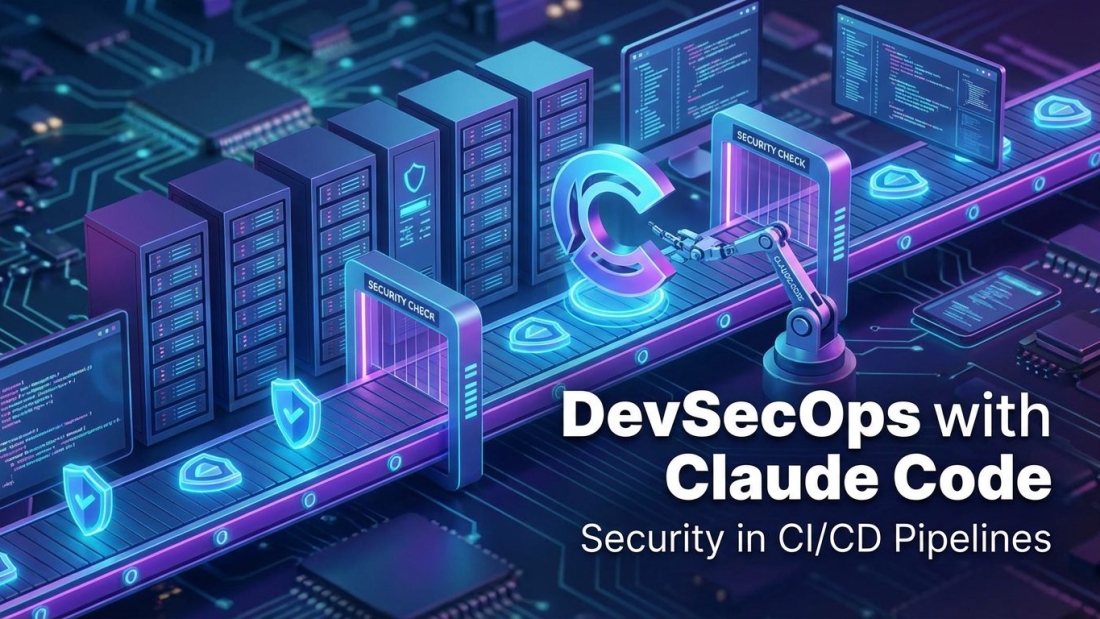
Understanding DevSecOps in Modern Software Development
What DevSecOps Really Means
Modern software teams release code at lightning speed. Agile workflows, microservices, and cloud deployments have transformed development cycles from months into days—or sometimes hours. While this speed fuels innovation, it also introduces a new problem: security vulnerabilities can slip through the cracks. This is exactly where DevSecOps enters the picture. DevSecOps is the practice of integrating security directly into the software development lifecycle rather than treating it as an afterthought. Instead of waiting until the final stage to perform security checks, DevSecOps embeds automated testing, vulnerability scanning, and policy enforcement into every step of development.
Think of DevSecOps like installing guardrails on a highway. Without them, drivers might move faster, but accidents become far more likely. Security guardrails in DevSecOps ensure developers can move quickly without crashing into security risks. Automated security scans, dependency checks, and secure configuration validation all operate inside the CI/CD pipeline. By shifting security left—meaning earlier in development—organizations reduce the cost and complexity of fixing vulnerabilities later. In traditional environments, security teams often worked separately from development teams. DevSecOps breaks down these silos, creating a collaborative culture where developers, security engineers, and operations teams share responsibility for protecting the application.
Why Security Must Be Integrated into CI/CD
Continuous Integration and Continuous Deployment (CI/CD) pipelines have become the backbone of modern software delivery. Every code commit triggers automated processes such as building, testing, and deploying applications. While these pipelines accelerate delivery, they also create opportunities for vulnerabilities to propagate quickly if security checks are missing. A single insecure code commit can travel from development to production in minutes. Embedding security directly into CI/CD pipelines ensures that every change is verified before it reaches users.
Automated security scanning tools now detect issues such as dependency vulnerabilities, insecure configurations, or malicious code patterns during the pipeline itself. With DevSecOps, these checks run alongside unit tests and performance benchmarks. As a result, security becomes a natural part of development rather than an external checkpoint. When developers receive immediate feedback about vulnerabilities in their code, they can fix issues instantly instead of waiting weeks for a security review. The outcome is a development culture where speed and safety coexist rather than compete.
The Rise of AI-Assisted DevOps
How AI Is Changing Software Delivery
Artificial intelligence is reshaping how software is built, tested, and deployed. Tools powered by large language models can analyze massive codebases, detect anomalies, and generate fixes faster than manual inspection. In DevOps environments, AI assistants are now helping developers write code, generate tests, review pull requests, and identify security issues. The shift is similar to the introduction of automated compilers decades ago—once revolutionary, now indispensable.
AI systems bring something unique to DevSecOps: contextual understanding. Traditional static analysis tools rely on rule-based detection patterns. AI-driven tools can examine code context, architecture patterns, and dependencies to detect subtle vulnerabilities that might otherwise remain hidden. Instead of scanning only for predefined patterns, AI can reason about how code behaves. This allows teams to identify security issues earlier and more accurately, which significantly reduces remediation costs.
The Role of AI Coding Agents in Security Automation
AI coding agents take automation even further by acting as collaborators within development workflows. They can run automated code reviews, suggest improvements, and even generate patches. When integrated into CI/CD pipelines, these agents function like tireless security reviewers who never miss a commit. Developers gain immediate feedback about potential vulnerabilities, code smells, or architectural weaknesses.
AI agents also excel at scaling security reviews across large codebases. Large enterprises often manage millions of lines of code across multiple repositories. Manual security reviews for every commit are practically impossible. AI assistants can analyze pull requests automatically, highlight potential risks, and prioritize issues based on severity. This capability transforms security operations from reactive to proactive. Instead of responding to incidents after deployment, teams prevent vulnerabilities before they ever reach production.
Introduction to Claude Code
What Claude Code Is and How It Works
Claude Code is an AI-powered coding assistant designed to integrate directly into developer workflows. It can operate from the command line, within development environments, or inside automated pipelines. Instead of simply generating code snippets, Claude Code can analyze entire repositories, run automated reviews, and propose improvements based on contextual understanding of the project. Developers interact with it through natural language prompts, allowing them to ask questions about code, architecture, or security concerns.
One of the key strengths of Claude Code lies in its ability to operate autonomously inside automation pipelines. In CI/CD environments, it can run in a headless mode, meaning it performs tasks without requiring interactive input. This allows organizations to integrate AI-powered analysis directly into their deployment pipelines. Claude Code can perform automated code reviews, generate tests, update documentation, and run security scans as part of CI/CD workflows.
Key Capabilities for DevOps and Security
Claude Code brings a wide range of capabilities that make it suitable for DevSecOps environments. It can analyze pull requests, generate unit tests based on code changes, and even refactor code to improve maintainability. Security scanning is one of its most powerful features. The system can detect vulnerabilities such as SQL injection, cross-site scripting (XSS), authentication flaws, and insecure data handling patterns before code reaches production.
Another important feature is its integration with cloud-based CI/CD platforms such as GitHub Actions and GitLab CI. When developers submit a pull request, the pipeline can automatically trigger Claude Code to analyze the changes. The assistant reviews the code, identifies potential risks, and generates feedback directly within the pull request discussion. This seamless integration ensures that security feedback appears exactly where developers expect it—inside their existing workflow. Instead of switching tools or waiting for external audits, developers receive instant recommendations while they are still working on the code.
Integrating Claude Code into CI/CD Pipelines
Automating Code Reviews
Code reviews are one of the most important quality gates in software development. They help ensure that new changes follow best practices, maintain code quality, and avoid introducing vulnerabilities. However, manual code reviews often become bottlenecks in fast-moving development teams. AI-assisted reviews powered by Claude Code can significantly reduce this friction. When integrated into a CI/CD pipeline, Claude automatically analyzes pull requests and highlights potential issues.
This process works by connecting Claude Code with repository events. Whenever a pull request is created or updated, the pipeline triggers a job that passes the changed code to the AI system. Claude evaluates the code structure, dependencies, and potential security risks. It then generates comments suggesting improvements or identifying vulnerabilities. Because the analysis happens automatically, developers receive feedback almost instantly. Instead of waiting hours or days for a human reviewer, they can resolve issues within minutes.
Running Claude in Headless Mode for Pipelines
Automation requires tools that can operate without manual interaction. Claude Code supports this through its headless execution mode, which allows it to run tasks directly inside CI/CD pipelines. Developers provide prompts through command-line parameters, and the AI returns structured results that can be processed automatically. For example, a pipeline job might instruct Claude to review a pull request for security vulnerabilities and output the findings in JSON format.
This headless approach makes Claude Code highly adaptable to different environments. Organizations can integrate it with GitHub Actions, GitLab CI, Jenkins, or other automation platforms. Each pipeline stage can trigger specific AI tasks, such as security analysis or documentation updates. The ability to control allowed tools and permissions also helps maintain security boundaries within the pipeline. By restricting access to read-only operations or specific directories, teams prevent the AI from making unauthorized modifications.
Security Automation with Claude Code
Automated Vulnerability Detection
One of the most powerful applications of Claude Code in DevSecOps is automated vulnerability detection. Traditional security scans rely on predefined rules to identify common threats. While effective, these systems sometimes miss vulnerabilities that require contextual understanding. AI-powered analysis can detect patterns that traditional scanners might overlook. Claude Code examines code logic, data flow, and configuration settings to identify potential weaknesses.
When the /security-review command is executed, Claude scans the codebase and provides explanations for any detected vulnerabilities. These explanations help developers understand why the issue exists and how it could be exploited. Instead of simply reporting a problem, the system often suggests fixes or mitigation strategies. This educational feedback improves developer awareness and gradually strengthens the overall security posture of the organization.
Detecting Injection Attacks and Authentication Issues
Injection attacks remain among the most common security threats in web applications. SQL injection, cross-site scripting, and command injection vulnerabilities continue to appear in production systems despite decades of security awareness. Claude Code helps identify these issues during development by analyzing how user input flows through the application. If untrusted input reaches a database query or system command without proper sanitization, the system flags the vulnerability immediately.
Authentication and authorization flaws are another major risk area. These vulnerabilities can allow unauthorized users to access restricted resources or escalate privileges within an application. Claude Code analyzes authentication logic to detect weaknesses such as missing access controls or insecure session management. By catching these issues early, teams prevent potential breaches before the application ever reaches production.
Real-World DevSecOps Workflow with Claude Code
Example Pipeline Architecture
A typical DevSecOps pipeline powered by Claude Code involves several automated stages. When a developer commits code to a repository, the CI system triggers the pipeline. The first stage performs standard tasks such as linting, compiling, and running unit tests. If these checks pass, the pipeline moves to the security stage where Claude Code performs automated analysis. The AI scans the code changes, identifies vulnerabilities, and generates a report.
If serious vulnerabilities are detected, the pipeline can automatically block the merge request. Developers receive detailed feedback explaining the issue and possible fixes. Once the developer resolves the problem, the pipeline runs again to verify the solution. This feedback loop ensures that security checks remain continuous throughout development rather than occurring only during release cycles.
GitHub Actions Integration
Integrating Claude Code into GitHub Actions is relatively straightforward. Developers configure a workflow file that triggers when pull requests are opened or updated. The workflow job installs Claude Code, authenticates using a secure API key stored in repository secrets, and runs the analysis command. The results appear directly in the pull request as comments or status checks.
This integration brings several advantages. Developers do not need to learn a new interface or tool. All security feedback appears inside GitHub, where developers already collaborate and review code. The automation ensures that every pull request undergoes consistent security checks regardless of team size or workload. Over time, this automated review process becomes a natural part of the development workflow.
Benefits of Using Claude Code for DevSecOps
Faster Vulnerability Detection
Speed is one of the biggest advantages of AI-assisted DevSecOps. Manual security reviews often happen late in the development cycle, which increases remediation costs. With Claude Code integrated into CI/CD pipelines, vulnerabilities can be detected seconds after code is committed. Developers receive feedback while the code context is still fresh in their minds, making it easier to fix issues quickly.
Faster detection also reduces the risk of vulnerabilities reaching production environments. When security checks run automatically for every commit, risky code rarely progresses through the pipeline unnoticed. This continuous verification process dramatically improves the reliability and safety of software releases.
Improved Developer Productivity
Security processes sometimes frustrate developers because they slow down delivery. DevSecOps tools must strike a balance between strong security controls and developer productivity. Claude Code helps achieve this balance by acting as an intelligent assistant rather than a rigid gatekeeper. Instead of simply blocking deployments, it explains security issues and suggests practical solutions.
Developers benefit from immediate, contextual feedback that helps them improve their coding practices. Over time, this feedback loop builds stronger security awareness across development teams. Developers learn to recognize risky patterns and adopt safer practices naturally. The result is a more secure codebase without sacrificing development velocity.
Best Practices for Secure AI-Driven Pipelines
Isolation, Permissions, and Secrets Management
AI-powered automation introduces new security considerations. Pipelines must be designed carefully to prevent unauthorized access to sensitive data. Running Claude Code inside isolated containers helps protect the environment from unintended interactions. Limiting the AI’s permissions ensures that it cannot modify critical infrastructure or access confidential information unnecessarily.
Secrets management is another critical aspect of secure pipelines. API keys, authentication tokens, and database credentials should never be stored directly in code repositories. Instead, they should be injected securely through environment variables or dedicated secrets management systems. These practices protect sensitive information even when automation tools interact with the pipeline.
Continuous Monitoring and Audit Logs
Automation does not eliminate the need for oversight. Organizations should maintain detailed logs of every automated action performed by AI tools within the pipeline. Audit logs help security teams track changes, investigate incidents, and ensure compliance with security policies. Continuous monitoring systems can also detect anomalies in pipeline activity.
For example, if a pipeline suddenly begins executing unusual commands or accessing unexpected resources, monitoring systems can trigger alerts. This visibility ensures that automation remains transparent and accountable. With proper monitoring, organizations can safely leverage AI-driven DevSecOps while maintaining full control over their infrastructure.
Challenges and Limitations
Despite its benefits, AI-assisted DevSecOps is not without challenges. AI models can sometimes generate false positives or overlook subtle vulnerabilities. Security teams must treat AI feedback as guidance rather than absolute truth. Human expertise remains essential for validating findings and making final security decisions.
Another challenge involves the security of the AI tools themselves. Researchers have identified vulnerabilities in AI-powered development tools that could allow malicious repositories to execute hidden commands or expose API keys. These issues highlight the importance of implementing strict security controls and updating tools regularly to patch vulnerabilities. Security teams must carefully evaluate AI tools before integrating them into production pipelines.
Future of DevSecOps with AI Agents
The future of DevSecOps is likely to be heavily influenced by intelligent automation. AI coding assistants will continue evolving into full development collaborators capable of writing code, reviewing architecture, and enforcing security policies. Instead of simply detecting vulnerabilities, future systems may automatically generate secure patches and update affected services.
Organizations are also exploring self-healing security systems that respond to threats in real time. Research into automated security frameworks shows that AI-driven approaches can improve threat detection accuracy and reduce incident recovery times significantly. As these technologies mature, DevSecOps pipelines will become increasingly autonomous while maintaining strong security guarantees.
The integration of AI tools like Claude Code represents an important step toward this future. By embedding intelligent security analysis directly into CI/CD pipelines, organizations can deliver software faster while maintaining high security standards. The combination of automation, AI reasoning, and continuous monitoring is reshaping how modern applications are built and protected.
Conclusion
DevSecOps has transformed how organizations approach application security by embedding protection mechanisms directly into the software development lifecycle. Instead of treating security as a final checkpoint, modern teams integrate automated checks into every stage of development. Tools like Claude Code take this concept even further by introducing AI-powered analysis that operates continuously inside CI/CD pipelines.
By automating code reviews, vulnerability detection, and security feedback, Claude Code enables developers to identify risks early and fix them quickly. The result is a faster, safer development process where security becomes a shared responsibility across teams. When implemented with proper safeguards—such as isolation, permission controls, and monitoring—AI-driven DevSecOps pipelines can dramatically improve both productivity and security.
As software systems continue to grow in complexity, automation will become essential for maintaining secure development workflows. AI assistants are not replacing human security experts, but they are becoming powerful partners that help teams manage the increasing demands of modern software delivery.