

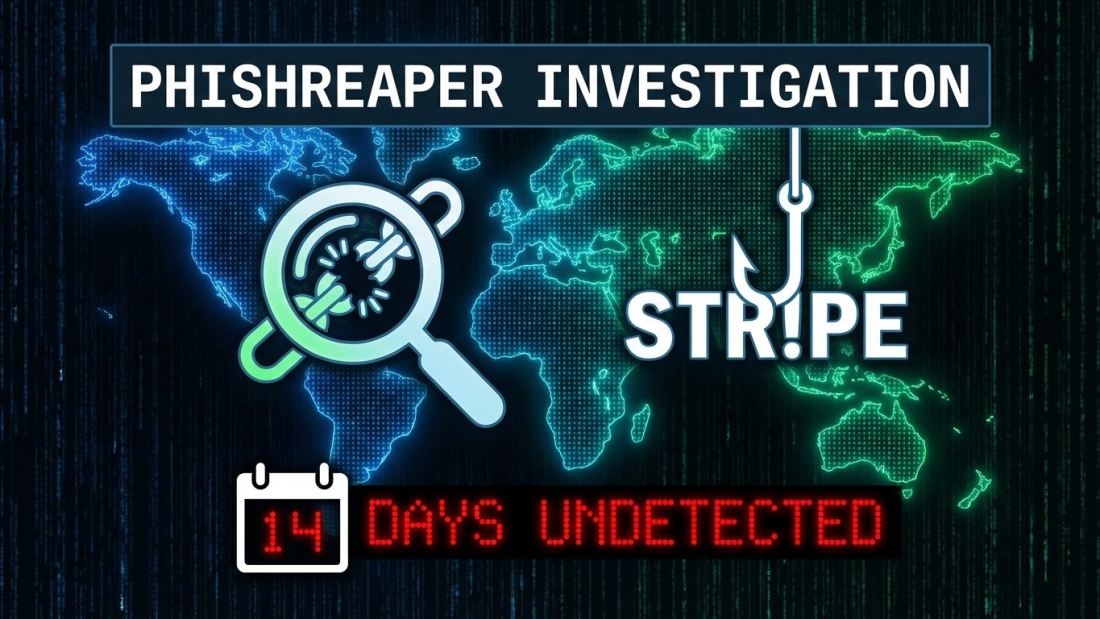
A threat intelligence report based on research conducted by PhishReaper and presented by LogIQ Curve
Introduction
Modern phishing campaigns are becoming increasingly sophisticated, leveraging polished user interfaces, trusted brand identities, and carefully staged infrastructure to evade detection. Payment platforms, widely used across global commerce, have become particularly attractive targets for cybercriminals seeking to harvest financial data at scale.
As the Exclusive OEM Partner of PhishReaper in Pakistan, LogIQ Curve is pleased to share the latest cybersecurity intelligence uncovered by the PhishReaper research team. Through this partnership, LogIQ Curve brings the proactive threat-hunting capabilities of the PhishReaper platform to enterprises, financial institutions, telecom operators, and government organizations looking to detect phishing infrastructure before attacks reach their users.
Organizations interested in strengthening their cyber-defense capabilities and proactively identifying phishing infrastructure are invited to contact our cybersecurity team at security@logiqcurve.com.
In a recent investigation, PhishReaper uncovered an active phishing campaign impersonating Stripe, one of the most widely used global payment gateways. The campaign had been operating for more than two weeks without detection by the broader cybersecurity ecosystem, illustrating how modern phishing infrastructure can quietly operate in plain sight. (phishreaper.ai)
The Discovery: A Two-Week Undetected Stripe Phishing Operation
During its threat-hunting operations, PhishReaper’s AI agents detected suspicious infrastructure targeting the Stripe brand. This intelligence trail led investigators to a phishing campaign involving several domains designed to mimic Stripe payment verification workflows.
One domain identified during the investigation, StripePay.online, serves as a representative example of the campaign’s infrastructure. The domain was created on 13th November 2025 and initially remained dormant before being activated to harvest credit card data from victims worldwide. (phishreaper.ai)
By the time the investigation documented the campaign publicly, the infrastructure had been active for 14 days without detection by traditional security tools, highlighting the delay often associated with reactive threat-intelligence systems. (phishreaper.ai)
Understanding the Phishing Infrastructure
The phishing site impersonating Stripe replicated the visual appearance of Stripe’s verification flow, including branding elements and a user interface designed to build trust with victims.
However, deeper analysis revealed several clear indicators of phishing infrastructure:
• Absence of Stripe’s legitimate Stripe.js payment integration
• Raw HTML fields capturing credit card data directly
• Externally hosted brand assets used to mimic authenticity
• A backend script designed to collect stolen payment details
• Artificial loading delays intended to disguise data exfiltration
These characteristics demonstrate how phishing kits are engineered to imitate legitimate services while silently extracting sensitive information from victims. (phishreaper.ai)
Why the Global Detection Ecosystem Missed It
The Stripe phishing campaign highlights a fundamental challenge in modern cybersecurity: many security tools operate using reactive detection models.
Traditional detection systems often rely on:
• Known malicious indicators
• Threat-intelligence feeds
• User-reported phishing pages
• Blocklists populated after attacks occur
Because the Stripe phishing infrastructure had not yet been widely reported or abused at large scale, it remained invisible to many detection systems.
This delay allowed the phishing site to remain operational and collect credit-card data for an extended period.
Research into phishing ecosystems confirms that such delays are common because many detection systems identify threats only after campaigns become visible through historical indicators or abuse reports. (arXiv)
PhishReaper’s Agentic AI Detection Approach
PhishReaper identified the campaign during its earliest stages, when the domain infrastructure first appeared.
Rather than waiting for reports or reputation signals, the platform analyzes patterns associated with malicious intent.
This proactive approach examines signals such as:
• Suspicious domain registration patterns
• Brand impersonation indicators
• Infrastructure relationships between domains
• Behavioral anomalies associated with phishing kits
By analyzing these early indicators, PhishReaper can detect phishing infrastructure before attacks reach widespread distribution.
In this case, the platform detected the campaign immediately upon encountering the infrastructure, long before it was recognized by other systems. (phishreaper.ai)
Strategic Implications for Payment Platforms
Phishing campaigns targeting payment gateways represent a significant risk for both organizations and consumers.
Successful attacks may lead to:
• Stolen credit-card information
• Financial fraud
• Identity theft
• Reputational damage for targeted brands
Because payment platforms handle large volumes of sensitive financial data, attackers often prioritize them as high-value targets.
The Stripe phishing campaign demonstrates how attackers can build convincing infrastructure capable of harvesting payment information while evading detection.
Early detection of such infrastructure is therefore essential to protecting financial ecosystems.
Moving Toward Proactive Cyber Defense
The Stripe phishing investigation highlights the growing importance of proactive cybersecurity strategies.
Instead of waiting for phishing campaigns to appear in threat feeds, organizations must adopt technologies capable of identifying malicious infrastructure during its earliest stages.
Proactive threat-hunting platforms provide organizations with:
• Earlier detection of phishing infrastructure
• Improved protection against brand impersonation attacks
• Greater visibility into attacker infrastructure
• Stronger threat-intelligence capabilities for SOC teams
This shift from reactive detection to intent-driven infrastructure analysis is becoming essential in modern cybersecurity defense.
Conclusion
The Stripe phishing campaign uncovered by PhishReaper illustrates how sophisticated phishing infrastructure can remain active for extended periods when detection systems rely solely on reactive intelligence.
Despite operating for 14 days without global detection, the campaign was identified immediately by PhishReaper’s proactive threat-hunting platform.
This investigation highlights the importance of infrastructure-level threat intelligence and demonstrates how early detection technologies can disrupt phishing operations before they cause widespread harm.
detect emerging phishing campaigns and strengthen their defenses against modern cyber threats.
Learn More About PhishReaper
Organizations interested in evaluating the PhishReaper phishing detection platform can contact LogIQ Curve to learn how this technology can strengthen enterprise security operations.
📧 security@logiqcurve.com
LogIQ Curve works with:
• Banks
• Telecom operators
• Government organizations
• Enterprises
• SOC teams
to identify phishing infrastructure before attacks, reach users.
Research Attribution
This analysis is based on the original threat-intelligence research conducted by PhishReaper. LogIQ Curve republishes these findings for its global audience as the Exclusive OEM Partner of PhishReaper in Pakistan, helping organizations gain early visibility into emerging phishing threats. (phishreaper.ai)
Description
PhishReaper uncovers a live Stripe phishing campaign that remained undetected worldwide for 14 days. Learn how proactive AI-driven threat hunting exposed the infrastructure harvesting credit-card data.
#PhishReaper #LogIQCurve #CyberSecurity #PhishingDetection #ThreatIntelligence #ThreatHunting #CyberDefense #EnterpriseSecurity #SOC #AIinCybersecurity #DigitalSecurity #CyberResilience #FintechSecurity #MobileWalletSecurity #InfoSec #SecurityOperations #CyberThreats #PakistanCyberSecurity #CyberInnovation #SafwanKhan #HaiderAbbas #NajeebUlHussan #MumtazKhan #CISO #CTO #SecurityLeadership