

Introduction
Phishing campaigns continue to evolve rapidly as cybercriminals adopt increasingly sophisticated tools, automation, and artificial intelligence to deceive victims. In this constantly shifting cybersecurity environment, early detection of phishing infrastructure has become critical for organizations seeking to protect their digital ecosystems and customer trust.
As the Exclusive OEM Partner of PhishReaper in Pakistan, LogIQ Curve is pleased to share the latest threat-intelligence findings produced by the PhishReaper research team. Through this partnership, LogIQ Curve brings the advanced capabilities of the PhishReaper phishing-detection platform to enterprises, financial institutions, telecom operators, and government organizations in Pakistan and beyond.
Organizations interested in proactively identifying phishing infrastructure and strengthening their cybersecurity posture are invited to connect with our security team at security@logiqcurve.com.
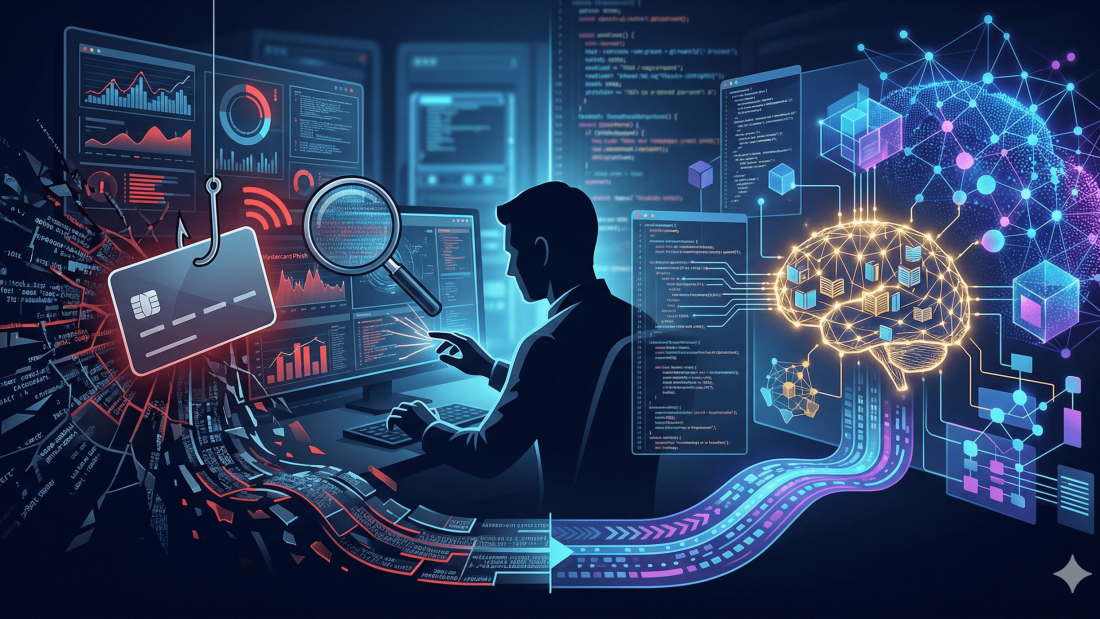
In a recent investigation, PhishReaper uncovered a phishing campaign impersonating Mastercard that had evolved beyond a simple phishing page. Instead, the malicious environment had transformed into a sophisticated platform functioning almost like a knowledge system for cybercriminal operations, demonstrating how phishing campaigns can mature into long-running operational ecosystems.
The Discovery: From Phishing Page to Operational Platform
During its threat-hunting operations, PhishReaper detected phishing infrastructure impersonating the global payments brand Mastercard.
At first glance, the malicious site appeared similar to many other brand-impersonation phishing pages. However, deeper investigation revealed that the infrastructure supporting the campaign was significantly more advanced.
Instead of serving only a single phishing function, the platform appeared to operate as a long-running operational environment where attackers could manage, reuse, and potentially scale phishing activities.
This discovery suggests that modern phishing campaigns are increasingly evolving into structured cybercrime platforms rather than isolated fraudulent websites.
Such environments allow threat actors to maintain campaigns for extended periods while adapting their infrastructure to avoid detection.
Understanding the Infrastructure Behind the Attack
PhishReaper’s investigation examined the infrastructure supporting the Mastercard-themed phishing operation and identified several structural characteristics associated with persistent phishing ecosystems.
These included:
• Domains crafted to resemble legitimate Mastercard-related services
• Phishing interfaces designed to capture sensitive financial information
• Infrastructure capable of hosting multiple operational components
• Persistent hosting environments enabling long-term campaign operation
This structure indicated that the attackers were not merely launching temporary phishing pages but building an infrastructure designed for continued use and operational scalability.
By analyzing the relationships between these infrastructure elements, PhishReaper was able to map the broader phishing ecosystem supporting the campaign.
Why Traditional Security Systems Often Miss These Threats
Many legacy cybersecurity tools rely on reactive detection models that focus primarily on known malicious indicators.
These systems often depend on:
• Previously reported malicious URLs
• Known indicators of compromise
• Manual reporting by victims or researchers
While effective against previously known threats, these mechanisms often struggle to identify newly created phishing infrastructure.
Modern phishing operations increasingly leverage automation and artificial intelligence to evolve rapidly, allowing attackers to modify infrastructure and evade detection mechanisms.
As phishing campaigns become more complex, relying solely on reactive threat intelligence leaves organizations vulnerable during the early stages of attacks.
Research across the cybersecurity industry shows that AI-driven techniques are increasingly being used in both attacks and defensive tools, further accelerating the evolution of phishing campaigns. (SaaS Alerts)
PhishReaper’s Proactive Threat Hunting Approach
PhishReaper approaches phishing detection differently by focusing on intent-driven infrastructure discovery.
Instead of waiting for phishing domains to appear in threat-intelligence feeds, the platform actively searches for suspicious infrastructure patterns associated with phishing campaigns.
This approach includes analysis of:
• Domain registration patterns
• Infrastructure relationships
• Behavioral indicators associated with phishing intent
• Attacker operational patterns
By analyzing these signals, PhishReaper can detect phishing infrastructure during the early stages of campaign development.
In the case of the Mastercard phishing operation, this approach allowed investigators to uncover a phishing ecosystem that had evolved into a persistent operational platform.
Strategic Implications for Financial Platforms
Phishing campaigns targeting global payment platforms pose significant risks to both organizations and their users.
Brand-impersonation attacks involving financial platforms can lead to:
• Credential harvesting
• Financial fraud
• Identity theft
• Reputational damage for targeted organizations
Because payment platforms operate within highly trusted digital ecosystems, attackers often exploit brand recognition to increase the credibility of phishing campaigns.
Detecting phishing infrastructure early is therefore essential to protecting users and preventing large-scale financial fraud.
Platforms like PhishReaper provide organizations with the visibility needed to identify malicious infrastructure before phishing campaigns reach widespread distribution.
Moving Toward Proactive Cyber Defense
The Mastercard phishing investigation illustrates a broader shift within the cyber threat landscape.
Phishing campaigns are no longer isolated events, they are increasingly becoming structured cybercrime operations supported by persistent infrastructure.
To defend against these threats, organizations must adopt proactive detection technologies capable of identifying malicious infrastructure early in its lifecycle.
Proactive threat-hunting platforms provide organizations with:
• Earlier visibility into emerging phishing campaigns
• Stronger protection against brand impersonation attacks
• Improved monitoring of attacker infrastructure
• Enhanced threat-intelligence capabilities for security teams
By shifting toward proactive cyber defense, organizations can significantly reduce the impact of phishing campaigns.
Conclusion
The Mastercard phishing operation uncovered by PhishReaper demonstrates how modern phishing campaigns are evolving into persistent operational platforms capable of supporting long-term cybercrime activity.
Through advanced infrastructure analysis and proactive threat hunting, PhishReaper was able to illuminate a phishing ecosystem that extended far beyond a single malicious webpage.
This discovery highlights the importance of identifying attacker infrastructure early and reinforces the need for organizations to adopt proactive cybersecurity technologies.
Through its collaboration with PhishReaper, LogIQ Curve is committed to helping organizations detect phishing campaigns before they escalate into large-scale threats.
Learn More About PhishReaper
Organizations interested in evaluating the PhishReaper phishing detection platform can contact LogIQ Curve to learn how this technology can strengthen enterprise security operations.
📧 security@logiqcurve.com
LogIQ Curve works with:
• Banks
• Telecom operators
• Government organizations
• Enterprises
• SOC teams
to identify phishing infrastructure before attacks, reach users.
Research Attribution
This analysis is based on the original threat-intelligence research conducted by PhishReaper. LogIQ Curve republishes these findings for its global audience as the Exclusive OEM Partner of PhishReaper in Pakistan, helping organizations gain early visibility into emerging phishing threats.
Description
PhishReaper uncovers a Mastercard-themed phishing operation that evolved into a persistent AI-driven platform for cybercrime infrastructure. Discover how proactive threat hunting exposes hidden phishing ecosystems.
Hashtags
#PhishReaper #LogIQCurve #CyberSecurity #PhishingDetection #ThreatIntelligence #ThreatHunting #CyberDefense #EnterpriseSecurity #SOC #AIinCybersecurity #DigitalSecurity #CyberResilience #FinancialSecurity #PaymentsSecurity #InfoSec #SecurityOperations #CyberThreats #PakistanCyberSecurity #CyberInnovation #SafwanKhan #HaiderAbbas #NajeebUlHussan #MumtazKhan #CISO #CTO #SecurityLeadership