

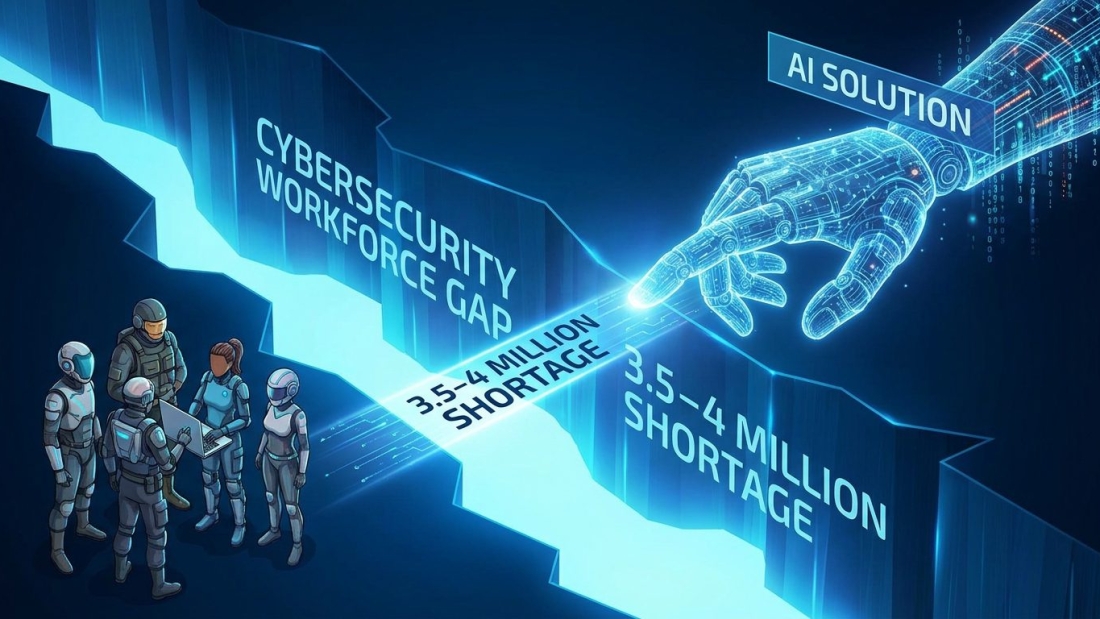
The cybersecurity industry faces a critical shortage of 3.5 to 4 million professionals globally
The Global Shortage in Numbers
The cybersecurity industry is dealing with a massive workforce shortage, and it’s not slowing down anytime soon. Estimates suggest there are between 3.5 to 4 million unfilled cybersecurity roles globally, leaving organizations exposed to growing digital threats. Every new system, application, or connected device increases the need for protection, but the number of skilled professionals is simply not keeping up. It creates a situation where businesses are constantly trying to defend expanding digital environments with limited human resources.
This shortage is more than just a hiring problem. It directly impacts how quickly organizations can detect and respond to cyberattacks. When teams are understaffed, threats take longer to identify, and response times increase, giving attackers a larger window to cause damage. In many cases, companies are forced to prioritize only the most critical risks, leaving smaller vulnerabilities unaddressed. Over time, these gaps build up and create serious security risks.
The challenge becomes even more intense when you consider how quickly cyber threats are evolving. Attackers are now using advanced tools, automation, and even artificial intelligence to scale their operations. This creates an imbalance where defenders are already short on staff, while attackers are becoming faster and more efficient. The result is a growing gap between the demand for cybersecurity and the ability to supply it.
Why the Gap Keeps Growing
The workforce gap continues to grow because the demand for cybersecurity is expanding faster than the supply of skilled professionals. Digital transformation is happening across every industry, from healthcare to finance to retail. Each of these sectors relies heavily on technology, which increases the need for strong cybersecurity measures. As more businesses move to the cloud and adopt connected systems, the number of potential attack points increases significantly.
At the same time, the education and training systems are struggling to keep up. Traditional academic programs often lag behind real-world needs, meaning graduates may not have the practical skills required to handle modern threats. Even experienced professionals need constant upskilling to stay relevant, as new technologies and attack methods emerge regularly. This constant evolution makes it difficult to maintain a workforce that is fully prepared.
Another major factor is burnout. Cybersecurity professionals often work in high-pressure environments, dealing with continuous alerts and critical incidents. The stress can lead to fatigue and job dissatisfaction, causing many professionals to leave the field altogether. This not only reduces the workforce but also increases the workload for those who remain, creating a cycle that is difficult to break.
The Shift from Talent Shortage to Skills Gap
Why Skills Matter More Than Headcount
While the number of available professionals is important, the real issue lies in the skills gap. Many organizations are finding that even when they hire new employees, those individuals may not have the specific expertise required for modern cybersecurity challenges. This includes areas like cloud security, threat intelligence, and AI-based defense systems.
The problem can be compared to having a large team without the right tools or knowledge. Simply increasing the number of employees does not guarantee better security if those employees are not equipped with the right skills. Organizations need professionals who can think critically, adapt quickly, and understand complex systems. These are not skills that can be developed overnight.
As a result, companies are shifting their focus from hiring more people to developing better talent. This includes investing in training programs, certifications, and hands-on experience. The goal is to build a workforce that is not only larger but also more capable of handling advanced threats. This shift is changing how organizations approach recruitment and workforce development.
The Impact of AI on Required Skills
Artificial intelligence is reshaping the skills required in cybersecurity. Many routine tasks that were once handled by entry-level professionals are now being automated. This includes activities like monitoring logs, identifying suspicious behavior, and responding to basic alerts. As a result, the demand for low-level tasks is decreasing, while the need for advanced skills is increasing.
Professionals are now expected to understand how AI systems work, how to interpret their outputs, and how to make decisions based on AI-driven insights. This requires a combination of technical knowledge and analytical thinking. It also means that cybersecurity roles are becoming more complex and specialized.
For new entrants, this creates a unique challenge. Traditional entry-level roles are becoming less common, making it harder to gain initial experience. At the same time, the expectations for new hires are higher than ever. This shift highlights the importance of continuous learning and adaptability in the cybersecurity field.
How AI is Transforming Cybersecurity
AI-Powered Threat Detection
Artificial intelligence is revolutionizing how threats are detected. Traditional systems rely on predefined rules, which can only identify known threats. AI, on the other hand, can analyze large amounts of data in real time and identify patterns that may indicate suspicious activity. This allows organizations to detect threats that have never been seen before.
For example, AI can monitor user behavior and identify anomalies, such as unusual login times or unexpected access patterns. It can also analyze network traffic to detect hidden malware or unauthorized data transfers. This level of analysis would be extremely difficult for humans to perform manually, especially at scale.
The ability to detect threats early is critical in cybersecurity. The faster a threat is identified, the quicker it can be contained. AI enhances this capability by providing continuous monitoring and rapid analysis, reducing the time it takes to respond to potential attacks.
Automation of Routine Security Tasks
One of the most significant benefits of AI is automation. Many cybersecurity tasks are repetitive and time-consuming, such as reviewing logs, managing alerts, and conducting routine scans. AI can handle these tasks efficiently, freeing up human professionals to focus on more complex issues.
Automation also improves consistency. Unlike humans, AI systems do not experience fatigue or distraction, which means they can perform tasks with a high level of accuracy over long periods. This reduces the risk of errors and ensures that important tasks are not overlooked.
By automating routine work, organizations can make better use of their limited workforce. Instead of spending time on repetitive tasks, professionals can focus on strategic activities, such as threat analysis and security planning.
AI as a Force Multiplier
Doing More with Fewer Professionals
AI allows organizations to maximize their resources by enabling a smaller team to handle a larger workload. This is particularly important in a field where skilled professionals are in short supply. With AI, a single analyst can manage tasks that would have previously required multiple team members.
This increased efficiency helps organizations maintain strong security even with limited staff. It also allows them to scale their operations without significantly increasing their workforce. In a way, AI acts as a multiplier, enhancing the capabilities of each individual professional.
Reducing Analyst Burnout
Burnout is a major concern in cybersecurity, and AI can help address it. By reducing the number of repetitive tasks and minimizing alert fatigue, AI allows professionals to focus on meaningful work. This not only improves productivity but also enhances job satisfaction.
When employees are less stressed and more engaged, they are more likely to stay in their roles. This helps organizations retain talent and reduce turnover, which is essential for maintaining a stable workforce.
AI in Cybersecurity Training and Education
AI is also transforming how cybersecurity professionals are trained. Adaptive learning platforms can tailor content to individual needs, helping learners focus on areas where they need improvement. This makes training more efficient and effective.
These systems can provide real-time feedback, simulate real-world scenarios, and guide learners through complex challenges. This hands-on approach helps develop practical skills that are directly applicable in the workplace.
Upskilling the Existing Workforce
Upskilling is a key strategy for addressing the workforce gap. Instead of relying solely on new hires, organizations can train their existing employees to take on more advanced roles. AI tools can identify skill gaps and recommend targeted training programs.
This approach is both cost-effective and scalable. It allows organizations to build a more capable workforce without the delays associated with hiring new employees.
Challenges of Using AI in Cybersecurity
AI Skill Requirements
While AI offers many benefits, it also requires specialized knowledge. Professionals need to understand how to implement, manage, and monitor AI systems. This adds another layer of complexity to an already challenging field.
Finding individuals with both cybersecurity and AI expertise can be difficult, which may limit the effectiveness of AI adoption.
Risks of Over-Reliance on Automation
Relying too heavily on AI can create new risks. AI systems are not perfect and may produce false positives or miss certain threats. Attackers may also attempt to manipulate AI systems to bypass security measures.
Human oversight is essential to ensure that AI is used effectively and responsibly.
Industry Adoption of AI Solutions
Enterprise Use Cases
Organizations across various industries are adopting AI-driven cybersecurity solutions. These tools are being used for threat detection, incident response, and risk management. The goal is to improve efficiency and reduce the impact of cyber threats.
Managed Security Services Growth
Many companies are turning to managed security service providers that use AI to deliver scalable solutions. This allows organizations to access advanced security capabilities without needing a large in-house team.
Future Job Roles in AI-Driven Cybersecurity
Emerging Roles
New roles are emerging as AI becomes more integrated into cybersecurity. These include positions focused on managing AI systems, analyzing data, and developing advanced security strategies.
Decline of Entry-Level Tasks
As automation increases, traditional entry-level tasks are becoming less common. This creates challenges for workforce development but also opens up opportunities for more specialized roles.
Strategies to Bridge the Workforce Gap
AI + Human Collaboration
The most effective approach combines AI with human expertise. AI handles large-scale analysis, while humans provide judgment and decision-making.
Reskilling and Policy Changes
Investing in education and training is essential. Organizations and governments need to support programs that develop cybersecurity skills and encourage continuous learning.
The Road Ahead
Long-Term Outlook
The cybersecurity workforce gap is likely to remain a challenge, but AI offers a powerful solution. By improving efficiency and enabling better decision-making, AI can help organizations keep up with evolving threats.
Will AI Fully Replace Humans?
AI will not replace humans but will change how they work. The future of cybersecurity lies in collaboration between humans and machines.
Conclusion
The cybersecurity workforce gap is a complex and growing challenge that cannot be solved through traditional hiring alone. With millions of unfilled roles and increasingly sophisticated cyber threats, organizations must find new ways to strengthen their defenses. Artificial intelligence provides a practical and scalable solution by automating routine tasks, enhancing threat detection, and enabling professionals to focus on high-value activities.
At the same time, AI is reshaping the skills required in the industry. It is pushing professionals toward more advanced roles that require critical thinking and technical expertise. This shift highlights the importance of continuous learning and adaptation. Organizations that invest in training and embrace AI-driven solutions will be better positioned to address the workforce gap.
The future of cybersecurity depends on collaboration between humans and AI. By combining the strengths of both, it is possible to build a more resilient and effective defense against cyber threats.