
The Shift from AI Experiments to Core Infrastructure
Why AI Pilots Fail to Scale
Most organizations didn’t start their AI journey with a grand plan. They began small, experimenting with chatbots, automation scripts, or predictive tools in isolated departments. At first, it felt like progress. Teams were excited, results looked promising, and leadership saw potential. But over time, something became clear—these small wins weren’t translating into large-scale impact. The reason is simple: experiments create isolated success, not systemic change.
When AI projects are treated as side initiatives, they often lack integration with core systems. Data remains locked in silos, different teams use disconnected tools, and there’s no unified strategy guiding the efforts. This fragmentation creates barriers that prevent AI from scaling across the organization. Even when a pilot performs well, it struggles to move beyond its initial scope because the foundation isn’t built for expansion.
Another major issue is leadership alignment. Without a clear vision that positions AI as a business priority, projects lose momentum. They become “nice-to-have” tools rather than essential systems. This leads to high failure rates, not because the technology is weak, but because the strategy behind it is incomplete. Companies end up investing time and money into experiments that never reach their full potential.
Scaling AI requires more than technical success. It demands organizational change, strong infrastructure, and a mindset shift. Without these elements, even the most promising AI initiatives remain stuck in the pilot phase.
The Rise of AI as Business-Critical Infrastructure
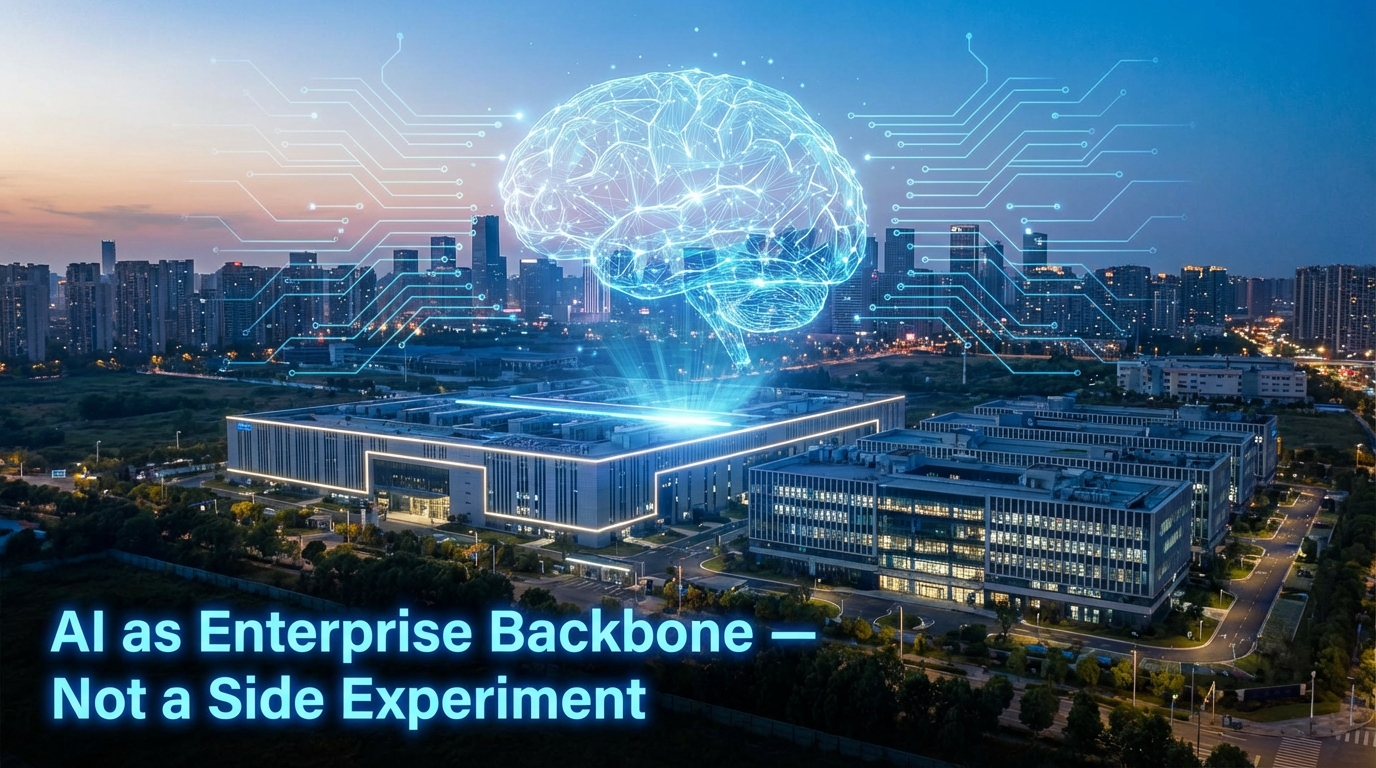
The conversation around AI has changed dramatically in recent years. It is no longer seen as a futuristic concept or an optional upgrade. Instead, it has become a fundamental part of how businesses operate. Organizations are now embedding AI into their workflows, products, and decision-making processes, turning it into a core component of their operations.
This shift is driven by measurable results. Companies that integrate AI deeply into their systems are experiencing significant improvements in productivity and efficiency. Employees are able to complete tasks faster, processes become more streamlined, and decision-making becomes more data-driven. AI is not just supporting operations; it is transforming them.
What makes this transformation powerful is the depth of integration. Instead of using AI as a standalone tool, organizations are building it into the backbone of their systems. This means AI is involved in everything from customer interactions to supply chain management. It operates behind the scenes, enhancing performance and enabling smarter decisions.
This evolution mirrors the adoption of other foundational technologies in the past. Just as electricity and the internet became essential infrastructure, AI is following a similar path. Businesses that recognize this shift early are positioning themselves for long-term success, while those that hesitate risk falling behind.
Understanding Enterprise AI in 2026
What Defines Enterprise-Grade AI
Enterprise-grade AI is very different from basic AI applications. It is not just about having advanced algorithms or powerful models. It is about creating systems that are reliable, scalable, and deeply integrated into the organization. These systems must work seamlessly with existing technologies and support critical business functions.
One of the key characteristics of enterprise AI is its ability to operate within complex environments. It must handle large volumes of data, interact with multiple systems, and deliver consistent results. This requires a strong foundation, including robust data infrastructure and well-defined processes.
Another important aspect is trust. Enterprises deal with sensitive information and high-stakes decisions. AI systems must be transparent, secure, and compliant with regulations. This ensures that organizations can rely on them without compromising security or ethical standards.
Enterprise AI also focuses on outcomes. It is not enough to generate insights; those insights must lead to action. Whether it is improving customer experience, optimizing operations, or driving innovation, enterprise AI is designed to deliver measurable value.
Key Statistics Driving Adoption
The rapid adoption of AI across industries highlights its growing importance. A large majority of organizations are now using AI in some capacity, and many are expanding their investments to include more advanced applications. This widespread adoption reflects a recognition that AI is no longer optional.
Despite this growth, there is still a gap between adoption and impact. Many companies are using AI tools, but only a smaller percentage are achieving significant financial results. This gap underscores the importance of integration and strategy. Simply adopting AI is not enough; it must be embedded into the core of the business.
Another key trend is the impact on productivity. Employees who use AI tools are able to save time on repetitive tasks, allowing them to focus on more strategic work. This shift is changing the nature of work itself, making it more efficient and more focused on value creation.
Investment in AI is also increasing. Organizations are allocating substantial budgets to AI initiatives, signaling a long-term commitment. This level of investment reflects the belief that AI will play a central role in future business success.
Why Treating AI as a Side Project is a Costly Mistake
Missed ROI Opportunities
When AI is treated as a side project, its potential is severely limited. Organizations may see small improvements, but they miss out on the larger benefits that come from full integration. AI has the ability to transform entire business processes, but this can only happen when it is treated as a core capability.
One of the biggest missed opportunities is the ability to drive innovation. AI can help organizations develop new products, improve customer experiences, and identify new revenue streams. When it is confined to isolated projects, these opportunities remain untapped.
Another issue is the lack of scalability. Side projects are often designed for specific use cases, making it difficult to expand them across the organization. This limits their impact and reduces the return on investment.
To fully realize the value of AI, organizations must move beyond experimentation. They need to integrate AI into their core systems and align it with their business goals. This approach enables them to unlock the full potential of the technology.
Fragmentation and Inefficiency
Fragmentation is one of the biggest challenges faced by organizations that treat AI as a side project. Different teams may adopt different tools, leading to a lack of consistency and coordination. This creates inefficiencies and makes it difficult to share insights across the organization.
Data silos are another major issue. When data is not shared effectively, AI systems cannot operate at their full potential. This limits their ability to generate accurate insights and reduces their overall effectiveness.
To overcome these challenges, organizations need to adopt a unified approach. This involves standardizing tools, integrating systems, and ensuring that data flows seamlessly across the organization. By doing so, they can create a cohesive AI ecosystem that supports their business objectives.
AI as the New Digital Backbone
Integration Over Experimentation
The true power of AI lies in its ability to integrate with existing systems. Rather than focusing on standalone applications, organizations are now prioritizing integration. This approach allows AI to enhance existing processes and deliver greater value.
Integration enables AI to access and analyze data from multiple sources, providing a more comprehensive view of the business. This leads to better decision-making and improved performance.
AI Embedded in Workflows
In modern enterprises, AI is becoming an integral part of daily operations. It is embedded in workflows, supporting tasks and providing insights in real time. This makes it easier for employees to use AI without needing specialized knowledge.
By embedding AI into workflows, organizations can ensure that it is used consistently and effectively. This approach also makes it easier to scale AI across the organization.
Core Pillars of AI-Driven Enterprises
Data Infrastructure
A strong data infrastructure is essential for successful AI implementation. This includes data collection, storage, and processing systems that can handle large volumes of information.
Governance and Trust
Governance ensures that AI systems are used responsibly and ethically. This includes establishing policies and procedures for data usage and ensuring compliance with regulations.
Talent and AI Fluency
Organizations need skilled professionals who can develop and manage AI systems. They also need to invest in training to ensure that employees can work effectively with AI.
Real-World Benefits of AI Integration
Productivity Gains
AI helps employees complete tasks more efficiently, reducing the time spent on repetitive activities. This leads to increased productivity and better use of resources.
Decision Intelligence
AI provides valuable insights that support decision-making. By analyzing data in real time, it enables organizations to make informed decisions quickly.
From Pilots to Platforms: The Scaling Challenge
Why Most AI Projects Fail
Many AI projects fail due to a lack of strategy and poor data quality. Without a clear plan, it is difficult to achieve meaningful results.
How Leaders Succeed
Successful organizations focus on integration and long-term value. They invest in infrastructure and align their AI initiatives with their business goals.
AI and Business Process Reengineering
Redesigning Workflows
AI enables organizations to rethink their processes and improve efficiency. This involves redesigning workflows to take full advantage of AI capabilities.
Human + AI Collaboration
The combination of human expertise and AI capabilities leads to better outcomes. This collaboration allows organizations to achieve greater results.
Industry-Wide Transformation
Sectors Leading AI Adoption
Industries such as technology, healthcare, and manufacturing are leading the adoption of AI. These sectors are using AI to drive innovation and improve performance.
Competitive Advantage Gap
Organizations that adopt AI effectively gain a competitive advantage. Those that fail to do so risk falling behind.
Building an AI-First Enterprise Strategy
Steps to Transition
Organizations can transition to an AI-first strategy by aligning AI with their business goals, investing in infrastructure, and training their employees.
Long-Term Vision
AI is a long-term investment. Organizations must continuously adapt and evolve to stay competitive.
Conclusion
AI has moved far beyond being an experimental technology. It now serves as a critical foundation for modern enterprises, shaping how businesses operate, compete, and grow. Organizations that recognize AI as a backbone rather than a side project are better positioned to unlock its full potential. They build stronger systems, make smarter decisions, and create more value over time.