

Introduction
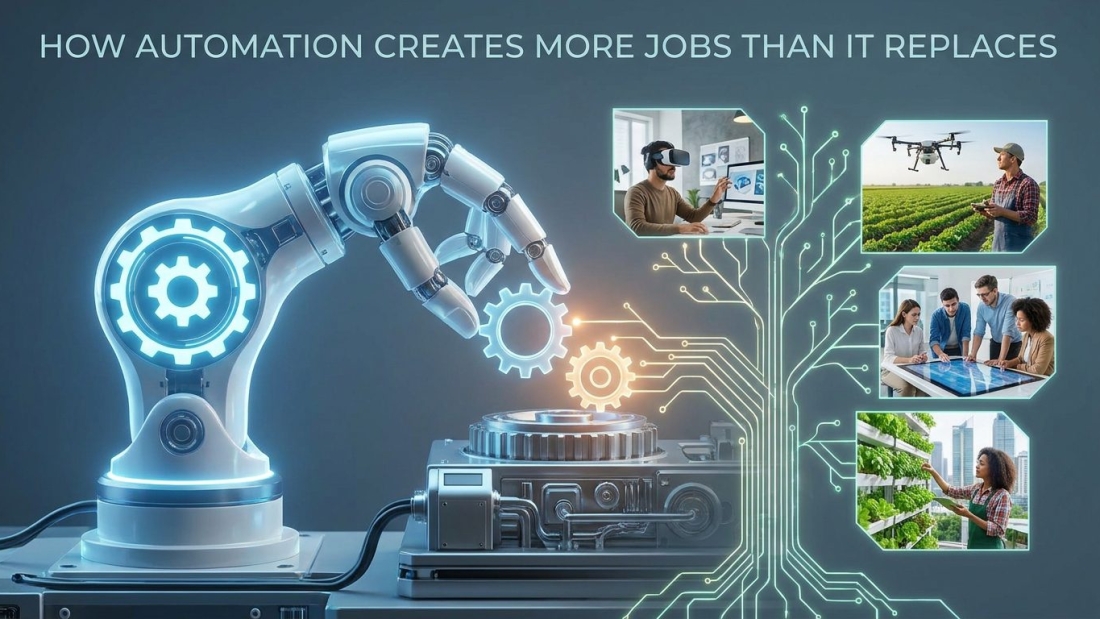
Few developments stir workplace anxiety quite like automation. For many, it conjures images of intelligent machines steadily encroaching on occupations once performed exclusively by people. Yet that narrative captures only a fragment of the picture. While automation undoubtedly absorbs certain routine functions, it simultaneously unlocks fresh avenues for enterprise, innovation, and employment. Across generations, technological progress has consistently reshaped the labor landscape rather than erasing it. As organizations sharpen efficiency and elevate output, they frequently broaden their reach, cultivating demand for emerging expertise and entirely new professional pathways.
Automation Eliminates Repetition, Not Professions
A widespread misunderstanding is that automation wipes out jobs in their entirety. The reality is considerably more nuanced. In most instances, automated systems assume responsibility for isolated duties—particularly those that are monotonous, predictable, or operationally repetitive. This transition frees individuals to dedicate their attention to work that requires judgment, ingenuity, collaboration, and strategic thought.
Consider modern software platforms capable of analyzing vast reservoirs of information within moments. Although these systems excel at processing data, they cannot independently determine business direction or formulate nuanced solutions. Human insight remains indispensable. As a result, employees often become more impactful, shifting from task execution to decision-making and value creation.
Emerging Sectors Generate Fresh Career Paths
Virtually every transformative innovation has given rise to industries that were once unimaginable. Automation continues this tradition. Expanding domains such as artificial intelligence, cybersecurity, cloud infrastructure, software engineering, and digital communications owe much of their momentum to automated technologies.
Organizations embracing these advancements require professionals capable of architecting, supervising, refining, and safeguarding complex systems. This growing appetite for specialized talent fuels the creation of thousands of rewarding careers. Rather than rendering the workforce obsolete, technological evolution continuously redefines it, encouraging adaptation and opening doors to opportunities that did not previously exist.
Greater Efficiency Fuels Commercial Expansion
Automation serves as a catalyst for operational excellence. By minimizing inaccuracies, streamlining workflows, and accelerating production, businesses can accomplish more with greater precision. Enhanced efficiency often translates into improved customer experiences, stronger profitability, and access to broader markets.
As enterprises expand, workforce demand frequently follows. Additional personnel may be needed across sales, customer engagement, operations, project management, and technical support functions. In this sense, automation acts less like a workforce substitute and more like an engine powering organizational growth. The ripple effect often extends well beyond the departments where automation was initially introduced.
Human Capabilities Remain Irreplaceable
Technology can execute calculations, organize information, and automate procedural activities with remarkable speed. Yet distinctly human attributes remain beyond its reach. Imagination, emotional intelligence, ethical judgment, leadership, and interpersonal connection continue to hold extraordinary value in the contemporary workplace.
Organizations depend on people to navigate ambiguity, cultivate trust, and devise inventive solutions to multifaceted challenges. As automated systems absorb routine responsibilities, professionals gain greater freedom to focus on endeavors where human capability truly shines. Far from diminishing the importance of people, automation often elevates the significance of uniquely human strengths.
Why Reskilling Matters More Than Ever
As workplace expectations evolve, continuous learning becomes increasingly critical. Individuals who embrace new competencies are better positioned to capitalize on emerging opportunities and maintain relevance within a rapidly shifting employment landscape.
Educational programs, digital learning platforms, professional certifications, and workplace training initiatives provide accessible avenues for skill development. Rather than viewing automation as a rival, forward-thinking professionals recognize it as an instrument that amplifies effectiveness and enhances performance. Those who adapt proactively are often the ones who reap the greatest rewards.
Conclusion
Automation is undeniably reshaping how work is performed, but it is not extinguishing the need for human contribution. By amplifying productivity, stimulating commercial growth, and fostering entirely new industries, automation frequently creates more opportunities than it displaces. Success in this evolving environment depends on adaptability, curiosity, and a willingness to cultivate complementary skills. As technological advancement accelerates, individuals and organizations that embrace transformation will be best equipped to flourish in the years ahead.