Introduction to Blockchain and Web3
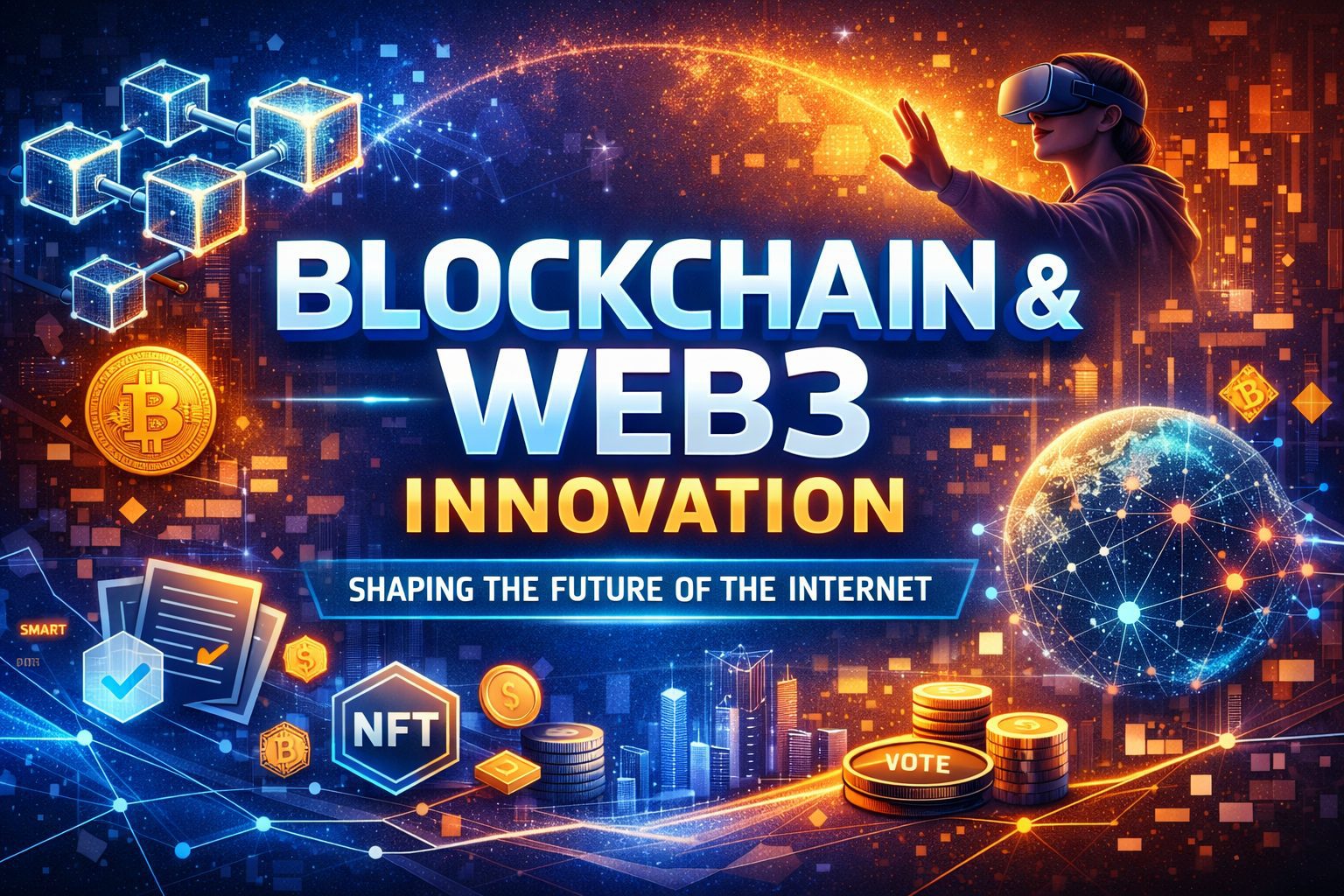
Let’s be honest—the internet is due for an upgrade. We’ve gone from static web pages to social platforms that know more about us than our closest friends. Now comes the next big leap: Blockchain and Web3 innovation. This isn’t just another tech buzzword. It’s a fundamental shift in how the internet works, who controls it, and who benefits from it.
If Web2 was about platforms, Web3 is about people.
What Is Blockchain Technology?
At its core, blockchain is a decentralized digital ledger. Instead of storing data in one central place, blockchain spreads it across a network of computers (called nodes). Every transaction is recorded, time-stamped, and locked in with cryptography.
Think of it like a shared Google Sheet that anyone can view but no one can secretly edit. Once data is added, it’s nearly impossible to change. That’s what makes blockchain trustworthy—even without a middleman.
What Is Web3 and How Is It Different from Web2?
Web3 is the internet built on blockchain technology. Unlike Web2, where big companies own your data, Web3 gives ownership back to users.
In Web3:
- You control your identity
- You own your assets
- You interact peer-to-peer
No gatekeepers. No silent data harvesting. Just value flowing directly between users.
The Evolution of the Internet
Web1 – The Read-Only Era
Web1 was simple. You visited websites, read content, and that was it. No comments, no likes, no interaction. It was like reading a newspaper online.
Web2 – The Social and Centralized Web
Then came Web2—social media, e-commerce, cloud platforms. Interaction exploded, but so did centralization. Companies started owning platforms, data, and monetization.
Free services came at a hidden cost: your data.
Web3 – The Decentralized Future
Web3 flips the script. Instead of platforms owning everything, users participate in networks they help run. Ownership is embedded in code, not promises.
Core Components of Blockchain Technology
Distributed Ledger Systems
Every participant in the blockchain network has a copy of the ledger. This removes single points of failure and increases trust.
Cryptography and Security
Hashing
Hashing turns data into a fixed-length code. Change even one letter, and the hash changes completely. This keeps data tamper-proof.
Public and Private Keys
Your public key is like your email address. Your private key is the password. Lose it, and you lose access—no “forgot password” button here.
Consensus Mechanisms
Proof of Work
Used by Bitcoin, this requires computational power to validate transactions. Secure, but energy-intensive.
Proof of Stake
Validators stake tokens instead of using heavy computation. Faster, cheaper, and more eco-friendly.
How Web3 Builds on Blockchain
Decentralized Applications (dApps)
dApps run on blockchain networks, not central servers. That means no downtime, no censorship, and no single owner.
Smart Contracts Explained
Smart contracts are self-executing programs. When conditions are met, actions happen automatically—no middleman required.
Imagine a vending machine. You put in money, select a snack, and it delivers. No cashier needed.
Tokens and Cryptocurrencies
Tokens power Web3 ecosystems. They’re used for payments, governance, rewards, and access.
Key Web3 Innovations Changing Industries
Decentralized Finance (DeFi)
DeFi removes banks from the equation. You can lend, borrow, trade, and earn interest directly on the blockchain.
Non-Fungible Tokens (NFTs)
NFTs prove digital ownership. Art, music, game assets—if it’s digital, it can be owned.
Decentralized Autonomous Organizations (DAOs)
DAOs are internet-native organizations run by code and community voting instead of CEOs.
Metaverse and Virtual Economies
Web3 fuels virtual worlds where users own land, items, and identities—turning gaming into real economies.
Real-World Use Cases of Blockchain and Web3
Finance and Banking
Faster cross-border payments. Lower fees. Full transparency.
Supply Chain Management
Track products from origin to shelf. No more fake goods or hidden delays.
Healthcare
Secure medical records with patient-controlled access.
Digital Identity
One identity. Full control. No data silos.
Gaming and Entertainment
Play-to-earn models reward players with real value.
Benefits of Blockchain and Web3 Innovation
Transparency and Trust
Everything is verifiable. No hidden rules.
User Ownership and Control
Your assets, your data, your rules.
Enhanced Security
Decentralization makes hacking far harder.
Reduced Intermediaries
Faster transactions, lower costs.
Challenges and Limitations
Scalability Issues
Blockchains are improving, but speed remains a challenge.
Energy Consumption
Older networks consume high energy, though newer ones are greener.
Regulatory Uncertainty
Governments are still catching up.
User Experience Barriers
Wallets, keys, and gas fees can feel overwhelming for beginners.
Blockchain and Web3 for Businesses
New Business Models
Token-based memberships. Community ownership. Revenue sharing.
Token Economy and Incentives
Users become stakeholders, not just customers.
Improved Data Security
Less risk, more trust.
The Role of Developers in Web3
Popular Web3 Programming Languages
Solidity, Rust, JavaScript, Python.
Web3 Development Tools and Frameworks
Ethereum, Polygon, Solana, Hardhat, Truffle.
Blockchain, Web3, and Digital Marketing
Transparent Advertising
No fake clicks. No hidden algorithms.
Creator Economy and Direct Monetization
Creators earn directly from fans—no platform cuts.
The Future of Blockchain and Web3 Innovation
Mass Adoption Trends
Simpler wallets. Better UX. Real-world integration.
Integration with AI and IoT
Smarter automation. Trustless machine interactions.
The Road to a Decentralized Internet
A web owned by users, powered by code, and governed by communities.
Conclusion
Blockchain and Web3 innovation isn’t about replacing the internet—it’s about fixing it. By removing unnecessary middlemen and restoring ownership to users, Web3 lays the foundation for a fairer, more transparent digital world. We’re still early, but one thing is clear: decentralization isn’t a trend—it’s the future.