
Introduction
Let’s be honest—legacy systems are like old buildings with shaky foundations. They still stand, but every small change feels risky and expensive. Businesses rely on them because they work, yet maintaining them feels like patching cracks in a crumbling wall.
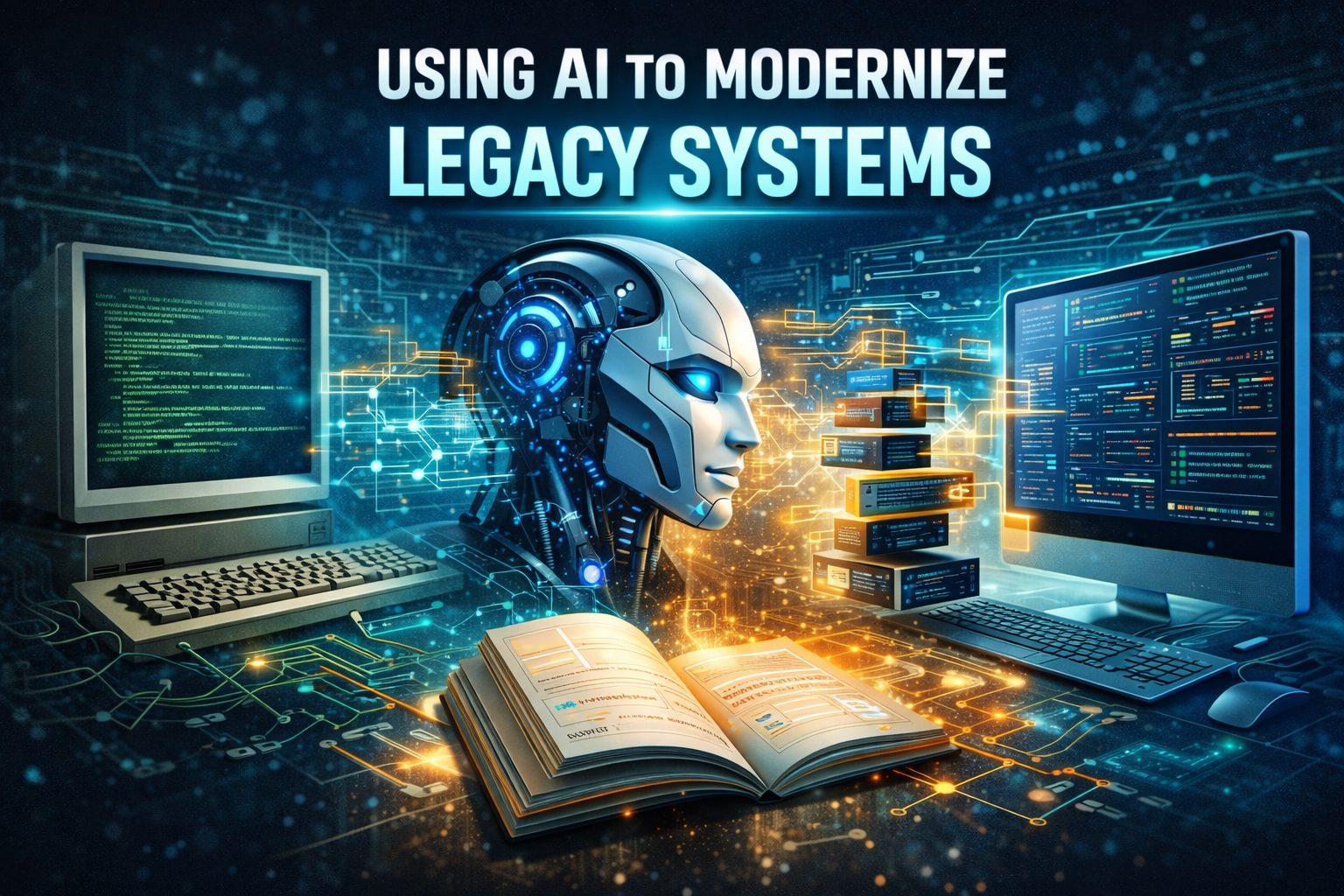
This is where AI steps in as a game-changer. Instead of ripping everything apart, AI helps modernize legacy systems intelligently—by automating refactoring and generating documentation that actually makes sense. Think of it as giving your old software a smart renovation rather than a demolition.
What Are Legacy Systems?
Defining Legacy Software
Legacy systems are older applications built on outdated technologies, languages, or architectures. They still power critical operations but struggle to keep up with modern demands.
Common Characteristics of Legacy Systems
These systems often have tightly coupled code, limited scalability, and little to no documentation. Changing one thing can unexpectedly break ten others.
Why They Still Exist
Simple reason: replacing them is risky and costly. Many businesses choose survival over innovation—until AI offers a safer path.
The Challenges of Maintaining Legacy Systems
Outdated Technologies and Languages
COBOL, Fortran, old Java frameworks—finding developers who understand them is getting harder every year.
High Maintenance Costs
Most of the IT budget goes into keeping the lights on instead of building new features.
Knowledge Gaps and Missing Documentation
When original developers leave, their knowledge leaves with them. The code becomes a mystery novel with missing chapters.
Why Traditional Modernization Approaches Fall Short
Manual Refactoring Risks
Manually refactoring millions of lines of code is slow, error-prone, and stressful.
Time-Consuming Documentation
Writing documentation by hand is often skipped or outdated within weeks.
Business Downtime Concerns
Shutting down systems for modernization isn’t an option for most organizations.
How AI Is Transforming Legacy System Modernization
AI-Powered Code Analysis
AI can scan massive codebases in hours, not months, identifying patterns, dependencies, and risks.
Pattern Recognition in Old Codebases
Machine learning models recognize repeated structures and anti-patterns humans might miss.
Automated Decision-Making
AI suggests what to refactor, what to rewrite, and what to leave untouched.
Understanding Automated Refactoring
What Is Automated Refactoring?
It’s the process of improving code structure without changing its behavior—done automatically using AI tools.
AI vs Rule-Based Refactoring
Unlike rigid rules, AI adapts to context. It learns from modern best practices and applies them intelligently.
Benefits for Large Codebases
The larger the system, the greater the payoff. AI thrives on scale.
AI Techniques Used in Automated Refactoring
Machine Learning Models
ML models learn from thousands of modern codebases to suggest optimal refactoring strategies.
Natural Language Processing (NLP)
NLP helps AI understand variable names, comments, and business logic embedded in code.
Static and Dynamic Code Analysis
AI analyzes both how code is written and how it behaves at runtime.
AI-Driven Documentation Generation
Why Documentation Matters
Good documentation reduces onboarding time and lowers dependency on tribal knowledge.
Turning Code into Human-Readable Insights
AI converts complex logic into clear explanations, diagrams, and summaries.
Keeping Docs Updated Automatically
Whenever code changes, AI updates the documentation—no more outdated guides.
Migrating Legacy Systems to Modern Architectures
Monolith to Microservices
AI identifies natural service boundaries and helps split monoliths safely.
Cloud-Native Transformations
AI assists in containerization and cloud readiness analysis.
API Enablement with AI
Legacy functions can be wrapped into modern APIs automatically.
Reducing Risk with AI-Based Modernization
Identifying Critical Dependencies
AI maps hidden dependencies that could cause failures.
Predicting Refactoring Impact
Before changes are made, AI simulates outcomes and flags risks.
Minimizing Downtime
Changes can be rolled out incrementally with minimal disruption.
Business Benefits of AI-Powered Modernization
Faster Time to Market
Modern systems mean quicker updates and feature releases.
Improved System Performance
Cleaner code runs faster and scales better.
Long-Term Cost Savings
Less maintenance, fewer bugs, and happier developers.
Real-World Use Cases of AI in Legacy Modernization
Banking and Financial Systems
AI helps modernize decades-old core banking platforms safely.
Healthcare and Government Platforms
Critical systems get upgraded without risking compliance or uptime.
Enterprise SaaS Applications
Legacy SaaS platforms gain cloud-native agility.
Challenges and Limitations of Using AI
Data Quality Issues
Poor-quality code leads to weaker AI recommendations.
Model Accuracy and Bias
AI isn’t perfect—it needs supervision.
Human Oversight Still Needed
AI assists, but humans make final decisions.
Best Practices for Implementing AI Modernization
Start Small and Scale Gradually
Pilot projects reduce risk and build confidence.
Combine AI with Human Expertise
The best results come from collaboration, not replacement.
Continuous Testing and Validation
Automation must be paired with rigorous testing.
The Future of Legacy System Modernization
Self-Healing Codebases
AI will soon fix issues automatically before users notice.
AI-Native Development Environments
Modern tools will embed AI at every development stage.
Continuous Modernization
No more “big rewrites”—just constant evolution.
Conclusion
Legacy systems don’t have to be a burden anymore. With AI-driven automated refactoring and documentation, businesses can modernize safely, efficiently, and intelligently. Instead of fearing change, organizations can finally embrace it—with AI as their trusted guide.