
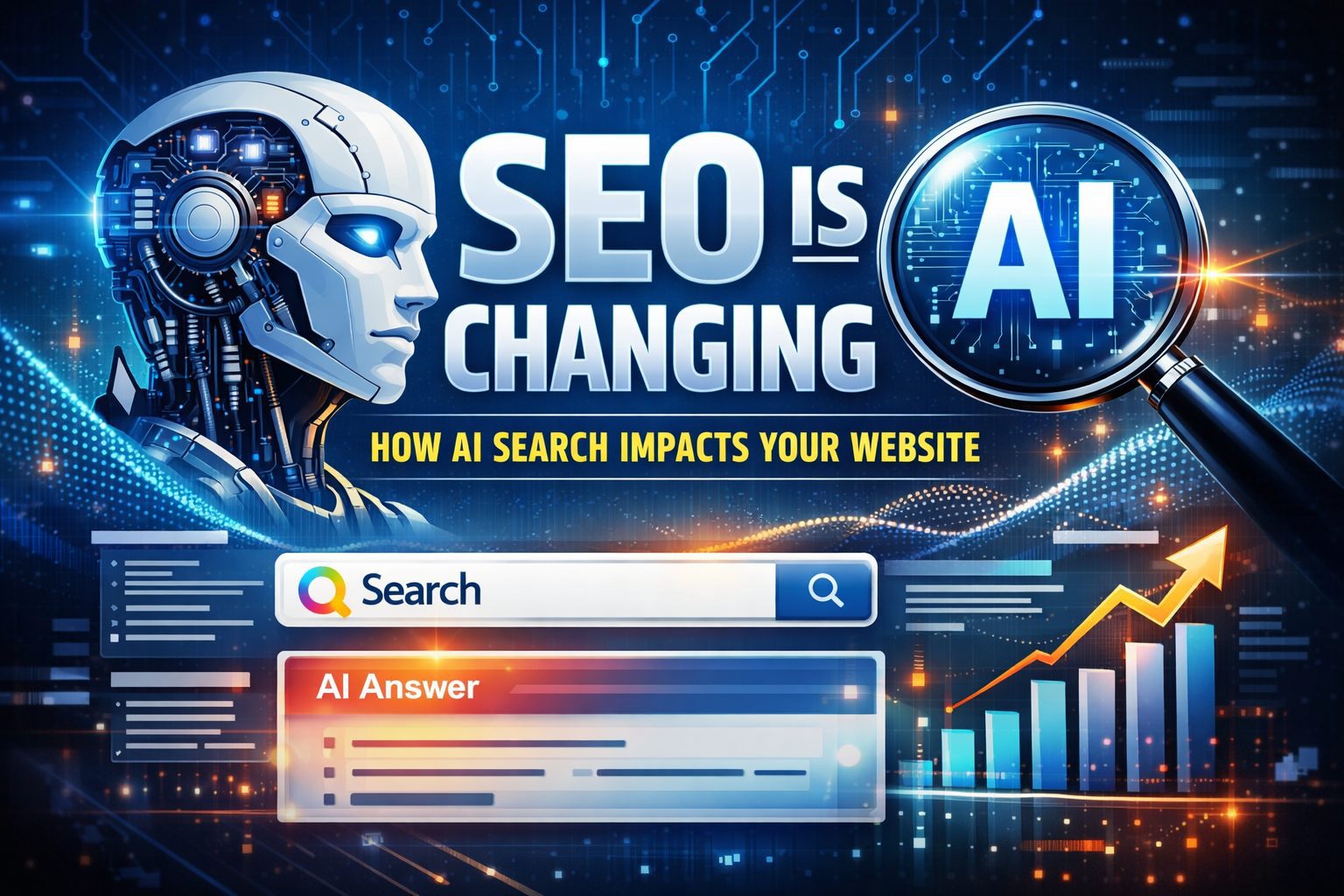
SEO isn’t dead—but it’s definitely not the same game anymore.
With AI-powered search engines like Google’s Search Generative Experience (SGE), Bing AI, and ChatGPT-style answers taking center stage, the way people discover websites is evolving fast. If your SEO strategy hasn’t changed yet, your traffic might be next.
Let’s break down what’s changing, why it matters, and how to stay ahead.
What Is AI Search and Why It Matters
AI search uses machine learning and large language models to understand user intent and deliver direct, summarized answers—often without users clicking a website.
Key Difference Between Traditional Search and AI Search
- Traditional SEO: Rank links → user clicks → reads content
- AI Search: AI summarizes answers → fewer clicks → higher competition for visibility
This shift is changing how websites earn traffic, authority, and trust.
How AI Search Is Changing SEO
1. Fewer Clicks, More Zero-Click Searches
AI-generated answers often appear above organic results, meaning:
- Users get answers instantly
- Fewer clicks go to standard blog posts
- Only the best, most trusted content wins
SEO takeaway: Ranking isn’t enough anymore—you must be referenced.
2. Content Quality Beats Keyword Stuffing
AI doesn’t reward keyword spam. It rewards:
- Clear explanations
- Real expertise
- Helpful structure
Thin, generic content is getting filtered out fast.
SEO takeaway: Write for humans first—AI follows.
3. Search Intent Is More Important Than Ever
AI understands why someone searches, not just what they type.
Example:
- Old SEO: “best SEO tools” → listicle
- AI SEO: compares tools, use cases, pricing, and recommendations
SEO takeaway: Match intent, not just keywords.
How AI Evaluates Your Website
AI search engines look for trust and authority signals across your site.
Key Factors AI Search Uses
- Topical depth (not surface-level content)
- Consistent publishing in one niche
- Author expertise (E-E-A-T)
- Clear structure (headings, lists, FAQs)
- Fresh, updated content
If your site lacks credibility, AI won’t surface it.
How to Optimize Your Website for AI Search
1. Create Topic Clusters (Not Random Posts)
Instead of isolated blogs:
- Build pillar pages
- Support them with related subtopics
- Interlink everything logically
This tells AI: “This site owns this topic.”
2. Write Answer-Focused Content
AI loves content that:
- Answers questions directly
- Uses short, clear paragraphs
- Includes bullet points and summaries
Pro tip: Add a quick answer after every heading.
3. Optimize for Featured Snippets
AI pulls from snippet-style content.
Use:
- Definitions
- Step-by-step lists
- Pros & cons
- Comparisons
If Google trusts your snippet, AI will too.
4. Strengthen E-E-A-T Signals
Google and AI value:
- Real authors
- About pages
- Case studies
- Original insights
Generic content won’t survive AI search.
5. Update Old Content Regularly
Freshness matters more now.
- Refresh stats
- Improve structure
- Add new sections
Updated content = higher AI visibility.
Will SEO Still Matter in the Age of AI?
Yes—but only smart SEO will survive.
SEO is shifting from:
- Traffic chasing → Authority building
- Keywords → Context
- Quantity → Quality
Websites that adapt will win bigger than ever.
Final Thoughts: Adapt or Disappear
AI search isn’t a threat—it’s a filter.
If your website is:
- Helpful
- Trustworthy
- Well-structured
- Deeply informative
AI will amplify your reach, not kill it.
The future of SEO belongs to brands that educate, not just rank.