
Introduction to AI and Data Privacy
Artificial Intelligence is everywhere. It recommends what you watch, predicts what you buy, and even helps write what you read. But here’s the big question: what fuels all this intelligence? Data. Tons of it.
Why Data Is the Fuel of AI
Think of AI like a car engine. Data is the fuel. Without it, nothing moves. The more data an AI system consumes, the better it becomes at spotting patterns, predicting outcomes, and generating responses.
But not all fuel is clean. Sometimes, mixed in with harmless data, there’s sensitive information. And that’s where the trouble begins.
The Growing Concern Around Privacy
Data privacy isn’t just a technical issue anymore. It’s personal. People are starting to ask: Where is my data going? Who is using it? Is it safe?
And honestly, those are fair questions.
Understanding Sensitive Data
Before we go deeper, let’s clarify something important.
What Counts as Sensitive Information?
Sensitive data includes:
- Personal identification numbers
- Medical records
- Financial details
- Private conversations
- Biometric information
In short, anything you wouldn’t want strangers reading over your shoulder.
Personal vs. Confidential Business Data
It’s not just about individuals. Businesses also store trade secrets, internal strategies, and customer databases. If AI systems train on this data without proper safeguards, the risks multiply.
How AI Models Are Trained
Data Collection at Scale
AI systems learn by analyzing massive datasets. These datasets often come from websites, documents, social media, and user interactions.
Now imagine scraping billions of web pages. Can we guarantee none of them contain sensitive information? Not always.
Machine Learning and Pattern Recognition
AI doesn’t “think” like humans. It identifies patterns. If certain words often appear together, it learns that connection.
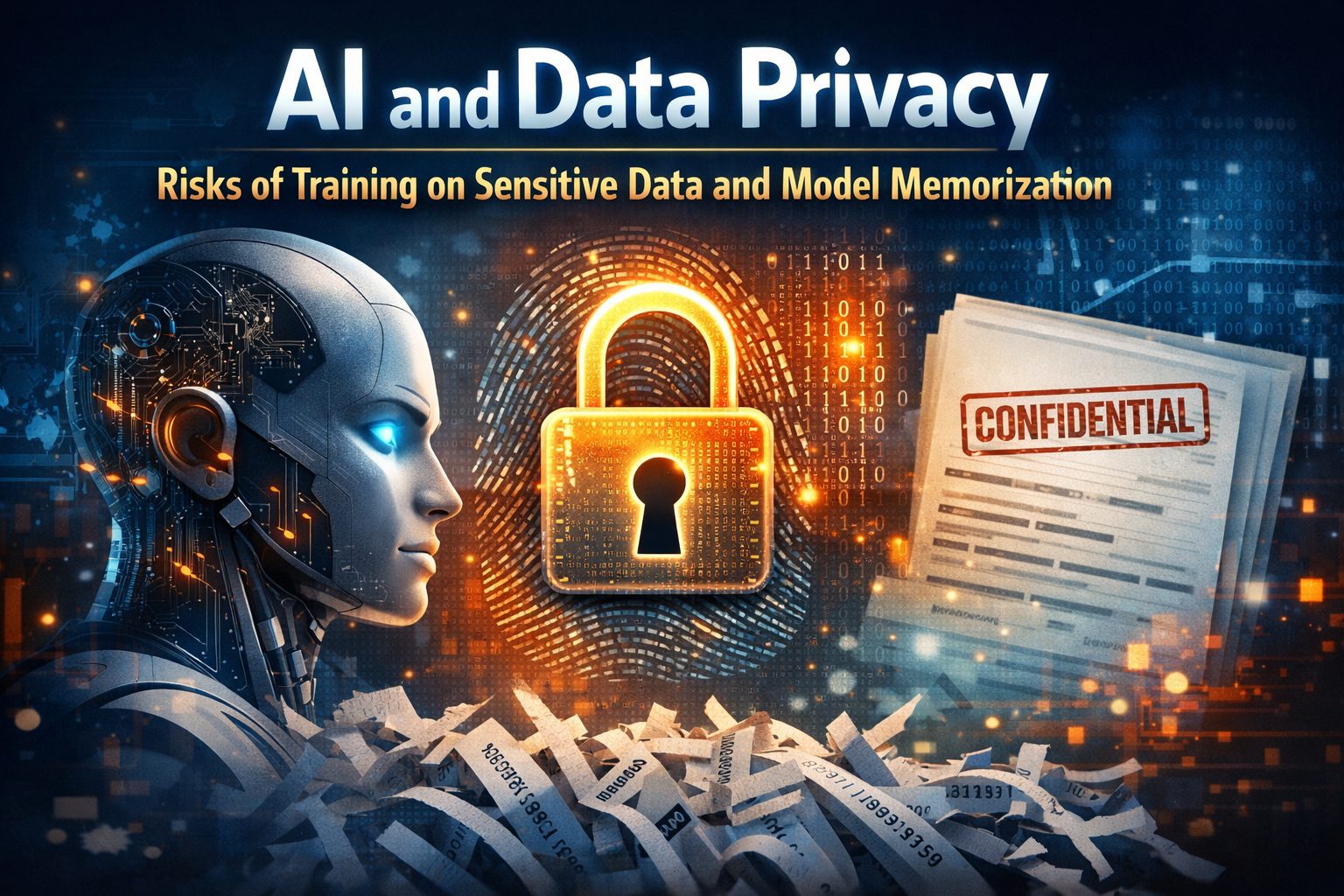
But here’s the catch: sometimes it doesn’t just learn patterns—it memorizes specific data.
The Role of Large Language Models
Large language models are trained on enormous text collections. They’re incredibly powerful. Yet, because of their scale, they can sometimes retain pieces of exact data instead of just patterns.
That’s where model memorization enters the picture.
The Risk of Training on Sensitive Data
Accidental Data Inclusion
Sensitive data can slip into training datasets accidentally. For example:
- A leaked database posted online
- Personal emails shared publicly
- Documents indexed by search engines
If scraped, this information might become part of training data.
Scraped Data from Public Sources
Just because something is public doesn’t mean it’s safe to reuse. A forum post might include someone’s phone number. A resume uploaded online might contain private contact details.
Hidden Risks in Publicly Available Data
Public doesn’t equal permission. That’s the gray area many AI developers are now facing.
What Is Model Memorization?
Pattern Learning vs. Data Memorization
Ideally, AI learns general patterns. For example, it understands how phone numbers look. But sometimes, it memorizes an actual phone number from its training data.
That’s like a student memorizing a single answer instead of understanding the concept.
Real-World Examples of Memorization
In some cases, researchers have shown that models can reproduce rare sequences of data when prompted cleverly. That means specific details from the training data might be extractable.
Scary? A little.
Data Leakage and Privacy Breaches
Prompt-Based Data Extraction
Attackers can craft specific prompts to trick AI systems into revealing memorized information. It’s like gently nudging someone until they accidentally spill a secret.
Membership Inference Attacks
This type of attack tries to determine whether a specific person’s data was used to train a model. Even confirming that fact can be a privacy violation.
Model Inversion Attacks
Here, attackers attempt to reconstruct sensitive data by analyzing the model’s outputs. Think of it like solving a puzzle backward.
Legal and Ethical Implications
Regulatory Frameworks
Privacy laws are tightening worldwide. Regulations demand transparency, consent, and proper data handling. Failing to comply can result in heavy fines.
Organizational Responsibility
Companies can’t just say, “The AI did it.” Responsibility lies with developers and organizations deploying these systems.
Ethics isn’t optional anymore.
The Impact on Businesses
Reputational Damage
Trust is fragile. One data leak can destroy years of brand credibility.
Financial and Legal Consequences
Fines, lawsuits, and compensation claims can cost millions. Prevention is cheaper than damage control.
The Human Side of Privacy Risks
Loss of Trust
When users feel exposed, they withdraw. They stop sharing. They disengage.
Emotional and Social Impact
Privacy breaches can lead to embarrassment, discrimination, or even identity theft. It’s not just data—it’s someone’s life.
Strategies to Prevent Sensitive Data Exposure
Data Minimization
Collect only what you truly need. Less data means less risk.
Anonymization and Pseudonymization
Removing identifiers helps reduce exposure. But it must be done carefully to avoid re-identification.
Differential Privacy Techniques
This approach adds statistical noise to data, making it harder to trace information back to individuals while keeping patterns intact.
Secure AI Development Practices
Privacy-by-Design
Privacy shouldn’t be an afterthought. It must be built into the system from day one.
Access Control and Encryption
Restrict who can see training data. Encrypt sensitive information. Basic? Yes. Essential? Absolutely.
Auditing and Monitoring AI Systems
Red Team Testing
Security experts actively try to break the system to identify weaknesses before attackers do.
Continuous Monitoring
AI systems aren’t “set and forget.” They require ongoing evaluation and updates.
The Role of Transparency
Clear Data Policies
Users deserve to know how their data is used.
User Consent and Awareness
Consent should be informed, not hidden behind confusing legal language.
Balancing Innovation and Privacy
Responsible AI Development
Innovation doesn’t have to come at the cost of privacy. Smart design can achieve both.
The Future of Privacy-First AI
The future belongs to AI systems that are powerful and trustworthy. Privacy will become a competitive advantage, not a limitation.
Conclusion
AI is powerful. It’s reshaping industries and redefining what machines can do. But with great power comes serious responsibility.
Training on sensitive data without strict safeguards is like building a skyscraper on shaky ground. It might stand for a while, but cracks will appear.
Model memorization, data leakage, and privacy breaches are not theoretical risks—they’re real challenges. The solution isn’t to stop innovation. It’s to build smarter, safer systems.
Because at the end of the day, AI should serve people—not expose them.