
Introduction to AI in Modern Sales
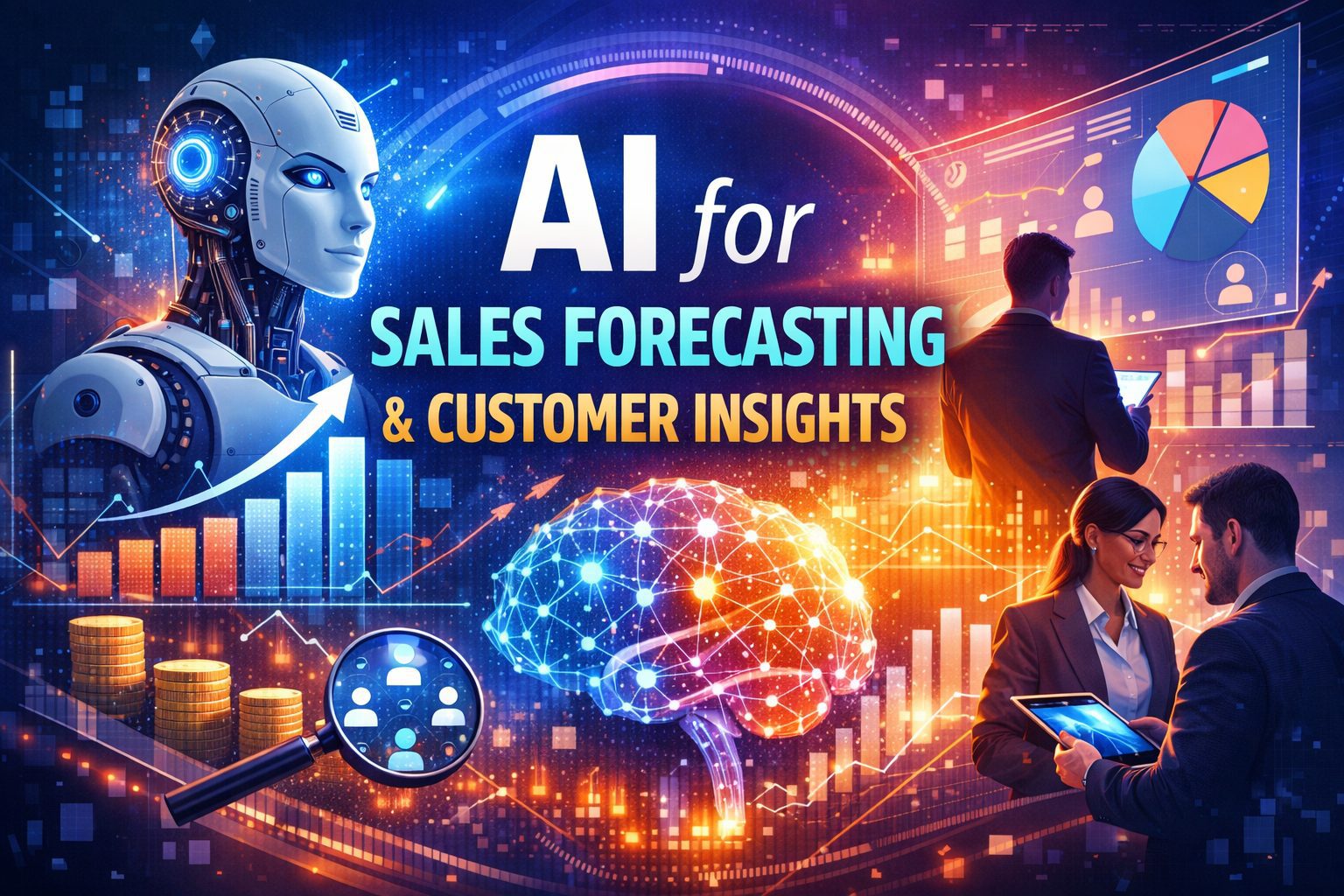
Sales today isn’t just about gut feelings and last year’s numbers. It’s more like playing chess with data. And AI? That’s your grandmaster. Businesses are increasingly turning to AI for sales forecasting and customer insights to stay competitive, reduce uncertainty, and make smarter decisions faster.
Why Traditional Sales Forecasting Falls Short
Traditional sales forecasting relies heavily on historical data, spreadsheets, and human assumptions. While experience matters, it often brings bias, errors, and slow updates. Market shifts, customer behavior changes, and unexpected trends can easily throw off manual forecasts.
The Rise of Data-Driven Decision Making
AI changes the game by analyzing massive datasets in real time. Instead of guessing, sales teams now rely on predictive insights backed by data. Think of it as switching from a paper map to GPS—faster, smarter, and more accurate.
What Is AI Sales Forecasting?
Definition and Core Concepts
AI sales forecasting uses machine learning and predictive analytics to estimate future sales outcomes. It analyzes patterns in historical data, customer behavior, seasonality, and external factors to predict revenue and demand.
How AI Differs from Manual Forecasting
Manual forecasting is reactive. AI forecasting is proactive. AI learns continuously, adapts to new data, and improves accuracy over time—something static spreadsheets simply can’t do.
Rule-Based Models vs Machine Learning Models
Rule-based models follow fixed logic. Machine learning models, on the other hand, learn from data. They adjust predictions automatically as conditions change, making them far more powerful.
Understanding Customer Insights Through AI
What Are Customer Insights?
Customer insights are deep understandings of customer behavior, preferences, needs, and motivations. They answer questions like: Why do customers buy? When do they leave? What do they want next?
How AI Extracts Insights from Data
AI scans thousands of data points—from clicks and purchases to reviews and chats—and turns them into actionable insights. It’s like having a superpower that sees patterns invisible to the human eye.
Structured vs Unstructured Customer Data
Structured data includes CRM records and transactions. Unstructured data includes emails, reviews, and social posts. AI excels at analyzing both, especially unstructured data that humans struggle with.
Key Technologies Powering AI Sales Forecasting
Machine Learning Algorithms
Machine learning models identify trends, correlations, and anomalies in sales data. Over time, they refine predictions without manual intervention.
Predictive Analytics
Predictive analytics forecasts future outcomes based on historical and real-time data. It helps sales teams anticipate demand, revenue, and customer actions.
Natural Language Processing (NLP)
NLP allows AI to understand human language. It’s used to analyze customer feedback, emails, and conversations.
Sentiment Analysis in Sales
Sentiment analysis detects emotions in customer interactions. Happy, frustrated, or confused—AI reads between the lines and informs sales strategies.
Benefits of AI for Sales Forecasting
Improved Accuracy and Precision
AI reduces guesswork. Forecasts become more reliable, helping businesses plan confidently.
Faster Forecasting Cycles
What once took weeks now takes minutes. AI processes data instantly, enabling real-time forecasting.
Reduced Human Bias
AI relies on data, not emotions or assumptions. This leads to more objective predictions.
Better Inventory and Resource Planning
Accurate forecasts prevent overstocking or shortages, saving costs and improving efficiency.
Benefits of AI-Driven Customer Insights
Personalization at Scale
AI enables personalized offers, messages, and recommendations for thousands of customers simultaneously.
Better Customer Segmentation
AI groups customers based on behavior, value, and preferences, not just demographics.
Improved Customer Retention
By predicting churn, businesses can act before customers leave.
Predicting Customer Lifetime Value
AI estimates how much revenue a customer will generate over time, helping prioritize high-value customers.
AI Use Cases in Sales Forecasting
Demand Forecasting
AI predicts future product demand, helping businesses prepare ahead of time.
Revenue Prediction
Sales leaders can forecast revenue with higher confidence and accuracy.
Sales Pipeline Optimization
AI identifies bottlenecks and suggests actions to close deals faster.
Deal Win Probability Scoring
AI assigns probability scores to deals, helping sales teams focus on high-potential opportunities.
AI Use Cases in Customer Insights
Customer Behavior Prediction
AI predicts what customers are likely to do next—buy, upgrade, or leave.
Churn Prediction
AI flags customers at risk of leaving, enabling timely intervention.
Cross-Selling and Upselling
AI recommends relevant products based on customer behavior.
Purchase Intent Analysis
AI detects buying signals, helping sales teams strike at the right moment.
Data Sources Used for AI Sales Intelligence
CRM and ERP Systems
These systems provide structured data like sales history and customer profiles.
Website and App Analytics
User behavior data reveals interests and intent.
Social Media and Reviews
AI analyzes public sentiment and brand perception.
Customer Support Interactions
Support tickets and chats offer valuable insight into customer pain points.
Implementing AI in Sales Forecasting
Data Collection and Preparation
Clean, accurate data is the foundation of effective AI.
Choosing the Right AI Tools
Select tools that align with business goals and integrate easily.
Training and Testing Models
AI models must be trained, tested, and refined for accuracy.
Continuous Model Optimization
AI improves over time, but only with continuous monitoring.
Challenges of AI in Sales Forecasting
Data Quality Issues
Poor data leads to poor predictions.
High Implementation Costs
Initial setup can be expensive for small businesses.
Resistance from Sales Teams
Change can be uncomfortable. Training is essential.
Ethical and Privacy Concerns
Data privacy and compliance must be prioritized.
Best Practices for Using AI in Sales
Aligning AI with Business Goals
AI should solve real problems, not just look impressive.
Combining Human Expertise with AI
AI supports decision-making, it doesn’t replace humans.
Ensuring Data Security
Protect customer data with strong security measures.
Measuring AI Performance Metrics
Track accuracy, ROI, and impact regularly.
AI Tools for Sales Forecasting and Customer Insights
CRM-Based AI Tools
CRMs like Salesforce and HubSpot offer built-in AI features.
Standalone AI Analytics Platforms
These provide advanced forecasting and insights.
Cloud-Based AI Solutions
Cloud platforms offer scalability and flexibility.
Future of AI in Sales Forecasting
Real-Time Predictive Sales
Forecasts will update instantly as data changes.
Autonomous Sales Intelligence
AI will recommend actions, not just insights.
AI-Powered Decision Automation
Sales decisions will become faster and smarter.
Conclusion
AI for sales forecasting and customer insights is no longer optional—it’s essential. Businesses that embrace AI gain clarity, speed, and a competitive edge. By combining data, technology, and human expertise, AI turns uncertainty into opportunity and insights into growth.