
Introduction to DevSecOps
Startups move fast. Really fast. But here’s the thing—speed without security is like driving a race car without brakes. Exciting? Yes. Safe? Not at all.
That’s where DevSecOps comes in.
What is DevSecOps?
DevSecOps stands for Development, Security, and Operations. It’s the practice of embedding security directly into the DevOps lifecycle instead of treating it as a final checkpoint.
Think of it like building a house. Instead of checking for cracks after construction, you strengthen the foundation from day one.
Why Startups Can’t Ignore Security
Many founders think, “We’re too small to be targeted.” That’s a myth.
Hackers love startups. Why? Because security is usually weak, processes are immature, and speed is prioritized over protection.
One breach can:
- Kill customer trust
- Scare away investors
- Lead to heavy compliance penalties
And for a startup, that can mean game over.
DevSecOps vs Traditional Security Models
Traditional security works like airport security—everything stops until checks are done.
DevSecOps works like built-in car safety systems—continuous, automatic, and integrated.
The difference? Flow. DevSecOps doesn’t slow you down. It protects you while you move.
Why Startups Need a DevSecOps Roadmap
You can’t just “add security.” You need a plan.
Speed vs Security Dilemma
Startups live by rapid releases. But pushing insecure code is like launching a rocket with loose bolts. It might fly. Or it might explode.
DevSecOps removes this tradeoff.
Cost of Ignoring Security Early
Fixing a vulnerability in production costs significantly more than fixing it during development.
Security debt is like technical debt—it compounds.
Building Investor Confidence
Investors now ask about:
- Security posture
- Compliance readiness
- Risk management
A clear DevSecOps roadmap shows maturity. It tells investors you’re building something sustainable.
Step 1 – Assess Your Current Development Process
Before building anything new, understand where you stand.
Evaluate Existing DevOps Practices
- Do you use CI/CD?
- Are code reviews mandatory?
- Is deployment automated?
If your DevOps foundation is weak, start there.
Identify Security Gaps
Look for:
- Hardcoded secrets
- No dependency scanning
- Open cloud permissions
Common Security Blind Spots in Startups
- Using outdated libraries
- No vulnerability scanning
- Shared admin credentials
Small cracks become massive breaches.
Step 2 – Define Security Goals and Compliance Needs
Security without direction is chaos.
Aligning Security with Business Goals
If you handle payments, focus on transaction security.
If you store user data, prioritize data protection.
Tie security to revenue and reputation.
Understanding Regulatory Requirements
Depending on your market, compliance may be mandatory.
GDPR, SOC 2, and Other Standards
- GDPR for European users
- SOC 2 for SaaS credibility
- HIPAA for healthcare
Compliance shouldn’t be an afterthought. Bake it in early.
Step 3 – Build a Security-First Culture
Tools don’t create security. People do.
Leadership Buy-In
If founders don’t prioritize security, no one else will.
Security must be a board-level conversation.
Developer Security Training
Train developers in:
- Secure coding practices
- OWASP Top 10 risks
- Threat modeling
Knowledge reduces vulnerabilities.
Making Security Everyone’s Responsibility
DevSecOps is not just the security team’s job.
It’s shared ownership.
Step 4 – Integrate Security into CI/CD Pipeline
Automation is your best friend.
Secure Code Reviews
Every pull request should check for:
- Code quality
- Security risks
- Policy violations
Static and Dynamic Application Security Testing (SAST & DAST)
SAST scans source code.
DAST tests running applications.
Use both. They complement each other.
Automating Security Checks
Automated scans ensure:
- No human forgetfulness
- Faster detection
- Continuous feedback
Security becomes part of the workflow—not a blocker.
Step 5 – Implement Infrastructure Security
Your cloud is your backbone. Protect it.
Secure Cloud Configuration
Misconfigured storage buckets are a hacker’s favorite entry point.
Follow least-privilege access principles.
Infrastructure as Code (IaC) Security
Scan Terraform or CloudFormation templates before deployment.
Shift security left—even for infrastructure.
Secrets Management
Never store API keys in code. Use secure vaults.
Secrets are like house keys. Don’t leave them under the mat.
Step 6 – Continuous Monitoring and Incident Response
Prevention is great. Detection is critical.
Real-Time Threat Detection
Use monitoring tools to detect anomalies.
If login attempts spike at 3 AM, you should know.
Log Management and Monitoring
Logs tell stories. Monitor them consistently.
Centralize logs for better visibility.
Creating an Incident Response Plan
When a breach happens (and someday, something will), panic is not a strategy.
Have:
- Defined roles
- Communication plans
- Recovery procedures
Prepared teams recover faster.
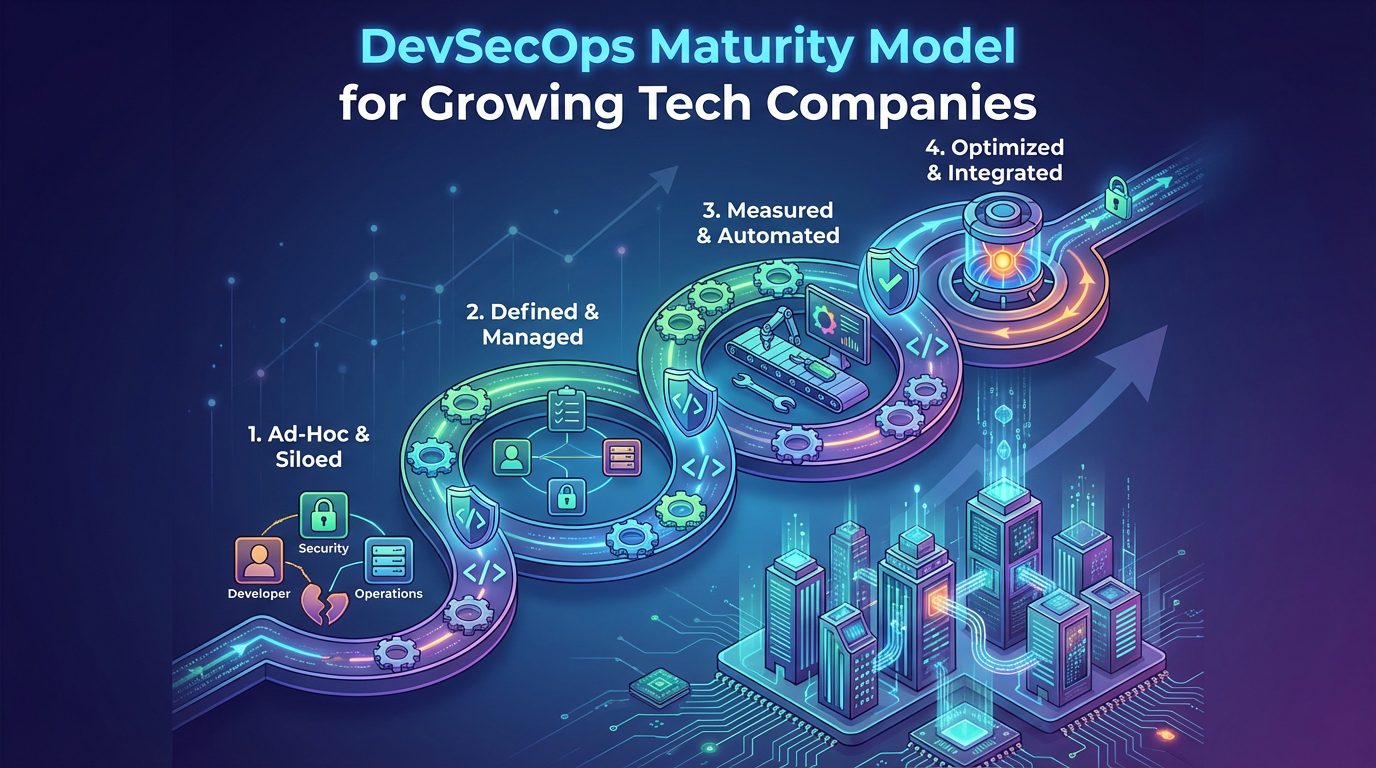
Step 7 – Measure, Improve, Repeat
DevSecOps isn’t a one-time project. It’s a loop.
Security KPIs for Startups
Track:
- Mean time to detect (MTTD)
- Mean time to respond (MTTR)
- Vulnerability resolution time
What gets measured gets improved.
Conducting Regular Security Audits
Run internal audits. Consider third-party audits as you scale.
Continuous Improvement Strategy
Review incidents. Improve policies. Update tools.
Security evolves. So should you.
Common Mistakes Startups Make in DevSecOps
Overcomplicating the Process
Start simple. Don’t adopt enterprise-level complexity on day one.
Tool Overload
More tools ≠ better security.
Choose tools that integrate well with your stack.
Ignoring Culture
If developers see security as a burden, adoption fails.
Make it collaborative.
Recommended DevSecOps Tools for Startups
- GitHub Advanced Security
- Snyk
- OWASP ZAP
- Terraform security scanners
- Vault for secrets management
Choose tools based on your budget and stack.
Final Thoughts on Scaling DevSecOps
As your startup grows, security must grow with it.
DevSecOps isn’t about paranoia. It’s about resilience.
It allows you to move fast—without breaking trust.
Conclusion
Startups thrive on speed. But speed without security is fragile.
A structured DevSecOps implementation roadmap ensures you build strong foundations while scaling quickly. From assessing your current setup to embedding automated security checks and fostering a culture of shared responsibility, every step matters.
Security isn’t a roadblock. It’s your competitive advantage.