
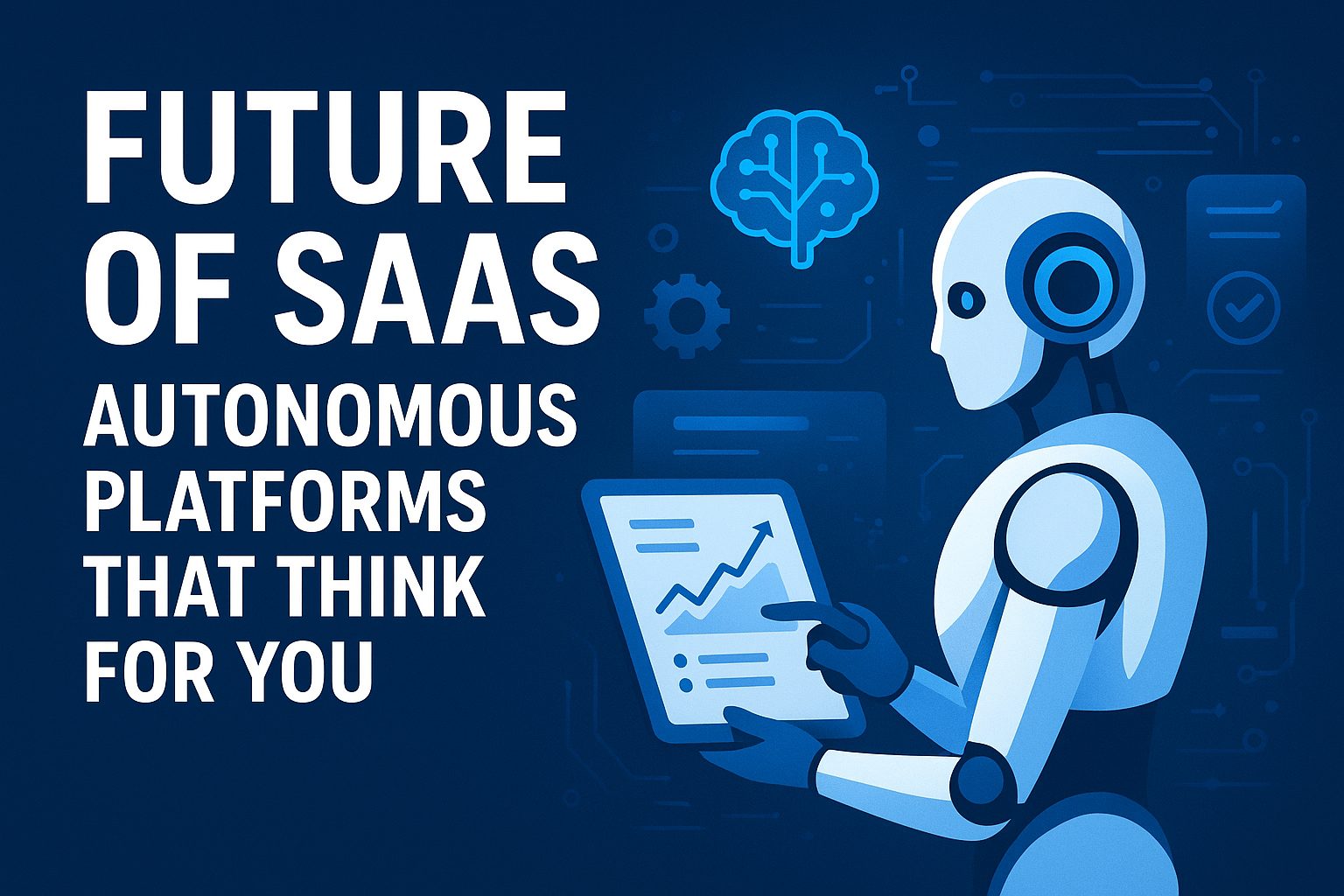
Introduction to the Next Era of SaaS
Imagine logging into your software — and everything is already done. Campaigns are optimized, reports are prepared, customers are helped, and problems are fixed before you even see them. That’s the future of SaaS.
We are stepping into an age where software won’t just store information — it will act on it intelligently. SaaS is becoming autonomous.
What Makes SaaS Autonomous?
From Manual Workflows to Self-Operating Systems
Traditional SaaS tools still depend heavily on human input. You must set rules, create tasks, and manage data manually. Autonomous SaaS flips that script. It handles:
- Execution
- Analysis
- Improvement
…without waiting for someone to click a button.
AI Agents and Continuous Optimization
Autonomous SaaS uses intelligent agents that monitor performance and continuously improve results using data feedback loops.
Think of it like a co-worker that never sleeps and keeps upgrading itself.
Key Technologies Powering Autonomous SaaS
Machine Learning and Predictive Analytics
Platforms can now:
- Predict user behavior
- Forecast demand
- Suggest business action
…not just show numbers in dashboards.
Large Language Models (LLMs) and Intelligent Interfaces
LLMs (like GPT models) allow software to understand natural language and take action. You can talk to SaaS like to your team:
“Create a Q4 revenue forecast and send to the CEO.”
Boom — done.
Automation Through API-First Ecosystems
Autonomous SaaS tools connect to everything. They pull data, execute processes, and deliver results across the business stack automatically.
How Autonomous SaaS Transforms Work
Eliminating Routine Tasks
No more manually updating spreadsheets or assigning tasks — software handles it.
Decision-Making Without Human Input
Autonomous systems detect issues and solve them instantly e.g., blocking suspicious accounts or adjusting pricing for demand.
From Tools to Digital Team Members
SaaS will take over roles like:
- Analyst
- Scheduler
- Security guard
- Sales assistant
We won’t just use software — we’ll work with software.
Benefits of Autonomous SaaS Platforms
Faster ROI and Reduced Operational Cost
Automation cuts labor hours, speeds execution, and boosts efficiency.
Hyper-Personalized Business Outcomes
Every customer journey is tailored in real-time, creating Netflix-style personalization across industries.
Improved Accuracy and Risk Management
AI catches mistakes humans miss — financial anomalies, cyber threats, and compliance issues.
Top Industries That Will Benefit
Marketing and Sales
Predictive lead scoring, auto-generated campaigns, fully managed customer funnels.
Cybersecurity
Threat detection and mitigation in milliseconds — before breaches happen.
Finance and Accounting
Automated auditing, budgeting, forecasting, and anomaly reporting.
Healthcare and Retail
AI-powered diagnosis support, inventory automation, and customer behavior insights.
Real-World Examples
Autonomous Customer Support Systems
AI agents respond, escalate, and resolve issues without human involvement.
Automated Financial Planning Tools
They analyze spending, build budgets, invest, and optimize portfolios independently.
Self-Learning Cybersecurity Platforms
Systems monitor networks, detect threats, and lock vulnerabilities instantly.
Challenges and Ethical Considerations
Privacy and Data Ownership
Who controls decisions made by software? Companies must prioritize transparency.
Job Shifts Instead of Job Loss
Instead of replacing jobs entirely, roles evolve toward:
- Creativity
- Strategy
- Human interaction
Ensuring Responsible AI Automation
We must avoid bias and ensure fair decision-making as AI becomes more independent.
The Future: Autonomous SaaS Agents Running Businesses
Zero-Click Business Operations
SaaS handles everything automatically — even the decision to trigger new processes.
Fully Automated Customer Journeys
From the first click to post-purchase experience, AI guides users seamlessly through the funnel.
We are heading toward a world where a startup with smart software could outperform a big enterprise with outdated systems.
Conclusion
The future of SaaS is not about adding more features. It’s about removing friction — eliminating clicks, reducing workload, and letting AI handle the complexity behind the scenes. Autonomous SaaS platforms will fundamentally change how companies run, making machines the new operational workforce.
Businesses that adopt early will lead. Those who resist? They might not stay in the race.