
Understanding the Startup Scaling Challenge
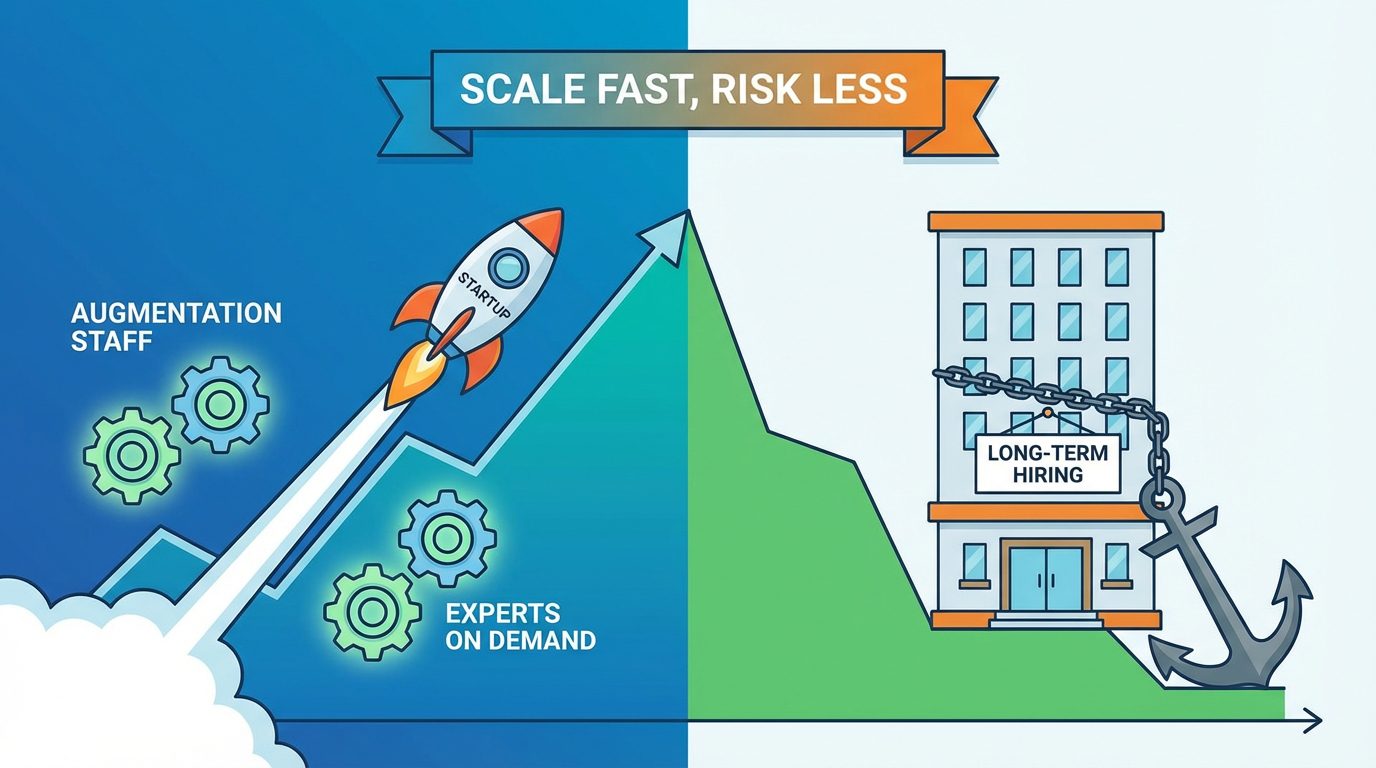
Why Traditional Hiring Slows Startups Down
Startups operate in a fast-moving environment where timing can determine success or failure. When you rely on traditional hiring processes, you are essentially slowing down your own momentum. The process of finding, interviewing, and onboarding employees takes time, and that delay can cost you opportunities in a competitive market.
Think about how long it typically takes to fill a role. You create job postings, screen dozens of candidates, conduct interviews, and negotiate offers. Even after hiring, new employees need time to adjust before they become fully productive. For startups, this lag can disrupt product timelines and delay launches.
It is similar to trying to build a high-speed train while it is already moving. You need immediate results, but traditional hiring forces you into a slow and rigid process. This mismatch between speed and structure creates friction, making it harder for startups to scale efficiently.
The Hidden Risks of Full-Time Hiring
Hiring full-time employees is not just time-consuming; it is also a financial and strategic risk. Every hire comes with long-term commitments, including salaries, benefits, and operational costs. For startups with limited budgets, these fixed expenses can quickly become overwhelming.
There is also the risk of hiring the wrong person. Even with careful selection, not every candidate will meet expectations. A poor hire can impact team performance, delay projects, and require additional time and resources to fix.
Another major concern is uncertainty. Startups often pivot their strategies based on market feedback or funding changes. However, full-time employees represent fixed commitments that do not easily adapt to these changes. This lack of flexibility can put unnecessary pressure on a growing business.
What is Staff Augmentation?
Definition and Core Concept
Staff augmentation is a flexible hiring approach that allows startups to bring in external professionals on a temporary or project basis. Instead of committing to permanent hires, you add skilled experts to your team only when needed.
These professionals work alongside your internal team, contributing to projects just like regular employees. They follow your processes, participate in meetings, and help achieve your goals. The key difference is that their involvement is temporary and adaptable.
Imagine needing a cybersecurity expert for a specific project. Hiring someone full-time might not make sense if the requirement is short-term. With staff augmentation, you can bring in that expert for the duration of the project and then scale back once the work is complete.
How It Differs from Outsourcing
Staff augmentation is often compared to outsourcing, but they serve different purposes. Outsourcing involves handing over entire projects to external teams who manage everything independently. This can reduce control and visibility over the work.
In contrast, staff augmentation keeps you in control. The external professionals integrate into your team and work under your direction. You manage the workflow, assign tasks, and ensure quality.
Think of outsourcing as handing over the steering wheel, while staff augmentation is like adding more drivers to help you reach your destination faster. For startups that value control and flexibility, staff augmentation offers a more balanced approach.
Why Staff Augmentation is Booming in 2025
Talent Shortages in Tech
The demand for skilled professionals continues to grow, especially in areas like software development, artificial intelligence, and cloud computing. However, finding the right talent quickly has become increasingly difficult.
This shortage makes traditional hiring even more challenging for startups. Competing with larger companies for top talent can be tough, especially when resources are limited. Staff augmentation solves this problem by providing access to a wider talent pool.
Instead of searching locally, startups can tap into global expertise. This increases the chances of finding the right skills quickly and efficiently.
Rise of Remote Work and Global Talent
Remote work has transformed how businesses operate. Teams are no longer limited by geography, and companies can collaborate with professionals from different parts of the world.
Staff augmentation takes full advantage of this shift. Startups can build distributed teams without the need for physical offices or relocation costs. This approach not only reduces expenses but also opens the door to diverse perspectives and ideas.
By leveraging global talent, startups can stay competitive and innovate faster.
Key Benefits of Staff Augmentation for Startups
Flexibility and Scalability
One of the biggest advantages of staff augmentation is its flexibility. Startups often experience fluctuations in workload, and having a fixed team size can be limiting.
With staff augmentation, you can scale your team up or down based on your current needs. If you are launching a new feature, you can bring in additional developers. Once the project is complete, you can reduce the team size without complications.
This adaptability ensures that you are always operating efficiently without overcommitting resources.
Cost Efficiency
Managing costs is crucial for startups. Traditional hiring involves multiple expenses, including recruitment, salaries, benefits, and infrastructure. Staff augmentation reduces these costs by offering a more flexible model.
You only pay for the work that is done, which makes budgeting easier and more predictable. This allows startups to allocate resources more effectively and focus on growth.
Faster Time-to-Market
Speed is essential in the startup world. The quicker you can launch your product, the sooner you can gather feedback and improve it.
Staff augmentation accelerates this process by providing immediate access to skilled professionals. There is no need to wait for lengthy hiring cycles. You can bring in experts who are ready to contribute from day one.
Access to Specialized Skills
Startups often require niche expertise that may not be needed on a full-time basis. Hiring permanent employees for short-term needs is not practical.
Staff augmentation allows you to access specialized skills when required. Whether it is machine learning, DevOps, or user experience design, you can find professionals with the right expertise for your project.
Reducing Long-Term Hiring Risks
Avoiding Bad Hires
Hiring the wrong person can be costly and disruptive. Staff augmentation reduces this risk by offering flexibility. If a resource does not meet expectations, you can replace them without long-term consequences.
This approach allows startups to maintain productivity and focus on their goals without being tied to unsuitable hires.
Eliminating Fixed Payroll Burden
Fixed payroll expenses can strain a startup’s budget. Staff augmentation eliminates this burden by offering a pay-as-you-go model.
You only pay for the resources you need, which helps manage cash flow and reduces financial risk. This flexibility is especially valuable for startups operating in uncertain environments.
Real-World Use Cases
MVP Development
When building a minimum viable product, speed and efficiency are critical. Startups often use staff augmentation to quickly assemble a team of developers, designers, and testers.
This approach allows them to launch faster, validate their ideas, and make improvements based on user feedback.
Post-Funding Growth Phase
After securing funding, startups need to scale quickly to meet expectations. Staff augmentation enables rapid team expansion without long-term commitments.
This helps startups handle increased workloads and deliver results efficiently.
Staff Augmentation vs Traditional Hiring
Key Differences Table
| Feature | Staff Augmentation | Traditional Hiring |
|---|---|---|
| Commitment | Short-term | Long-term |
| Cost | Flexible | Fixed |
| Hiring Speed | Fast | Slow |
| Risk | Low | High |
| Scalability | High | Limited |
Challenges of Staff Augmentation
Communication and Integration
Working with external professionals can create communication challenges, especially when teams are distributed across different time zones.
Clear communication and structured processes are essential to ensure smooth collaboration.
Managing Remote Teams
Managing a remote team requires effective tools and strong leadership. Without proper coordination, productivity can suffer.
Startups need to establish clear workflows and maintain regular communication to keep everyone aligned.
Best Practices for Startups
Choosing the Right Partner
Selecting the right staff augmentation partner is crucial. Look for providers with proven experience and strong communication skills.
A reliable partner can significantly improve project outcomes.
Onboarding and Collaboration Tips
Treat augmented staff as part of your team. Include them in meetings, provide clear instructions, and encourage open communication.
A strong onboarding process helps them integrate quickly and contribute effectively.
Future of Staff Augmentation
Staff augmentation is expected to grow as startups continue to prioritize flexibility and efficiency. Advances in technology and remote work will make it even easier to connect with global talent.
This model will play an increasingly important role in helping startups adapt to changing market conditions.
Conclusion
Staff augmentation provides startups with a powerful way to scale without taking on unnecessary risks. It combines flexibility, cost efficiency, and access to specialized talent, making it an ideal solution for modern businesses.
By adopting this approach, startups can stay agile, reduce financial pressure, and focus on what truly matters—building great products and growing their business.