
Artificial Intelligence is no longer just smart.
It’s becoming personal.
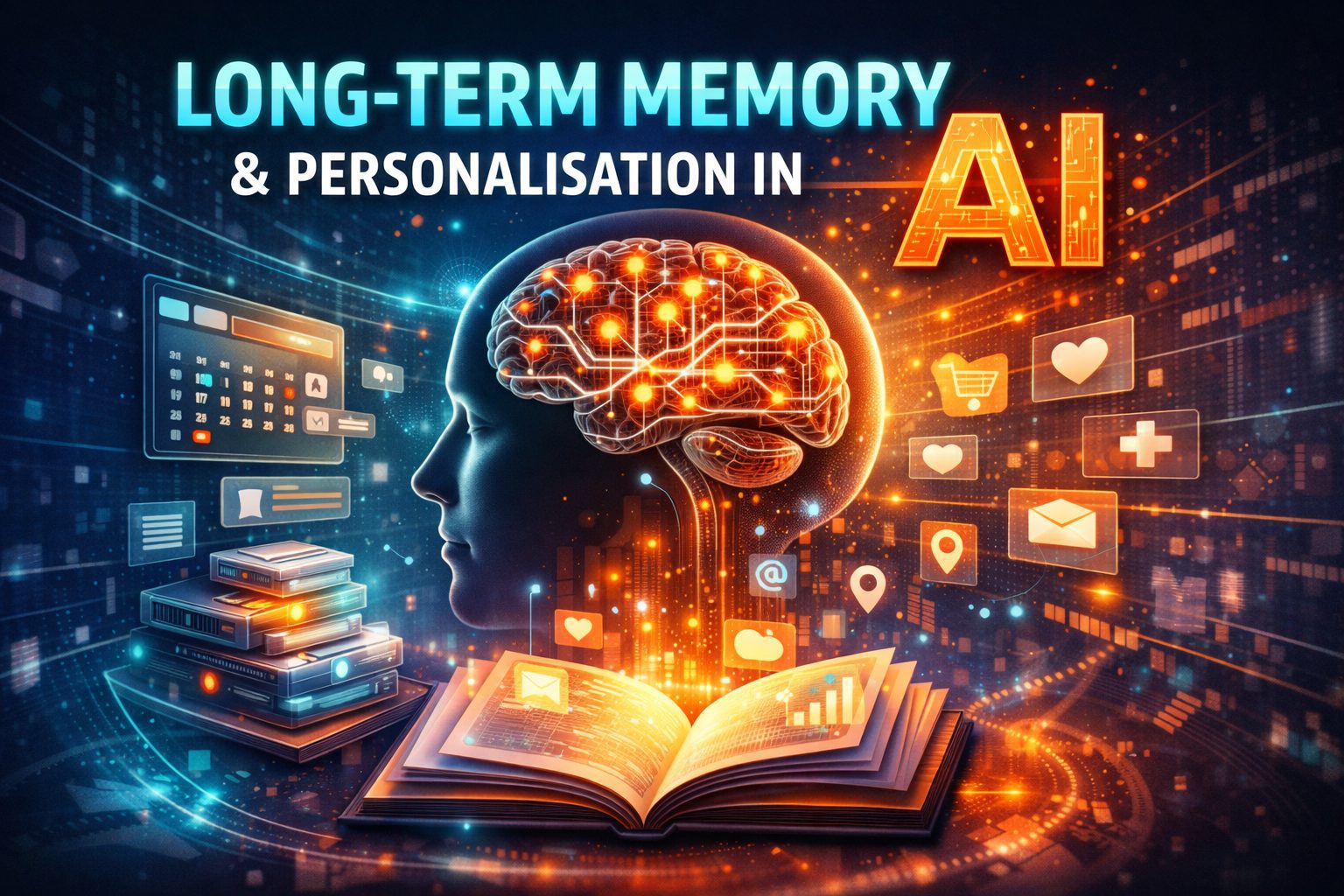
Welcome to the era of Long-Term Memory & Personalisation in AI—where machines don’t just respond, they remember, learn, and adapt to you over time.
This shift is quietly redefining how we work, shop, learn, and communicate. And honestly? We’re just getting started.
What Is Long-Term Memory in AI?
Traditional AI systems are forgetful.
They process your request, deliver an answer, and move on—like a goldfish with Wi-Fi.
Long-term memory in AI changes that.
It allows AI systems to:
- Remember user preferences
- Store contextual information over time
- Learn from past interactions
- Improve future responses automatically
Think of it as the difference between:
- ❌ A one-time conversation
- ✅ A growing relationship
That’s a massive leap.
Personalisation in AI: From Generic to Genius
Personalisation is where AI stops being “cool tech” and starts feeling human.
Instead of serving the same experience to everyone, AI personalisation adapts based on:
- User behavior
- Past interactions
- Interests and intent
- Location, time, and usage patterns
This means:
- Smarter recommendations
- Faster decisions
- Better user experiences
And yes—higher conversions 🚀
Why Long-Term Memory + Personalisation Is a Game Changer
When these two come together, AI stops reacting and starts anticipating.
Here’s what that unlocks:
1. Hyper-Personal User Experiences
AI remembers:
- Your tone preferences
- Your goals
- Your past questions
So the experience feels tailor-made—every single time.
2. Better Accuracy Over Time
More memory = more context.
More context = fewer mistakes.
AI becomes sharper with every interaction.
3. Reduced Repetition
No more:
“Can you explain this again?”
AI already knows.
And that’s powerful.
Real-World Examples of Long-Term Memory in AI
You’re already seeing this in action 👇
AI Assistants
Modern AI assistants remember:
- Your work style
- Frequently asked questions
- Ongoing projects
They don’t just help—they collaborate.
E-Commerce & Recommendation Engines
AI tracks:
- Browsing behavior
- Purchase history
- Product preferences
Result?
Personalized product suggestions that actually make sense.
Healthcare AI
Long-term memory helps AI:
- Track patient history
- Identify patterns
- Support accurate diagnoses
This isn’t automation—it’s intelligent care.
SEO & Marketing Impact of AI Personalisation
From an SEO and digital marketing perspective, this is huge.
Smarter Content Targeting
AI can personalize:
- Headlines
- CTAs
- Email campaigns
- Landing pages
Based on what actually works for each user.
Higher Engagement Metrics
Personalised AI experiences lead to:
- Lower bounce rates
- Longer session times
- Higher conversion rates
Search engines love that ❤️
Challenges of Long-Term Memory in AI
Of course, it’s not all sunshine.
Data Privacy & Ethics
Storing long-term user data raises questions:
- Who owns the data?
- How is it stored?
- How is consent managed?
Responsible AI design is critical.
Memory Accuracy
Bad memory = bad decisions.
AI systems must avoid:
- Outdated assumptions
- Incorrect context
- Bias reinforcement
This requires constant refinement.
The Future of Long-Term Memory & Personalisation in AI
Here’s where things get exciting 🔮
In the near future, AI will:
- Understand emotions and intent better
- Adapt in real time across platforms
- Offer deeply contextual decision support
- Feel less like software and more like a partner
AI won’t just know what you ask.
It’ll know why you ask.
Final Thoughts
Long-term memory & personalisation in AI is not a feature—it’s a transformation.
It’s turning AI into:
- A strategist, not a tool
- A collaborator, not a machine
- An experience, not an interface
The companies that master this balance—between memory, personalisation, and ethics—will define the next decade of technology.
And the rest?
They’ll be playing catch-up.