
A threat intelligence report based on research conducted by PhishReaper and presented by LogIQ Curve
Introduction
In today’s rapidly evolving digital threat landscape, phishing campaigns have become one of the most persistent and sophisticated cyber risks facing organizations worldwide. As the Exclusive OEM Partner of PhishReaper in Pakistan, LogIQ Curve is proud to present the latest threat-intelligence findings from the PhishReaper research team to our global audience. Through this strategic collaboration, LogIQ Curve represents the advanced phishing-detection capabilities of the PhishReaper platform to enterprises, financial institutions, telecom operators, and government organizations.
Organizations interested in strengthening their cybersecurity posture and proactively identifying phishing infrastructure are invited to explore this technology further by contacting our cybersecurity team at security@logiqcurve.com.
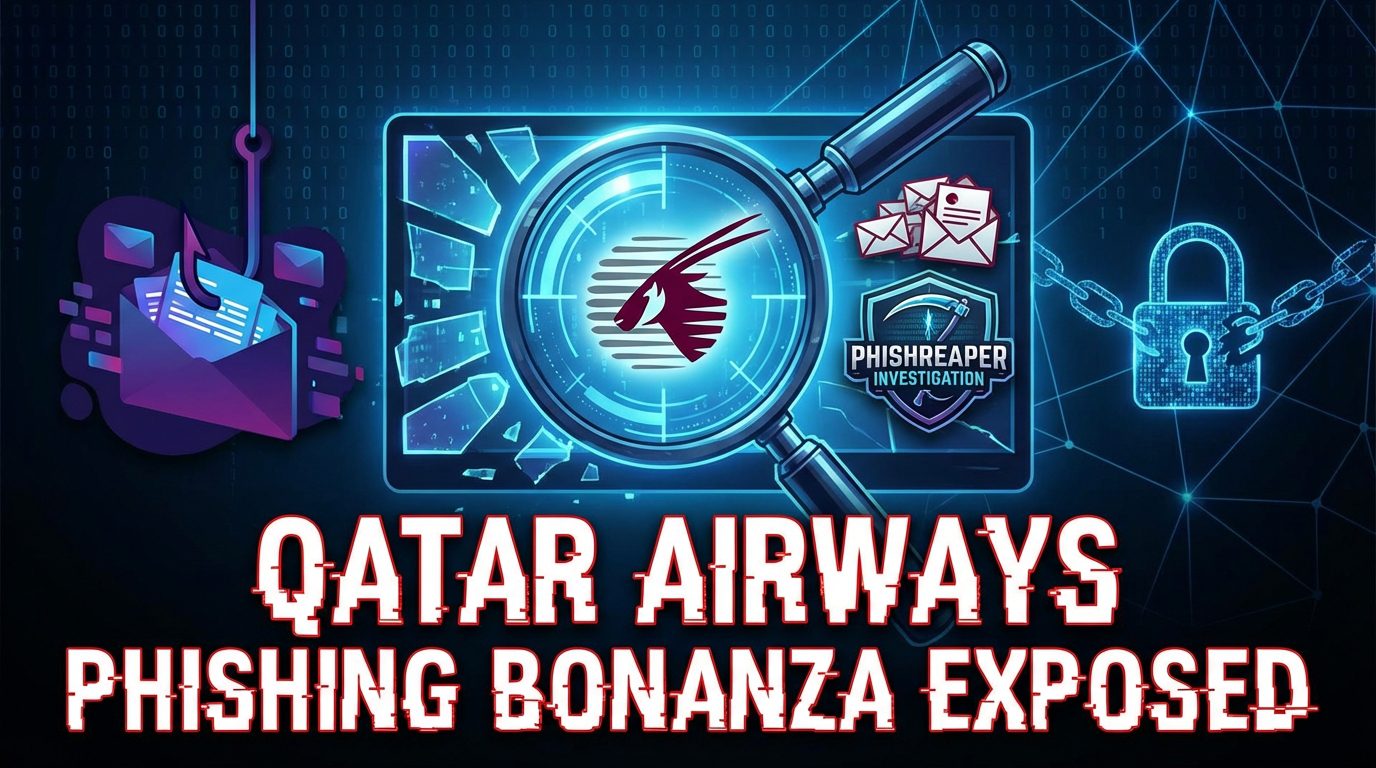
A recent investigation by PhishReaper uncovered a large-scale phishing campaign impersonating Qatar Airways, one of the world’s most recognizable airline brands. The discovery revealed an extensive ecosystem of phishing infrastructure designed to exploit the trust associated with global aviation brands, an increasingly common tactic used by cybercriminals seeking to deceive victims and extract sensitive information. (me-en.kaspersky.com)
The Discovery: A Large-Scale Phishing Ecosystem
PhishReaper’s threat-hunting systems detected a cluster of phishing assets associated with fraudulent websites impersonating Qatar Airways.
These malicious sites were designed to closely resemble legitimate brand interfaces, creating a convincing environment where victims could unknowingly submit credentials, personal data, or other sensitive information.
The investigation uncovered multiple phishing domains operating within a broader infrastructure network. Instead of relying on a single malicious website, the attackers appeared to deploy numerous related assets to increase campaign resilience and extend operational reach.
This discovery highlighted the scale and organization behind the operation, demonstrating how modern phishing campaigns increasingly resemble structured cybercrime ecosystems rather than isolated attacks.
Understanding the Infrastructure Behind the Attack
PhishReaper’s analysis focused on identifying the relationships between the various components supporting the phishing campaign.
The investigation revealed several characteristics typical of advanced phishing operations:
• Domain names crafted to resemble legitimate corporate branding
• Replicated login portals and brand assets
• Distributed hosting infrastructure designed for persistence
• Coordinated domain registrations linked to a larger campaign
By examining the infrastructure holistically, PhishReaper was able to identify patterns connecting multiple phishing assets that would otherwise appear unrelated.
This ecosystem-level visibility is critical because attackers often rely on infrastructure redundancy to keep campaigns operational even when individual phishing pages are discovered and taken down.
Why Traditional Security Systems Often Miss These Campaigns
Many conventional cybersecurity solutions rely on reactive detection models. These systems typically identify phishing websites only after they have been reported by victims or detected through traditional threat-intelligence feeds.
Such reactive models depend heavily on:
• Known indicators of compromise
• Previously identified malicious domains
• Community reporting or victim complaints
While these mechanisms eventually expose phishing campaigns, they often do so after significant damage has already occurred.
The Qatar Airways phishing infrastructure identified by PhishReaper demonstrates how attackers can exploit this detection gap by deploying phishing assets that remain undetected during the early phases of a campaign.
PhishReaper’s Proactive Threat Hunting Approach
PhishReaper takes a fundamentally different approach to phishing detection by focusing on identifying attacker intent and infrastructure patterns rather than relying solely on known malicious indicators.
Through advanced AI-driven threat hunting, PhishReaper analyzes signals such as:
• Domain registration patterns
• Infrastructure relationships
• Behavioral indicators associated with phishing intent
• Attacker operational patterns
This approach allows PhishReaper to detect phishing infrastructure before campaigns reach their peak distribution stage.
Rather than simply identifying individual malicious pages, the platform maps the broader ecosystem supporting a phishing operation, enabling security teams to disrupt attacks earlier in their lifecycle.
Strategic Implications for Organizations
The Qatar Airways phishing campaign illustrates a broader trend affecting organizations across industries: attackers are increasingly targeting trusted global brands to enhance the credibility of phishing campaigns.
Brand-impersonation attacks can result in serious consequences, including:
• Credential theft
• Financial fraud
• Identity theft
• Reputational damage to targeted organizations
For companies whose brands are exploited in phishing campaigns, early detection of malicious infrastructure is essential for protecting customers and maintaining trust.
Platforms like PhishReaper help organizations gain early visibility into emerging phishing campaigns and reduce the risk of large-scale attacks.
Moving Toward Proactive Cyber Defense
The investigation highlights the urgent need for cybersecurity strategies that prioritize early detection of attacker infrastructure.
As phishing operations become more sophisticated and automated, defenders must adopt technologies capable of identifying threats before they reach victims.
Proactive threat-hunting platforms provide organizations with:
• Earlier warning of phishing campaigns
• Improved brand protection
• Enhanced visibility into attacker infrastructure
• Stronger protection against credential harvesting attacks
These capabilities enable organizations to transition from reactive incident response toward preventive cybersecurity operations.
Conclusion
The Qatar Airways phishing campaign uncovered by PhishReaper demonstrates how sophisticated phishing operations can leverage trusted global brands to deceive victims and operate at scale.
By identifying the underlying infrastructure supporting the campaign, PhishReaper’s proactive threat-hunting capabilities were able to illuminate a phishing ecosystem that might otherwise have remained hidden.
This discovery reinforces the importance of early-stage phishing detection and highlights the need for organizations to adopt proactive security technologies capable of identifying malicious campaigns before they cause widespread damage.
Through its collaboration with PhishReaper, LogIQ Curve is committed to bringing this advanced phishing detection capability to organizations seeking stronger protection against evolving cyber threats.
Learn More About PhishReaper
Organizations interested in evaluating the PhishReaper phishing detection platform can contact LogIQ Curve to learn how this technology can strengthen enterprise security operations.
LogIQ Curve works with:
• Bank
• Telecom operators
• Government organizations
• Enterprises
• SOC teams
to identify phishing infrastructure before attacks reach users.
Research Attribution
This analysis is based on the original threat-intelligence research conducted by PhishReaper. LogIQ Curve republishes these findings for its global audience as the Exclusive OEM Partner of PhishReaper in Pakistan, helping organizations gain early visibility into emerging phishing threats.
Description
PhishReaper exposes a large-scale phishing campaign impersonating Qatar Airways. Discover how AI-driven threat hunting identified the infrastructure behind the attack and why proactive phishing detection is essential for modern enterprises.
#PhishReaper #LogIQCurve #CyberSecurity #PhishingDetection #ThreatIntelligence #ThreatHunting #CyberDefense #EnterpriseSecurity #SOC #AIinCybersecurity #DigitalSecurity #CyberResilience #AviationSecurity #InfoSec #SecurityOperations #CyberThreats #PakistanCyberSecurity #CyberInnovation #SafwanKhan #HaiderAbbas #NajeebUlHussan #MumtazKhan #CISO #CTO #SecurityLeadership