

CMS Development for Multi-Language Websites in Europe Europe is one of the most diverse digital markets in the world. A single website may need to support English, French, German, Spanish, Italian, Dutch, and many other languages at the same time. Businesses that want to grow across Europe cannot rely on one language only. People naturally trust websites written in their own language, and that trust often turns into more sales, longer visits, and stronger customer relationships. This is where CMS development for multi-language websites in Europe becomes extremely important. A good Content Management System helps businesses manage translations, update content faster, and keep the user experience smooth across different countries. Without the right CMS structure, managing multiple languages can feel like trying to juggle too many balls at once. Everything becomes harder, from SEO to content updates and customer support. Modern companies now focus on creating websites that feel local in every region. Visitors in Germany expect different content styles than users in France or Spain. A strong multi-language CMS allows businesses to adapt content while keeping the same brand identity. This balance between consistency and localization is the key to success in the European online market. Why Multi-Language Websites Matter in Europe Europe has dozens of active languages and millions of internet users who prefer browsing in their native language. Many customers avoid buying from websites they cannot fully understand. Even if English is available, users often feel more comfortable reading product descriptions, pricing details, and support pages in their own language. A multi-language website also improves customer trust. Imagine walking into a store where every sign is written in a language you barely understand. You would probably leave quickly. Websites work the same way. Language creates comfort, and comfort creates engagement. Businesses that localize their websites usually experience lower bounce rates and higher conversions. Search engine visibility is another major reason. Different countries search using different keywords and phrases. A properly localized CMS helps businesses rank in local search results across Europe. Instead of targeting only one audience, companies can reach users from multiple regions at the same time. This creates stronger brand exposure and opens doors to international growth opportunities. Choosing the Right CMS Selecting the right CMS is the foundation of a successful multi-language website. Some CMS platforms are built with localization tools already included, while others require plugins or custom development. Businesses must think about scalability, SEO support, ease of use, and translation workflows before making a decision. Open-Source CMS Options Open-source CMS platforms are popular because they are flexible and cost-effective. Systems like WordPress, Drupal, and Joomla allow developers to build multi-language websites with plugins and extensions. These platforms work well for startups and medium-sized businesses that want customization without massive costs. WordPress is especially popular because it offers many translation plugins and SEO tools. Drupal is often preferred for large-scale enterprise websites because of its advanced language management features. Joomla also supports multilingual content directly from its core system, making it useful for simpler projects. The biggest advantage of open-source platforms is freedom. Developers can customize almost every part of the website. The downside is that maintenance and security updates require regular attention. Businesses need experienced developers to keep the system running smoothly. Enterprise CMS Platforms Large companies often choose enterprise-level CMS platforms for better scalability and security. These systems are designed to handle large amounts of content across multiple regions. They also support team collaboration, workflow approvals, and advanced integrations. Enterprise CMS solutions usually provide centralized management. This means content teams from different countries can work together without creating confusion. Marketing departments can update campaigns quickly while developers maintain technical consistency across all language versions. Although enterprise platforms can be expensive, they are often worth the investment for companies operating in multiple European markets. They reduce manual work, improve workflow efficiency, and help maintain brand consistency across different languages. Important Features for Multi-Language CMS Development Not every CMS is suitable for multilingual projects. Businesses should focus on features that improve both user experience and content management efficiency. Feature Why It Matters Language Switching Helps users move between languages easily SEO Tools Improves rankings in local search engines Translation Management Simplifies content updates Mobile Optimization Supports mobile users across Europe Content Scheduling Helps manage campaigns in multiple regions Language Switching A language switcher should be simple, visible, and user-friendly. Visitors should never struggle to find their preferred language. Good CMS development ensures the language switcher works smoothly without redirect errors or broken pages. Some websites automatically detect the user’s location and suggest the appropriate language. This can improve user experience, but manual language selection should always remain available. Users may travel between countries or prefer browsing in another language. Consistency is also important. Every translated page should maintain the same structure and design. A confusing layout can make the website feel unprofessional and reduce trust among visitors. SEO Optimization SEO for multi-language websites is more complex than standard SEO. Businesses must optimize content separately for each language and region. Keywords that work in France may not work in Germany or Spain. A strong CMS helps organize these SEO strategies efficiently. URL structure is another key factor. Many European websites use country-specific URLs or language directories. This helps search engines understand which audience each page targets. Proper metadata, translated headings, and localized content also improve visibility. Technical SEO matters as well. Fast loading speeds, mobile responsiveness, and clean site architecture help websites rank better in European markets. A modern CMS should support all these requirements without needing constant manual fixes. Best Practices for European Localization Localization is not just about translating words. It involves adapting the entire user experience to fit local cultures and expectations. Businesses that ignore localization often struggle to connect with European audiences. For example, payment methods differ across countries. German customers may prefer bank transfers, while users in the Netherlands often use local payment systems. Currency formats, date styles, and even color preferences can vary between regions. Content tone also matters. Some countries prefer formal communication, while others respond better to casual language. A successful CMS strategy allows businesses to customize content without rebuilding the entire website for every country. Images and visuals should also feel local. Stock photos that work in one market may feel irrelevant in another. Localization creates familiarity, and familiarity encourages trust. GDPR and Data Privacy Considerations European websites must follow strict data privacy regulations. GDPR affects how businesses collect, store, and process user information. A multi-language CMS should support compliance features from the beginning. Cookie banners, privacy settings, and consent management tools are now essential parts of website development. Users must clearly understand how their data is being used. Transparency builds trust and protects businesses from legal problems. CMS platforms should also support secure hosting and encrypted data handling. Security is especially important for eCommerce websites and platforms handling customer information. Businesses that ignore privacy standards risk damaging both their reputation and finances. Mobile Optimization for European Users Mobile traffic continues to dominate across Europe. People shop, browse, and interact with brands directly from their phones. A multi-language website that performs poorly on mobile devices can lose a large percentage of potential customers. Responsive design is now a basic requirement. Text should remain readable, buttons should be easy to tap, and navigation should stay smooth across all screen sizes. Language switching must also work properly on mobile devices. Page speed plays a major role in user experience. Slow websites frustrate visitors quickly, especially mobile users. A well-developed CMS should include caching, image optimization, and lightweight coding practices to improve performance. Businesses should regularly test their websites on multiple devices and browsers. What works perfectly on desktop may not function well on smartphones or tablets. Common Mistakes to Avoid Many businesses rush into multi-language website development without proper planning. One common mistake is relying completely on automatic translation tools. Machine translations often miss cultural context and create awkward wording that damages credibility. Another mistake is duplicating the same content across all languages without localization. European audiences expect content tailored to their region. Generic messaging can make the website feel disconnected and impersonal. Poor SEO structure is another major issue. Some websites fail to separate language versions correctly, which confuses search engines and hurts rankings. Others ignore mobile optimization, leading to weak user experiences. Businesses should also avoid overcomplicated navigation systems. Visitors should reach their preferred language quickly without unnecessary clicks. Simplicity often creates better engagement. Future Trends in Multi-Language CMS Development The future of CMS development in Europe is becoming smarter and more automated. Artificial intelligence is already helping businesses speed up translations and personalize content for different audiences. AI-powered tools can analyze user behavior and suggest localized content automatically. Headless CMS platforms are also becoming more popular. These systems separate the content backend from the frontend design, making it easier to deliver content across websites, apps, and digital devices. This flexibility is especially useful for international businesses. Voice search optimization is another growing trend. More users now search using voice assistants in their native languages. Websites must adapt content to match natural language search behavior. Businesses are also investing more in personalized user experiences. Instead of showing the same homepage to everyone, websites can now display region-specific offers, products, and promotions based on user location and language preferences. Conclusion CMS development for multi-language websites in Europe is no longer optional for businesses that want international growth. European audiences expect localized experiences that feel natural, trustworthy, and easy to use. A strong multilingual CMS helps companies manage translations, improve SEO, and connect with customers across different regions. The right CMS platform can simplify content management while supporting scalability and localization. Businesses that focus on user experience, mobile optimization, SEO, and GDPR compliance are more likely to succeed in the competitive European digital market. As technology continues to evolve, multilingual website development will become even more advanced. Companies that invest in smart CMS solutions today will be better prepared for the future of digital business in Europe.

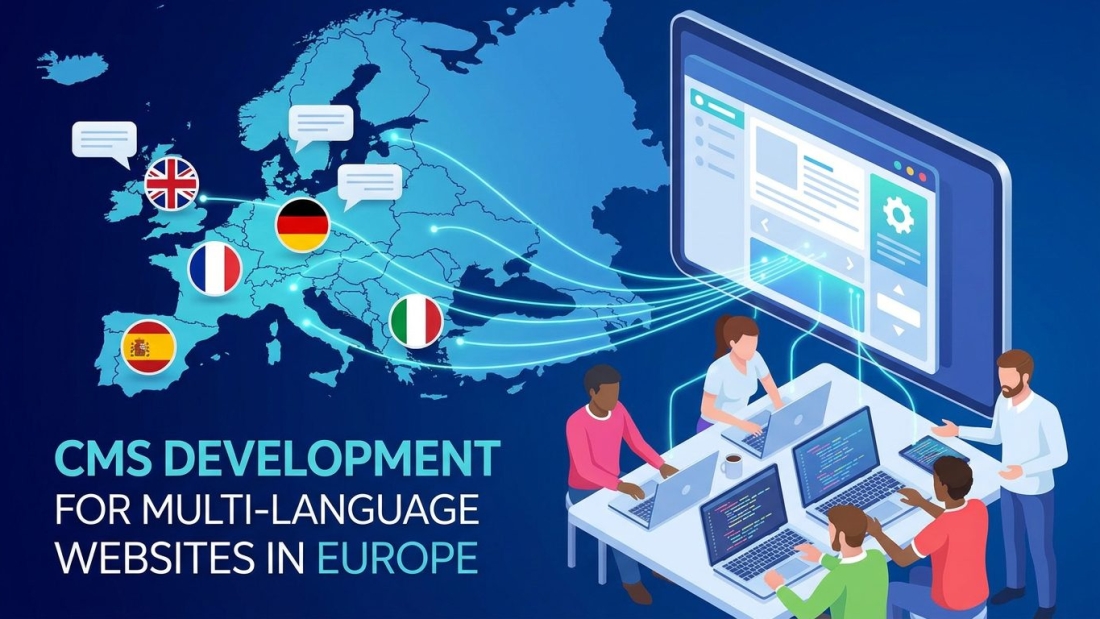
CMS development for multi-language websites in Europe

Europe is one of the most linguistically diverse digital markets in the world. A single website often needs to support English, German, French, Spanish, Italian, Dutch, and several other languages at once. Businesses aiming to expand across Europe cannot depend on one language alone. People naturally feel more comfortable browsing websites written in their native language, and that familiarity often leads to stronger trust, better engagement, and higher conversions.

This is why CMS development for multi-language websites in Europe has become increasingly important. A powerful Content Management System helps businesses organize translations, manage regional content, and maintain a smooth user experience across different countries. Without the right CMS structure, handling multiple languages can quickly become chaotic, especially when managing SEO, updates, and customer communication.

Why Multi-Language Websites Matter

European users prefer localized experiences. Even if visitors understand English, they usually feel more confident reading product descriptions, pricing details, and support information in their own language. Language creates comfort, and comfort builds trust.

Multilingual websites also improve search engine visibility. Different countries search using different terms and phrases. A localized CMS allows businesses to optimize content separately for each market, helping websites rank better in regional search results and reach wider audiences across Europe.

Choosing the Right CMS

The right CMS acts as the backbone of a multilingual website. Some platforms include built-in localization features, while others depend on plugins or custom integrations. Businesses should focus on scalability, SEO capabilities, translation management, and ease of use before selecting a platform.

Open-Source CMS Platforms

Platforms like WordPress, Drupal, and Joomla are widely used for multilingual development because they are flexible and cost-effective. WordPress offers a large collection of translation and SEO plugins. Drupal is often chosen for enterprise-level projects because of its advanced language controls, while Joomla provides built-in multilingual support for simpler websites.

The biggest advantage of open-source systems is customization. Developers can modify almost every aspect of the website. However, these platforms require regular maintenance and security updates to stay stable and secure.

Enterprise CMS Solutions

Large organizations often choose enterprise CMS platforms because they provide stronger scalability, centralized management, and advanced workflow systems. These solutions help teams from different regions collaborate smoothly while maintaining technical consistency across every language version.

Although enterprise systems can be expensive, they help reduce manual work and improve operational efficiency for businesses managing multiple European markets.

Important Features for Multi-Language CMS Development

FeaturePurpose
Language SwitchingMakes navigation easier for users
SEO ToolsImproves visibility in regional search engines
Translation ManagementSimplifies multilingual content updates
Mobile OptimizationEnhances user experience on smartphones
Content SchedulingHelps organize campaigns across regions

Language Switching

A language switcher should remain simple and easy to locate. Visitors should never struggle to find their preferred language. Some websites automatically recommend a language based on user location, but manual selection should always remain available.

Consistency is equally important. Every translated version should maintain the same structure and design to create a professional and reliable browsing experience.

SEO Optimization

SEO for multilingual websites requires region-specific strategies. Keywords that perform well in France may not work in Germany or Spain. A strong CMS helps businesses manage localized metadata, URLs, and translated content more efficiently.

Technical SEO also matters. Fast loading speeds, responsive design, and clean site architecture all contribute to stronger rankings across European markets.

Best Practices for European Localization

Localization involves much more than direct translation. Businesses must adapt their content, visuals, and user experience to match local expectations and cultural preferences.

Payment methods vary across Europe. Some countries prefer bank transfers, while others rely on regional payment systems. Communication styles also differ, with some audiences preferring formal messaging and others responding better to casual language.

Localized visuals help create familiarity as well. Images that feel relevant in one country may seem disconnected in another. Strong localization makes users feel understood and valued.

GDPR and Data Privacy

European websites must comply with GDPR regulations. A multilingual CMS should support privacy tools such as cookie notices, consent settings, and secure data management systems from the start.

Transparency is essential. Users want clear information about how their data is collected and used. Businesses that ignore privacy standards risk legal complications and reputational damage.

Mobile Optimization for European Users

Mobile browsing dominates much of Europe’s online traffic. Websites that perform poorly on smartphones often lose a significant portion of potential customers.

Responsive design, fast loading times, and smooth navigation are now basic expectations. A multilingual CMS should support mobile optimization naturally, ensuring every language version works properly across all devices and browsers.

Common Mistakes to Avoid

Many businesses rely too heavily on automatic translation tools. Machine-generated content often misses cultural context and creates awkward wording that weakens credibility.

Another mistake is copying identical content across all language versions without localization. European audiences expect region-specific messaging that feels authentic and relevant.

Poor SEO structures, confusing navigation systems, and weak mobile optimization also reduce website performance and user trust.

Future Trends in Multi-Language CMS Development

The future of multilingual CMS development is becoming smarter and more automated. Artificial intelligence is helping businesses speed up translations and personalize content based on user behavior.

Headless CMS platforms are also growing in popularity because they separate backend content from frontend design, making it easier to deliver content across websites, apps, and digital platforms.

Voice search optimization is another emerging trend. As more users search in their native languages through voice assistants, websites must adapt content to match natural speech patterns.

Conclusion

CMS development for multi-language websites in Europe is no longer optional for businesses aiming for international growth. European audiences expect localized, user-friendly experiences that feel natural and trustworthy.

The right multilingual CMS helps businesses manage translations, improve SEO, support mobile users, and maintain consistency across multiple regions. Companies investing in strong localization strategies today will be better prepared for the evolving digital landscape across Europe.