
Understanding Context Window Memory Loss
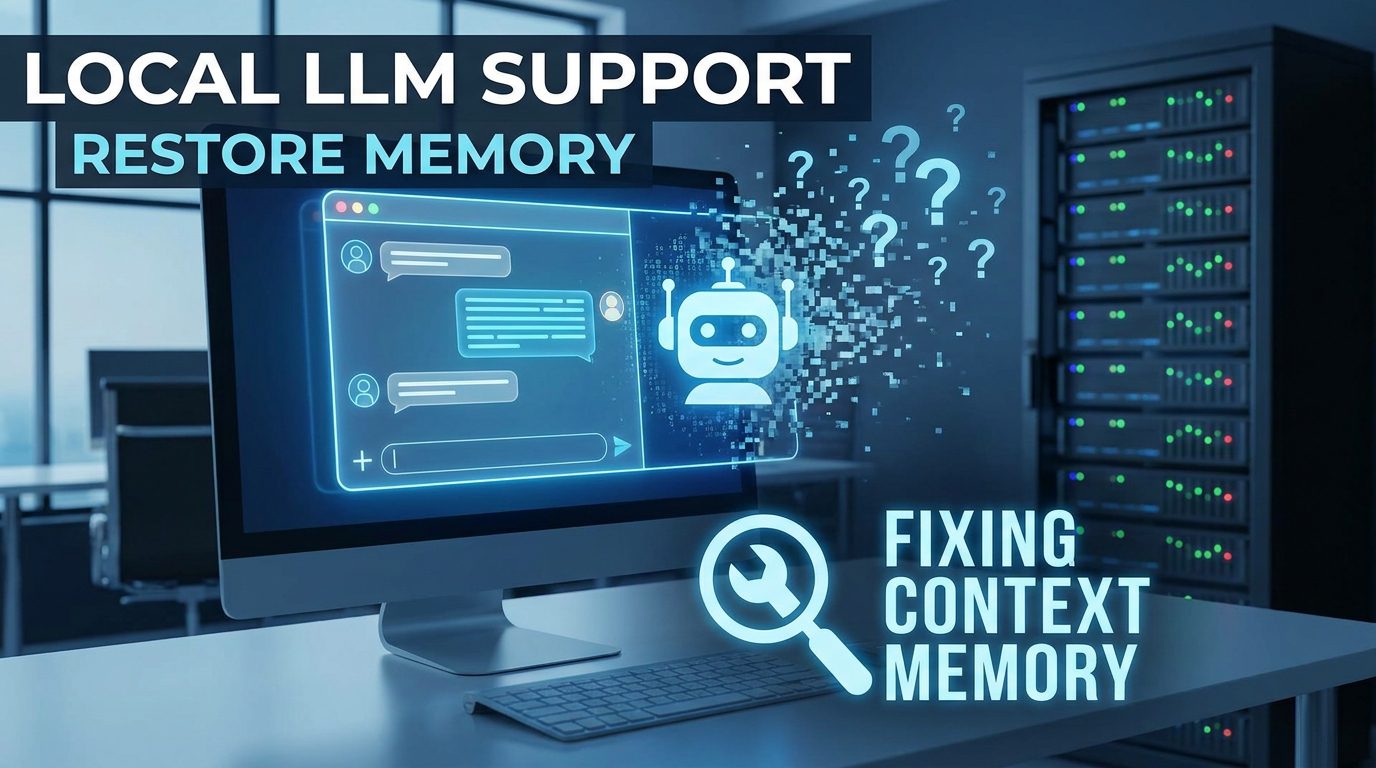
Local LLM customer service bots frequently encounter a subtle yet disruptive challenge when dialogues stretch across extended exchanges. Every language model operates within a predefined context window—the span of information it can actively retain while generating responses. Once that threshold is surpassed, earlier portions of the conversation gradually fade from the model’s working memory. Consequently, the bot may overlook crucial customer details, lose track of previous inquiries, or disregard established preferences. For users expecting a seamless and coherent interaction, this lapse can feel like speaking to someone who repeatedly forgets the discussion moments after it happens.
Recognizing the Symptoms of Memory Degradation
Context-related memory deterioration often reveals itself through obvious behavioral patterns. A customer might provide essential information early in the conversation, only to be asked for the exact same details later. In some situations, the chatbot may deliver responses that conflict with statements it made previously. Users may also notice that account-specific information, personal preferences, or the core issue being discussed seemingly vanishes midway through the exchange. These inconsistencies erode confidence and transform what should be an efficient support experience into a repetitive and frustrating process.
Leveraging Conversation Summarization
Among the most practical remedies is conversation summarization. Rather than preserving every individual message, the system periodically condenses the dialogue into a compact record containing only the most meaningful insights. This distilled summary is then supplied to future prompts in place of lengthy chat histories. By converting sprawling conversations into concise knowledge snapshots, organizations can safeguard critical context while minimizing token consumption. The result is a chatbot that retains essential information without exhausting its available context capacity.
Implementing Retrieval-Augmented Generation (RAG)
Retrieval-Augmented Generation, commonly referred to as RAG, introduces an intelligent alternative to relying solely on a model’s temporary memory. Instead of attempting to store everything within the context window, the chatbot can retrieve relevant information from an external knowledge repository whenever required. Customer records, prior conversations, support tickets, and operational data can reside in a dedicated database and be fetched dynamically. This architecture allows the system to access valuable information long after it has disappeared from the active conversational context.
Separating Long-Term Customer Information
Critical customer data should never depend entirely on the model’s short-lived memory. Preferences, account details, historical interactions, and recurring support patterns are better housed within a persistent storage layer. Whenever a customer initiates a new conversation, the system can retrieve these records and inject them into the prompt as needed. This approach creates continuity across interactions and enables a far more personalized support journey, regardless of how lengthy or complex the conversation becomes.
Refining Prompt Architecture
Inefficient prompt construction can consume valuable context real estate. Developers should craft prompts with precision, ensuring that only task-relevant information occupies the available space. Eliminating redundant instructions, duplicate content, and obsolete conversation fragments helps preserve room for meaningful context. A streamlined prompt structure acts like a well-organized workspace, allowing the model to focus its attention on the details that genuinely influence response quality.
Selecting Models with Expanded Context Capacity
Not all local LLMs are built with the same contextual reach. Some models provide substantially larger context windows, enabling them to process and retain greater volumes of conversational information. Choosing a model with enhanced token capacity can significantly reduce memory-related shortcomings, particularly in customer service environments where interactions often span numerous exchanges. While larger context windows may demand additional computational resources, they frequently deliver stronger conversational continuity and greater response consistency.
Recommended Practices for Dependable Customer Service Bots
| Strategy | Primary Advantage |
|---|---|
| Conversation Summarization | Preserves essential details while reducing token consumption |
| RAG Implementation | Retrieves information beyond the active context boundary |
| External Memory Storage | Retains long-term customer knowledge |
| Prompt Optimization | Maximizes usable context capacity |
| Larger Context Models | Supports extended conversations with greater stability |
Final Thoughts
Context window memory loss remains one of the most persistent obstacles in the development of local LLM customer service bots. Fortunately, it is far from insurmountable. Techniques such as conversation summarization, external memory repositories, Retrieval-Augmented Generation, and carefully engineered prompts can dramatically improve contextual retention. When these methods operate in concert, businesses can build customer service systems that remain attentive, context-aware, and consistently reliable throughout even the most extended interactions.