
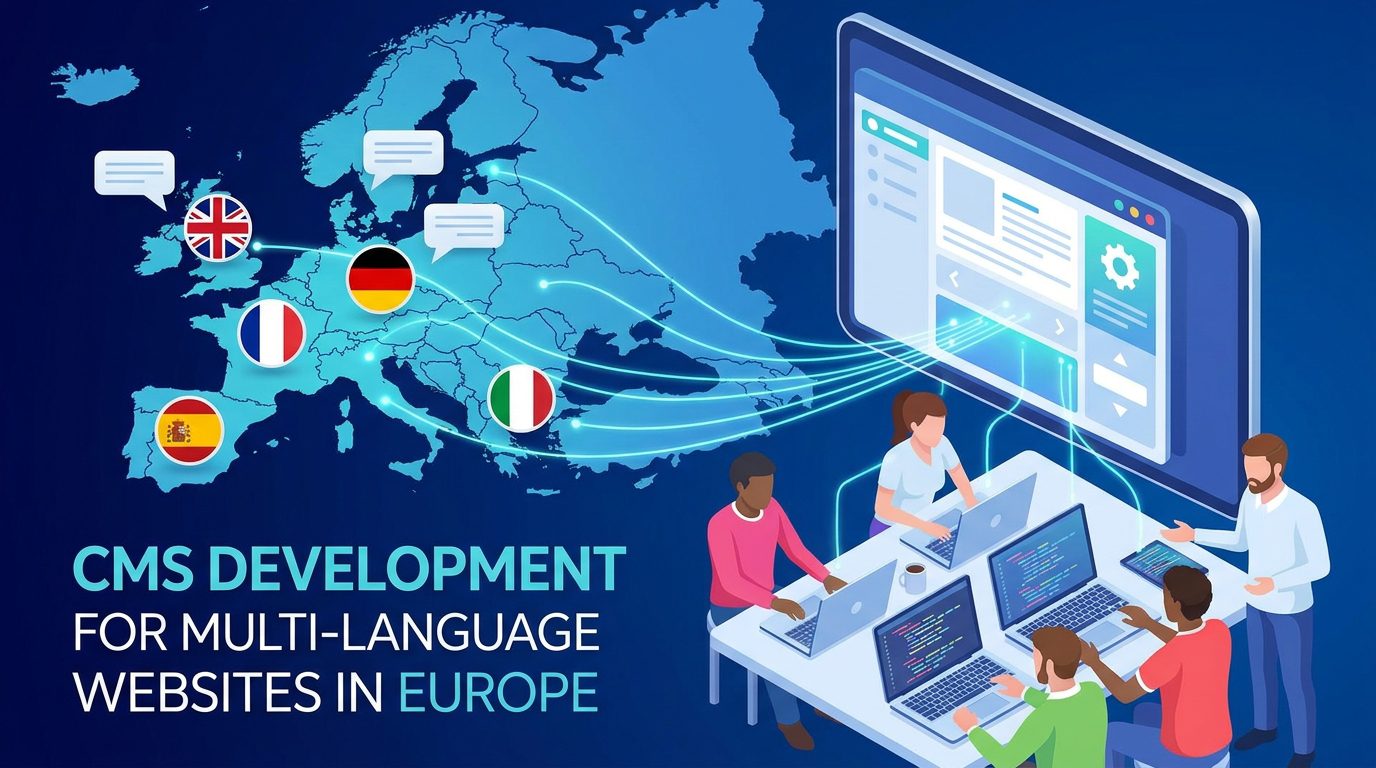
Europe is one of the most linguistically diverse digital markets in the world. A single website often needs to support English, German, French, Spanish, Italian, Dutch, and several other languages at once. Businesses aiming to expand across Europe cannot depend on one language alone. People naturally feel more comfortable browsing websites written in their native language, and that familiarity often leads to stronger trust, better engagement, and higher conversions.
This is why CMS development for multi-language websites in Europe has become increasingly important. A powerful Content Management System helps businesses organize translations, manage regional content, and maintain a smooth user experience across different countries. Without the right CMS structure, handling multiple languages can quickly become chaotic, especially when managing SEO, updates, and customer communication.
Why Multi-Language Websites Matter
European users prefer localized experiences. Even if visitors understand English, they usually feel more confident reading product descriptions, pricing details, and support information in their own language. Language creates comfort, and comfort builds trust.
Multilingual websites also improve search engine visibility. Different countries search using different terms and phrases. A localized CMS allows businesses to optimize content separately for each market, helping websites rank better in regional search results and reach wider audiences across Europe.
Choosing the Right CMS
The right CMS acts as the backbone of a multilingual website. Some platforms include built-in localization features, while others depend on plugins or custom integrations. Businesses should focus on scalability, SEO capabilities, translation management, and ease of use before selecting a platform.
Open-Source CMS Platforms
Platforms like WordPress, Drupal, and Joomla are widely used for multilingual development because they are flexible and cost-effective. WordPress offers a large collection of translation and SEO plugins. Drupal is often chosen for enterprise-level projects because of its advanced language controls, while Joomla provides built-in multilingual support for simpler websites.
The biggest advantage of open-source systems is customization. Developers can modify almost every aspect of the website. However, these platforms require regular maintenance and security updates to stay stable and secure.
Enterprise CMS Solutions
Large organizations often choose enterprise CMS platforms because they provide stronger scalability, centralized management, and advanced workflow systems. These solutions help teams from different regions collaborate smoothly while maintaining technical consistency across every language version.
Although enterprise systems can be expensive, they help reduce manual work and improve operational efficiency for businesses managing multiple European markets.
Important Features for Multi-Language CMS Development
| Feature | Purpose |
|---|---|
| Language Switching | Makes navigation easier for users |
| SEO Tools | Improves visibility in regional search engines |
| Translation Management | Simplifies multilingual content updates |
| Mobile Optimization | Enhances user experience on smartphones |
| Content Scheduling | Helps organize campaigns across regions |
Language Switching
A language switcher should remain simple and easy to locate. Visitors should never struggle to find their preferred language. Some websites automatically recommend a language based on user location, but manual selection should always remain available.
Consistency is equally important. Every translated version should maintain the same structure and design to create a professional and reliable browsing experience.
SEO Optimization
SEO for multilingual websites requires region-specific strategies. Keywords that perform well in France may not work in Germany or Spain. A strong CMS helps businesses manage localized metadata, URLs, and translated content more efficiently.
Technical SEO also matters. Fast loading speeds, responsive design, and clean site architecture all contribute to stronger rankings across European markets.
Best Practices for European Localization
Localization involves much more than direct translation. Businesses must adapt their content, visuals, and user experience to match local expectations and cultural preferences.
Payment methods vary across Europe. Some countries prefer bank transfers, while others rely on regional payment systems. Communication styles also differ, with some audiences preferring formal messaging and others responding better to casual language.
Localized visuals help create familiarity as well. Images that feel relevant in one country may seem disconnected in another. Strong localization makes users feel understood and valued.
GDPR and Data Privacy
European websites must comply with GDPR regulations. A multilingual CMS should support privacy tools such as cookie notices, consent settings, and secure data management systems from the start.
Transparency is essential. Users want clear information about how their data is collected and used. Businesses that ignore privacy standards risk legal complications and reputational damage.
Mobile Optimization for European Users
Mobile browsing dominates much of Europe’s online traffic. Websites that perform poorly on smartphones often lose a significant portion of potential customers.
Responsive design, fast loading times, and smooth navigation are now basic expectations. A multilingual CMS should support mobile optimization naturally, ensuring every language version works properly across all devices and browsers.
Common Mistakes to Avoid
Many businesses rely too heavily on automatic translation tools. Machine-generated content often misses cultural context and creates awkward wording that weakens credibility.
Another mistake is copying identical content across all language versions without localization. European audiences expect region-specific messaging that feels authentic and relevant.
Poor SEO structures, confusing navigation systems, and weak mobile optimization also reduce website performance and user trust.
Future Trends in Multi-Language CMS Development
The future of multilingual CMS development is becoming smarter and more automated. Artificial intelligence is helping businesses speed up translations and personalize content based on user behavior.
Headless CMS platforms are also growing in popularity because they separate backend content from frontend design, making it easier to deliver content across websites, apps, and digital platforms.
Voice search optimization is another emerging trend. As more users search in their native languages through voice assistants, websites must adapt content to match natural speech patterns.
Conclusion
CMS development for multi-language websites in Europe is no longer optional for businesses aiming for international growth. European audiences expect localized, user-friendly experiences that feel natural and trustworthy.
The right multilingual CMS helps businesses manage translations, improve SEO, support mobile users, and maintain consistency across multiple regions. Companies investing in strong localization strategies today will be better prepared for the evolving digital landscape across Europe.