Introduction to AI and Personal Data
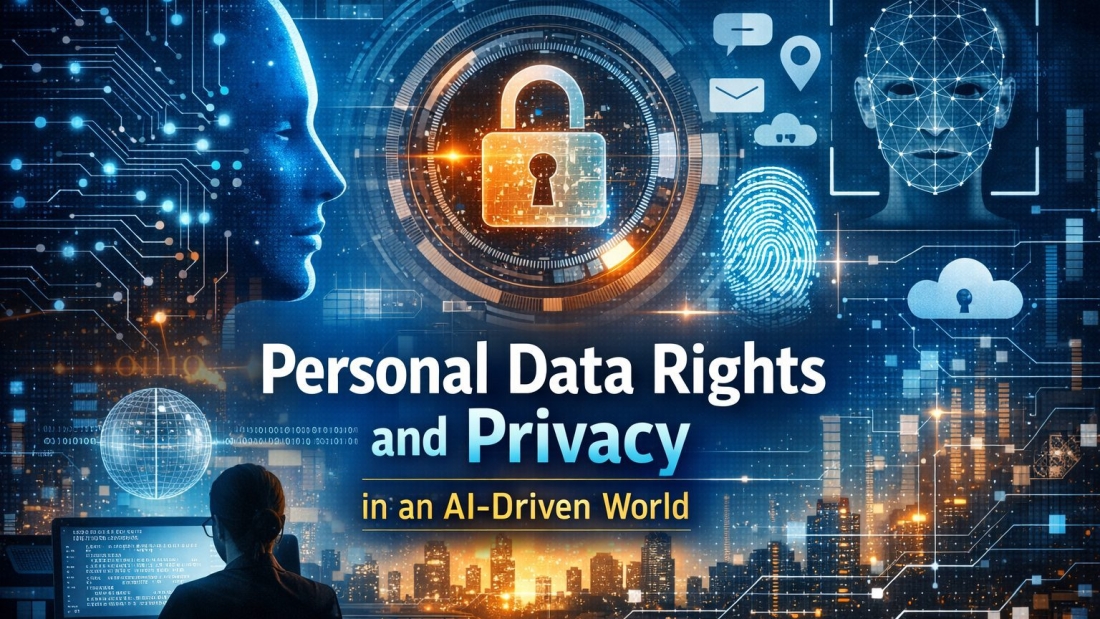
Artificial intelligence is no longer science fiction. It recommends what you watch, filters your emails, suggests what you should buy, and even helps doctors diagnose diseases. Sounds helpful, right? It is — but there’s a trade-off. AI runs on data, and a big chunk of that data is yours.
What Counts as Personal Data?
Personal data is any information that can identify you directly or indirectly. Your name, phone number, and email are obvious examples. But it goes deeper than that. Your location history, browsing behavior, shopping habits, voice recordings, and even the way you type can be linked back to you.
Think of it like puzzle pieces. One piece alone might not show the whole picture. But when AI systems combine thousands of pieces, they can build a very detailed image of your life.
AI learns by spotting patterns. To do that, it needs huge amounts of data. Your clicks, likes, searches, and movements all become fuel for algorithms. These systems analyze your behavior to predict what you’ll do next — what you’ll buy, who you’ll vote for, or what content will keep you scrolling longer.
You’re not just using technology anymore. In many ways, technology is studying you.
Why Privacy Matters More Than Ever
You might think, “I have nothing to hide.” But privacy isn’t just about hiding secrets. It’s about control.
The Value of Your Digital Identity
Your data is valuable. Companies use it to target ads, develop products, and train AI models. Data has become a currency of the digital world. The more platforms know about you, the more precisely they can influence your decisions.
Your digital identity can affect what job ads you see, what prices you’re offered, and even how you’re treated by automated systems.
Risks of Ignoring Data Privacy
When privacy is ignored, the consequences can be serious. Identity theft, financial fraud, discrimination, and manipulation all become more likely. Once your data is out there, it’s almost impossible to pull it back.
It’s like dropping glitter — you can try to clean it up, but it spreads everywhere.
Understanding Personal Data Rights
To balance power between individuals and organizations, many countries have introduced personal data rights. These rights give you more say over how your information is used.
You have the right to know when your data is being collected, why it’s being used, and who it’s being shared with. Privacy policies are supposed to explain this — although they’re often long and confusing.
The Right to Access Your Data
You can ask companies for a copy of the data they hold about you. This helps you understand what they know and check if it’s accurate.
The Right to Correct Inaccurate Data
If a company has wrong information about you, you can request corrections. This is important because inaccurate data can lead to unfair decisions.
The Right to Erasure (“Right to Be Forgotten”)
In certain situations, you can ask for your data to be deleted. Maybe you closed an account or withdrew consent. This right helps reduce your digital footprint.
The Right to Restrict Processing
You can ask organizations to limit how they use your data, especially if you’re disputing its accuracy or objecting to its use.
The Right to Data Portability
This lets you move your data from one service to another. For example, transferring your photos or contacts to a different platform.
The Right to Object
You can object to certain types of data processing, like direct marketing. Companies must respect this unless they have strong legal reasons not to.
If an important decision about you is made purely by an AI system — like loan approval — you have the right to request human review in many regions.
How AI Challenges Traditional Privacy Rules
AI doesn’t just use data. It transforms it in ways older privacy laws never imagined.
Data Collection at Massive Scale
AI systems thrive on big data. Instead of collecting information from thousands of people, companies now collect from millions or even billions. The scale alone makes oversight difficult.
Invisible Data Tracking
A lot of data collection happens quietly. Cookies, tracking pixels, and device fingerprints monitor you across websites and apps. You don’t see it happening, but AI systems are constantly learning from it.
AI Profiling and Behavioral Prediction
AI builds profiles about you — your interests, habits, and personality traits. Sometimes these profiles are more accurate than what your friends know about you. The scary part? You rarely see or control these hidden profiles.
Facial Recognition and Biometric Data
Biometric data includes fingerprints, facial features, voice patterns, and even iris scans.
You can change a password, but you can’t change your face. If biometric data is leaked or misused, the risks are permanent. That’s why many experts argue it needs stronger protection than regular data.
Real-World Concerns and Controversies
Facial recognition has been used in public surveillance, sometimes without people knowing. There have been cases of misidentification, especially affecting minority groups. This raises serious questions about fairness, accuracy, and consent.
AI in Everyday Life: Where Your Data Goes
AI is woven into daily life more than most people realize.
Every like, comment, and share helps AI understand your preferences. Platforms use this to personalize feeds and ads, keeping you engaged longer.
Ever searched for shoes and then seen shoe ads everywhere? That’s AI-driven ad targeting using your browsing data.
Smart Devices and IoT
Smart speakers, fitness trackers, and smart TVs collect data about your routines. They listen, track movement, and monitor habits to “improve” services.
Healthcare and Wearables
Health apps and wearable devices collect sensitive data like heart rate and sleep patterns. While helpful, this data must be protected carefully.
The Role of Big Tech Companies
Data as the New Oil
Data fuels innovation, just like oil fueled the industrial age. But unlike oil, data is deeply personal.
Responsibility vs. Profit
Tech companies walk a fine line between innovation and exploitation. Strong data practices can limit profits, which creates tension between ethics and business goals.
Governments and Data Protection Laws
GDPR (Europe)
The General Data Protection Regulation is one of the strongest privacy laws. It gives people broad rights and imposes heavy fines for violations.
CCPA and CPRA (California)
These laws give California residents more control over their data, including the right to know and delete personal information.
Other Emerging Global Laws
Countries around the world are introducing new privacy laws, showing that data protection is becoming a global priority.
Consent in the Age of AI
Do People Really Understand What They Agree To?
Most people click “I agree” without reading terms. That’s not meaningful consent — it’s more like digital autopilot.
Dark Patterns and Manipulative Design
Some websites design interfaces to push you into sharing more data. Bright “Accept All” buttons and hidden opt-outs are common tricks.
Data Breaches and Security Threats
How Breaches Happen
Hackers, weak passwords, and poor security practices can lead to massive data leaks.
The Long-Term Impact on Individuals
Stolen data can be used for scams, identity theft, and long-term surveillance. The damage can last years.
Children’s Privacy in an AI World
Children may not understand data risks. Their information can shape profiles that follow them into adulthood.
AI in Education and Apps
Educational tools collect learning data. While useful, it must be handled responsibly to avoid misuse.
Ethical AI and Privacy by Design
Building Privacy Into Technology from the Start
Privacy shouldn’t be an afterthought. Systems should be designed to collect only necessary data and protect it from day one.
Transparency and Explainability
People should understand how AI decisions are made. Black-box systems erode trust.
How Individuals Can Protect Their Privacy
Practical Steps You Can Take Today
Use strong passwords, enable two-factor authentication, limit app permissions, and review privacy settings regularly.
Privacy-focused browsers, ad blockers, and encrypted messaging apps can reduce your data exposure.
The Future of Data Rights in an AI-Driven Society
Will Privacy Become a Luxury?
There’s a risk that only tech-savvy or wealthy individuals will truly control their data. That would widen inequality.
The Push for Stronger Global Standards
Experts are calling for international rules to ensure AI respects human rights everywhere.
Conclusion
AI is powerful, exciting, and full of potential. But it feeds on personal data, and that changes the privacy game completely. Personal data rights exist to give you control, but laws alone aren’t enough. Companies must act responsibly, governments must enforce protections, and individuals must stay informed.
Your data tells your story. In an AI-driven world, protecting that story means protecting your freedom, identity, and future.