


Encrypted Data

Harvest Now, Decrypt Later — The Silent Threat Targeting Your Encrypted Data Today

Most businesses believe encryption keeps their data safe. Lock it up, and no one gets in. But what if attackers aren’t trying to break in today — they’re simply waiting?

Welcome to one of the most dangerous and least-discussed cybersecurity threats of 2026: Harvest Now, Decrypt Later (HNDL).


What Is Harvest Now, Decrypt Later?

HNDL is a strategy used by nation-state actors and sophisticated cybercriminals. The idea is simple but devastating — attackers intercept and steal your encrypted data today, store it, and wait until quantum computers are powerful enough to break the encryption and read everything inside.

No immediate breach. No ransom demand. No alarm goes off. Just silent, patient collection.

The data you send today — contracts, financial records, client information, intellectual property — could be fully readable to an adversary within the next decade.


Why This Is a Present-Day Problem

Many businesses think quantum computing is a distant threat. It isn’t.

Cybersecurity agencies including the US Department of Homeland Security, the UK’s National Cyber Security Centre, and the EU Agency for Cybersecurity have all confirmed that adversaries are already harvesting encrypted data right now, banking on future quantum capabilities to unlock it.

In 2024, NIST finalized the world’s first post-quantum cryptography standards — a clear signal that the threat is real and the transition needs to begin immediately.

More alarming: recent research published between 2025 and 2026 has significantly reduced the estimated computing power needed to break RSA-2048 encryption. Timelines are compressing faster than most security teams anticipated.


Who Is Most at Risk?

Any organization that stores sensitive, long-lived data faces exposure. That includes:

  • Financial institutions — transaction records, trading data, client communications
  • Healthcare providers — patient records that must stay confidential for decades
  • Government and defence — classified communications and national security data
  • Enterprises with valuable IP — product designs, research, competitive intelligence
  • Any business handling long-term customer data

If your data needs to remain confidential for ten or more years, it is already a target.


What Can You Do Right Now?

Quantum readiness is not a one-day fix. Cryptographic migrations historically take five to ten years. The window to act is open — but it won’t stay open.

Here’s where to start:

  1. Map your sensitive data — know what you have, where it lives, and how long it needs to stay protected
  2. Audit your encryption — identify systems running on RSA or elliptic curve cryptography, which quantum computers can break
  3. Segment your networks — limit how much data an attacker can harvest from a single access point
  4. Begin post-quantum migration planning — start with the most vulnerable, highest-value systems first

The Bottom Line

The breach you face in 2032 may have already started today. Organisations that act now will control their transition. Those that wait will be reacting to a breach they never saw coming.

At LogIQ Curve, we help enterprises across the GCC, UK, and beyond build cybersecurity strategies built for the threats of today — and tomorrow.
🌐 www.logiqcurve.com

How GCC Companies Are Using Staff Augmentation to Scale AI Teams Without Hiring Delays

How GCC Companies Are Using Staff Augmentation to Scale AI Teams Without Hiring Delays

The Surging Need for AI Talent in the GCC

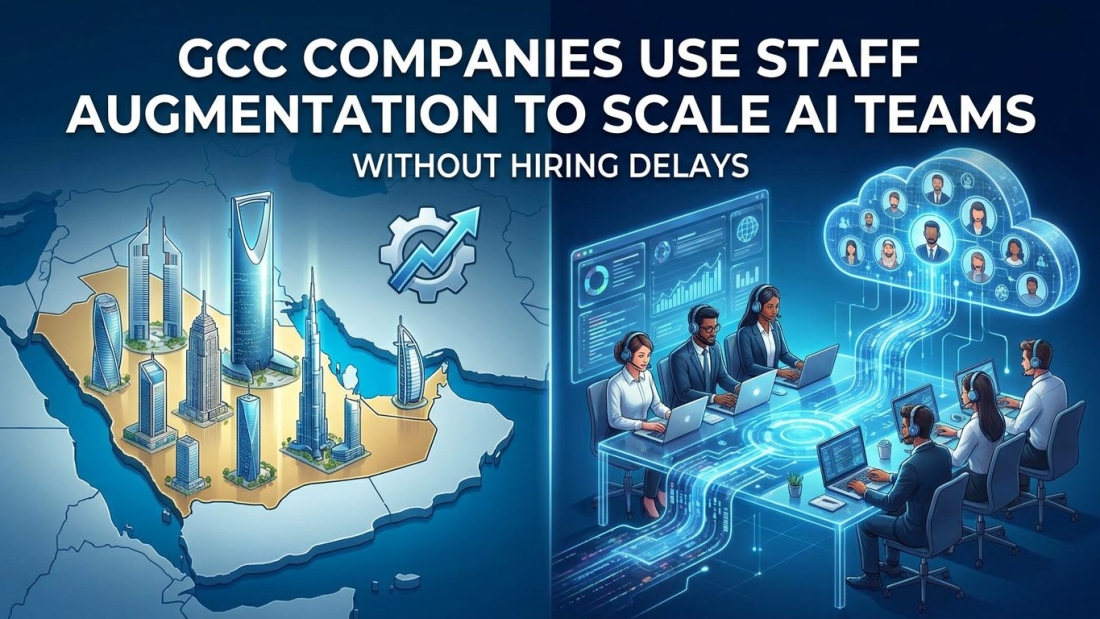
Artificial Intelligence has shifted from a distant ambition to an active reality across the Gulf Cooperation Council. Nations like the UAE, Saudi Arabia, and Qatar are accelerating toward digital ecosystems, yet a sharp imbalance persists—the appetite for AI specialists is outpacing supply. Companies urgently seek machine learning engineers and data scientists, but hiring pipelines remain sluggish, tangled in delays, costs, and fierce global competition.

To bypass this friction, many organizations are embracing staff augmentation. Instead of waiting months for full-time hires, they onboard skilled AI professionals within days. This rapid access to expertise is quietly becoming a decisive advantage in a speed-driven market.

What Staff Augmentation Really Means

At its core, staff augmentation is about temporarily integrating external talent into internal teams. Unlike outsourcing, control remains firmly in the company’s hands—projects, workflows, and direction stay internal, while external experts contribute as embedded collaborators.

This model fits AI development perfectly. AI work demands niche capabilities—think computer vision, NLP, or data engineering—that are rarely available in one place. Staff augmentation opens the door to global expertise, allowing companies to plug specific skill gaps exactly when needed.

Why Traditional Hiring Falls Short

Conventional hiring struggles to keep pace with AI demands. The process is long, resource-heavy, and often constrained by limited talent availability. By the time a candidate is hired, project timelines may already be compromised.

Costs add another layer of complexity. AI professionals command high salaries, and retaining them is equally challenging. For short-term projects, committing to full-time roles often leads to inefficiency and financial strain.

How GCC Companies Are Scaling Faster

Staff augmentation enables companies to scale AI teams almost instantly. Instead of building from scratch, they extend existing teams with ready-to-deploy experts. This agility is especially valuable for startups and fast-moving enterprises.

It also removes geographic limitations. GCC firms can collaborate with specialists worldwide without relocation hurdles, enriching projects with diverse insights and innovative thinking.

Key Advantages

  • Flexibility: Scale teams up or down based on project needs
  • Speed: Accelerate development and reduce time-to-market
  • Cost Control: Pay only for required expertise
  • Focus: Let internal teams concentrate on strategy, not hiring

Challenges to Consider

Despite its benefits, staff augmentation isn’t frictionless. Communication gaps may arise with distributed teams, and integrating external professionals requires structured onboarding. Data security also demands strict oversight, especially in AI projects handling sensitive information.

Looking Ahead

The GCC’s push toward AI-driven transformation shows no signs of slowing. As demand intensifies, traditional hiring models will continue to struggle under pressure. Staff augmentation, with its adaptability and efficiency, is evolving from a temporary fix into a long-term strategy.

Final Thought

For GCC companies, scaling AI teams quickly is no longer optional—it’s essential. Staff augmentation offers a streamlined path forward, blending speed, flexibility, and global reach. In a landscape where innovation moves fast, those who adapt fastest will lead.

Learn Why 40% of AI Agent Projects Are Set to Fail by 2027 and how to avoid common mistakes when scaling AI.

From Pilot to Production: Why 40% of AI Agent Projects Are Set to Fail by 2027

AI Agent Projects: Beneath the Surface of the Hype

Understanding AI Agents

AI agents are not just automated scripts—they’re self-operating digital entities capable of interpreting data, making calculated decisions, and executing actions with minimal human interference. Picture them as tireless operators working behind the scenes, constantly learning and refining their behavior. Businesses are increasingly embedding these systems into their operations to streamline workflows, elevate user experiences, and improve efficiency. From conversational bots to intelligent decision engines, AI agents are becoming foundational to modern business ecosystems. Yet, despite the excitement surrounding them, their real-world execution often proves far more complex than anticipated.

The Surge of AI Adoption

Organizations are investing heavily in AI, drawn by the promise of faster processes, sharper insights, and reduced costs. Most begin with pilot programs—controlled experiments designed to validate potential. These pilots often deliver impressive outcomes, creating confidence and momentum. However, this early success can be misleading. Scaling from a controlled setting to a live production environment introduces layers of complexity that many teams fail to anticipate.


The 40% Failure Warning

What It Really Signals

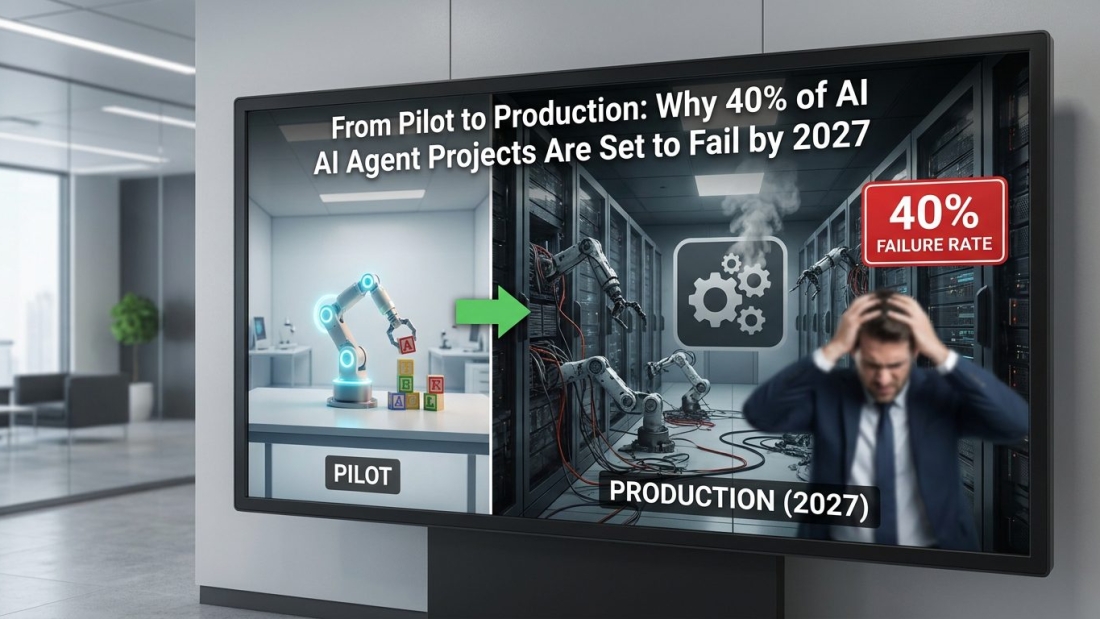
The prediction that 40% of AI agent projects may fail by 2027 does not reflect a flaw in AI itself. Instead, it highlights the growing gap between ambition and execution. Many organizations assume that success in a pilot phase guarantees scalability. In reality, moving to production requires a completely different level of planning, infrastructure, and strategic clarity.

Why Failure Risks Are Rising

As AI adoption accelerates, companies are rushing to implement solutions without fully understanding long-term requirements. This urgency often results in fragile systems that cannot scale effectively. At the same time, weaknesses in data management, governance, and system integration are becoming more visible, increasing the likelihood of failure.


The Gap Between Pilot and Production

The Comfort of Pilot Environments

Pilot phases operate in controlled conditions where data is clean, variables are limited, and the focus is on proving feasibility. Under these circumstances, AI systems tend to perform well, building confidence among stakeholders. However, this success is often artificial, shaped by an environment that does not reflect real-world challenges.

The Reality of Production

Production environments are unpredictable and demanding. Systems must handle large-scale data, integrate with existing infrastructure, and operate reliably under pressure. Issues such as latency, inconsistency, and system failures become more apparent. Without proper preparation, the transition exposes weaknesses that were hidden during the pilot phase.


Why AI Agent Projects Fail

Unclear Use Cases

A major reason for failure is the absence of a clearly defined objective. Many organizations adopt AI because it is trending rather than because it addresses a specific problem. This leads to solutions that lack direction and fail to deliver meaningful value.

Weak Data Foundations

AI systems rely heavily on data quality. Incomplete, inconsistent, or biased data leads to unreliable outputs. As projects scale, these issues become more pronounced, affecting performance and trust.

Integration Barriers

Integrating AI with existing systems is often more complex than expected. Legacy infrastructure may not support modern AI frameworks, creating compatibility challenges that delay progress and increase costs.

Governance Limitations

Without strong governance, AI projects face risks related to compliance, security, and accountability. Clear policies and oversight are essential to ensure responsible and effective deployment.


Organizational and Technical Barriers

Talent Shortages

AI requires specialized expertise, and many organizations lack the necessary skills. This gap leads to poor implementation and limits the potential of AI initiatives.

Misaligned Expectations

Leadership often expects rapid results, placing pressure on teams to deliver without adequate resources. This misalignment can lead to rushed decisions and compromised outcomes.

Scalability and Security Challenges

Scaling AI systems requires careful planning and robust infrastructure. At the same time, handling sensitive data demands strong security and compliance measures. Neglecting these areas increases the risk of failure.


Scaling AI the Right Way

Think Beyond the Pilot

Successful AI initiatives are designed with production in mind from the start. This means focusing on scalability, reliability, and integration early in the process.

Keep Humans Involved

AI should not operate in isolation. Human oversight ensures better decision-making, reduces risks, and allows for continuous improvement.


Final Perspective

AI success is not determined by technology alone—it is driven by strategy, discipline, and execution. The transition from pilot to production is where most projects falter, not because AI lacks potential, but because organizations underestimate the complexity of scaling it. Those who approach AI with clarity, preparation, and long-term thinking will not only avoid failure but turn it into a competitive advantage.