
The Surging Need for AI Talent in the GCC
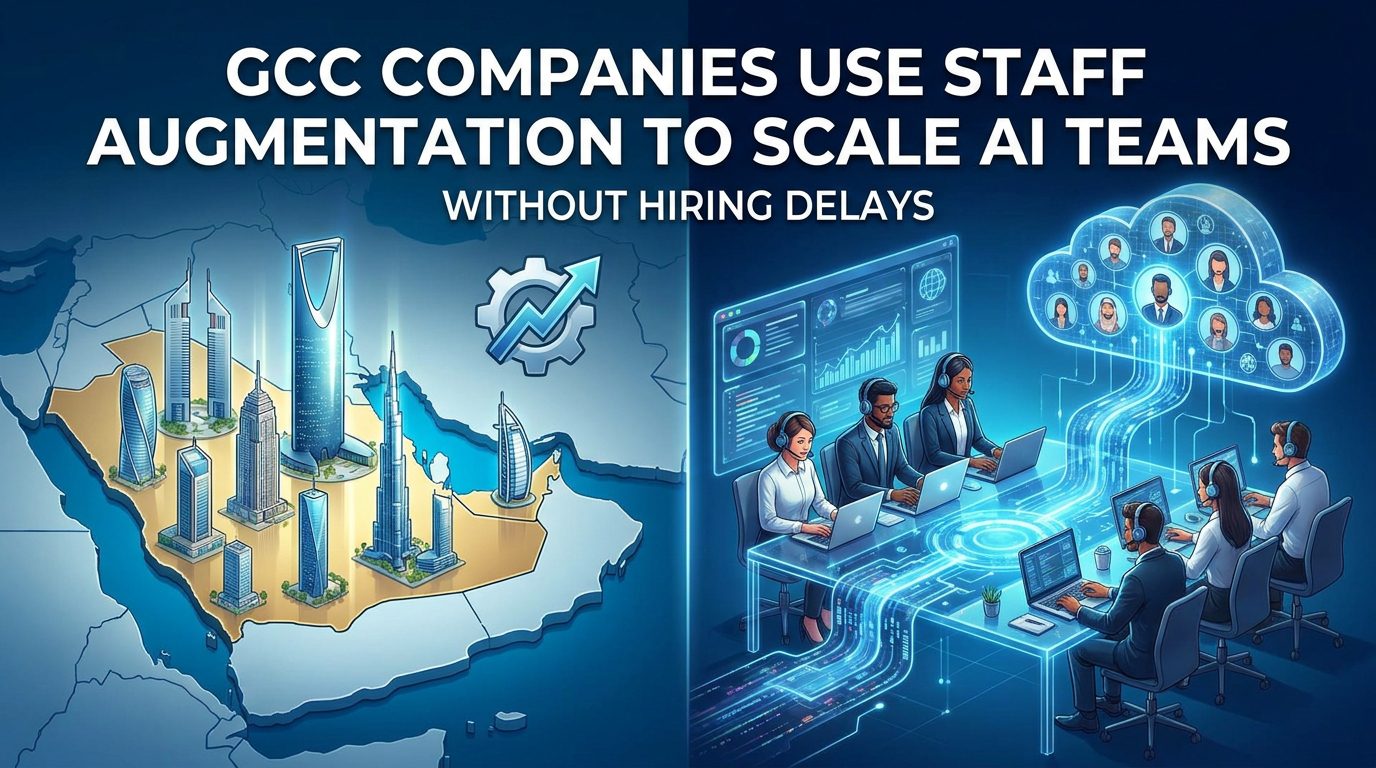
Artificial Intelligence has shifted from a distant ambition to an active reality across the Gulf Cooperation Council. Nations like the UAE, Saudi Arabia, and Qatar are accelerating toward digital ecosystems, yet a sharp imbalance persists—the appetite for AI specialists is outpacing supply. Companies urgently seek machine learning engineers and data scientists, but hiring pipelines remain sluggish, tangled in delays, costs, and fierce global competition.
To bypass this friction, many organizations are embracing staff augmentation. Instead of waiting months for full-time hires, they onboard skilled AI professionals within days. This rapid access to expertise is quietly becoming a decisive advantage in a speed-driven market.
What Staff Augmentation Really Means
At its core, staff augmentation is about temporarily integrating external talent into internal teams. Unlike outsourcing, control remains firmly in the company’s hands—projects, workflows, and direction stay internal, while external experts contribute as embedded collaborators.
This model fits AI development perfectly. AI work demands niche capabilities—think computer vision, NLP, or data engineering—that are rarely available in one place. Staff augmentation opens the door to global expertise, allowing companies to plug specific skill gaps exactly when needed.
Why Traditional Hiring Falls Short
Conventional hiring struggles to keep pace with AI demands. The process is long, resource-heavy, and often constrained by limited talent availability. By the time a candidate is hired, project timelines may already be compromised.
Costs add another layer of complexity. AI professionals command high salaries, and retaining them is equally challenging. For short-term projects, committing to full-time roles often leads to inefficiency and financial strain.
How GCC Companies Are Scaling Faster
Staff augmentation enables companies to scale AI teams almost instantly. Instead of building from scratch, they extend existing teams with ready-to-deploy experts. This agility is especially valuable for startups and fast-moving enterprises.
It also removes geographic limitations. GCC firms can collaborate with specialists worldwide without relocation hurdles, enriching projects with diverse insights and innovative thinking.
Key Advantages
- Flexibility: Scale teams up or down based on project needs
- Speed: Accelerate development and reduce time-to-market
- Cost Control: Pay only for required expertise
- Focus: Let internal teams concentrate on strategy, not hiring
Challenges to Consider
Despite its benefits, staff augmentation isn’t frictionless. Communication gaps may arise with distributed teams, and integrating external professionals requires structured onboarding. Data security also demands strict oversight, especially in AI projects handling sensitive information.
Looking Ahead
The GCC’s push toward AI-driven transformation shows no signs of slowing. As demand intensifies, traditional hiring models will continue to struggle under pressure. Staff augmentation, with its adaptability and efficiency, is evolving from a temporary fix into a long-term strategy.
Final Thought
For GCC companies, scaling AI teams quickly is no longer optional—it’s essential. Staff augmentation offers a streamlined path forward, blending speed, flexibility, and global reach. In a landscape where innovation moves fast, those who adapt fastest will lead.