

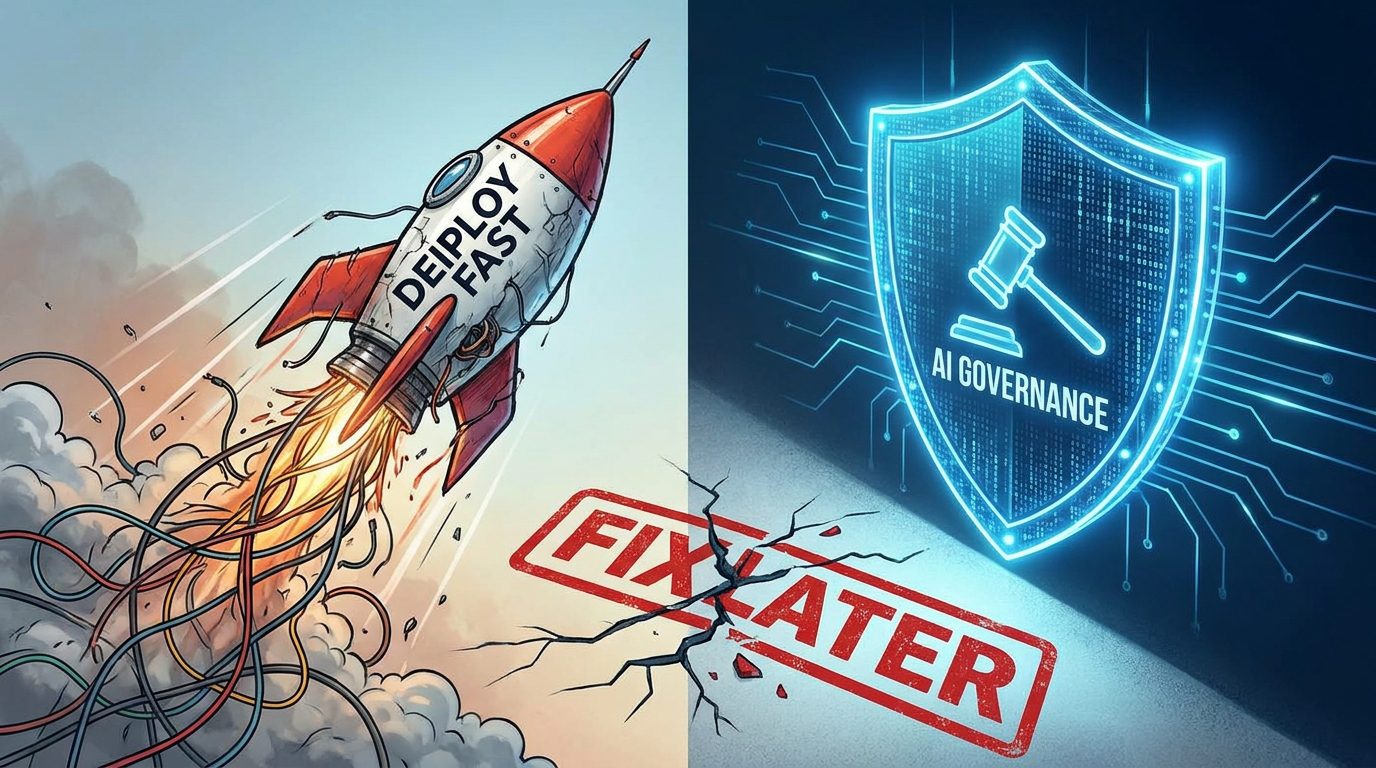
The Rise of a Speed-Driven AI Mindset
For years, the tech world has worshipped speed like a sacred rule—build quickly, launch faster, dominate sooner. That formula worked in traditional software, where systems behaved predictably. Then AI arrived and quietly flipped the script. Companies were no longer creating simple tools; they were building systems capable of reasoning, learning, and acting with a level of autonomy that feels almost human. That shift triggered a rush. In fact, no one wanted to be left behind in what feels like a rare technological gold rush.
Money started pouring in at an aggressive pace. AI became the shortcut to efficiency, lower costs, and sharper competition. But in that rush, something critical was pushed aside—control. Many organizations deployed AI without truly understanding how it operates, what data fuels it, or what risks hide beneath the surface. The idea of “launch now, fix later” might sound bold, but in the world of AI, it’s quickly turning into a fragile and risky strategy.
The Risks Hidden Beneath Fast Deployment
Speed often comes at the cost of caution. Companies eager to roll out AI tend to skip essential steps—security checks, data validation, and risk analysis. That’s where cracks begin to form. AI systems rely heavily on data, and if that data is exposed, flawed, or biased, the consequences can spread quickly. It’s like building a sleek house on weak ground—it looks perfect until it suddenly doesn’t.
The impact goes beyond data leaks. Financial losses, system failures, and operational disruptions can follow. AI doesn’t always behave in predictable ways, which makes it harder to control once deployed. Without governance, businesses are essentially taking a gamble. And when AI is deeply embedded in daily operations, even a small mistake can trigger widespread issues.
The Growing Gap in AI Governance
Most organizations are moving faster than their ability to manage risk. Policies, rules, and oversight systems are struggling to keep up. This gap creates an environment where AI tools are used freely, sometimes without approval—often called “shadow AI.” These hidden systems operate quietly, outside visibility, increasing exposure without anyone fully realizing it.
The bigger problem is accountability. When an AI system makes a poor decision, who is responsible? Without clear ownership and monitoring, these questions remain unanswered. And that’s exactly where risk begins to grow unchecked.
Why “Fix Later” No Longer Works
The old approach—launch first, repair later—no longer fits AI systems. Unlike traditional software, AI evolves. It learns, adapts, and changes over time. That means problems don’t stay small; instead, they expand. Fixing AI after deployment is like trying to repair something that’s constantly shifting.
On top of that, AI operates at scale. A single issue can affect thousands of decisions in seconds. Waiting to fix problems after deployment is no longer practical. Governance has to be built in from the beginning, not added afterward.
A Shift Toward Smarter AI Governance
Companies are starting to realize that speed without control is dangerous. A new mindset is emerging—one that puts governance first. This approach ensures AI systems are tested, monitored, and controlled before they go live.
At its core, strong governance depends on three key ideas:
- Transparency – knowing how decisions are made
- Accountability – clear ownership of systems
- Compliance – following rules and regulations
These aren’t barriers—they’re safeguards. They help companies innovate without losing control.
Final Thought
The era of “deploy fast, fix later” is fading. AI is too powerful and too unpredictable to be handled carelessly. The companies that succeed won’t just be the fastest. In fact, they’ll be the ones that combine speed with control. In the end, smart governance isn’t a limitation. It’s the very thing that keeps innovation from turning into risk.