

Introduction
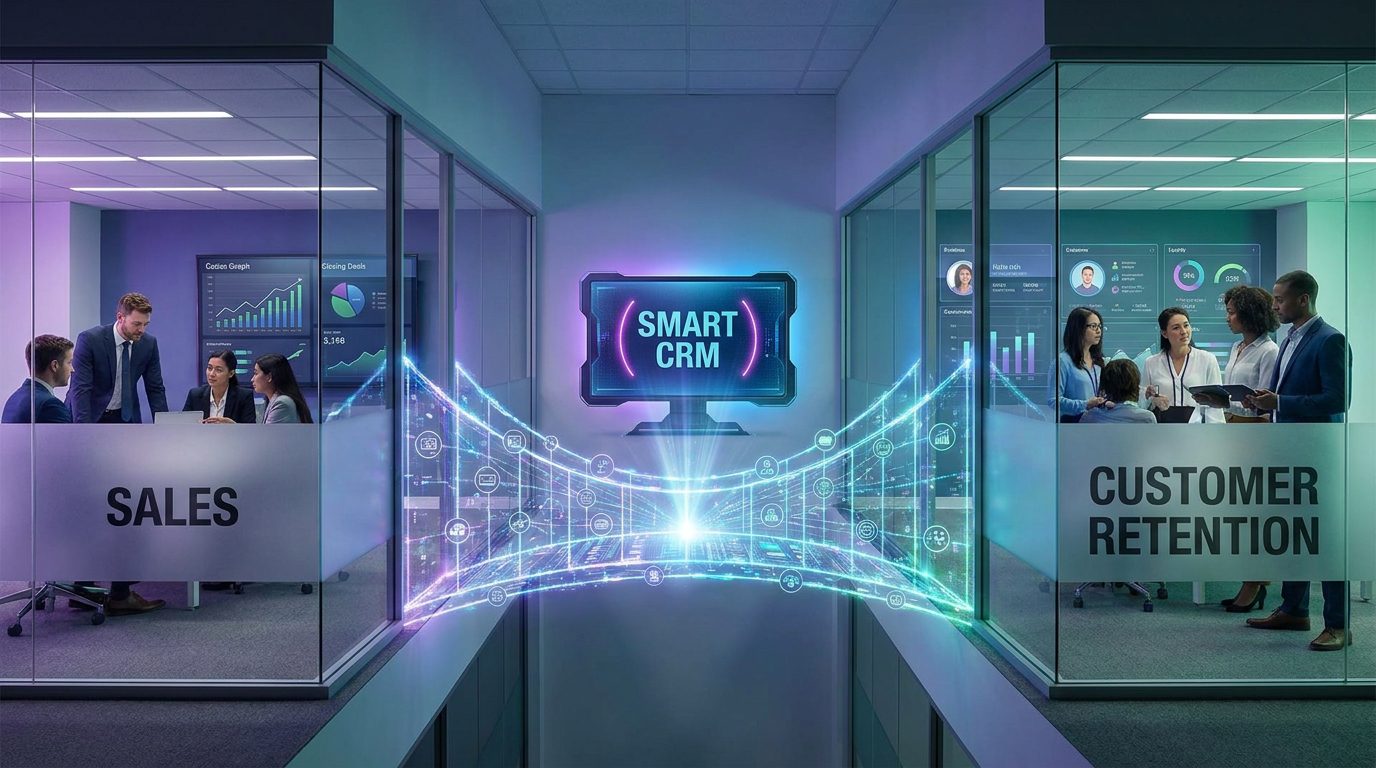
Modern businesses are no longer chasing quick sales alone. The bigger mission is keeping customers satisfied long after the purchase. Many brands spend heavily to attract buyers, yet struggle to maintain lasting relationships. This is where smart CRM systems are reshaping business operations. These platforms connect sales, marketing, and customer support into one synchronized system.
A modern CRM is far more advanced than a digital contact list. It monitors customer behavior, predicts future needs, and helps companies respond with greater speed and precision. By merging sales and retention through automation and shared data, businesses create smoother customer experiences and stronger loyalty.
Why Sales and Retention Must Work Together
A business cannot thrive if sales and customer support operate separately. A company may win customers through strong sales tactics, but weak follow-ups can quickly damage trust. Smart CRM systems bridge this divide by keeping every department aligned.
Businesses that focus on customer retention often grow faster because loyal customers buy repeatedly and recommend the brand to others. CRM systems help companies understand customer expectations at every stage, turning short-term buyers into long-term supporters.
What Makes Smart CRM Systems Different
Traditional CRM platforms mainly stored customer records. Smart CRM systems go further by using AI, automation, and analytics to improve communication and decision-making.
These systems collect information from emails, websites, social media, and customer service channels, storing everything in one place. This allows teams to access customer histories instantly, solve problems faster, and personalize interactions more effectively.
The Role of AI and Automation
Artificial intelligence has transformed CRM systems into predictive business tools. They can identify customer behavior patterns, suggest actions, and automate repetitive tasks like emails, reminders, and follow-ups.
For example, if a customer stops interacting with a brand, the CRM can automatically trigger a personalized message or alert the sales team. This keeps customers engaged and reduces the risk of losing them.
Benefits of Smart CRM Systems
Businesses using smart CRM systems often experience stronger customer loyalty and improved efficiency. These platforms help teams communicate better, reduce manual work, and deliver personalized experiences.
Some major advantages include:
- Faster customer support
- Better follow-up communication
- Increased sales opportunities
- Improved customer retention
- More organized business operations
Customers appreciate businesses that respond quickly and remember their preferences. CRM systems make that possible.
The Future of CRM and Customer Retention
CRM technology is becoming more intelligent every year. AI-powered insights, predictive analytics, and automation will continue shaping how businesses interact with customers.
Future CRM systems will likely include smarter chatbots, voice assistants, and deeper personalization features. Companies that adopt these tools early will have a major advantage in building stronger and longer-lasting customer relationships.
Conclusion
Smart CRM systems are changing how businesses manage customer relationships. Instead of separating sales from retention, companies now connect every stage of the customer journey through data, automation, and real-time communication.
Businesses that invest in smart CRM technology are not only improving efficiency but also building trust, loyalty, and long-term growth in an increasingly competitive market.