
PhishReaper Investigation: Anatomy of a JazzCash Brand-Abuse Mass Phishing Operation

PhishReaper Investigation: Anatomy of a JazzCash Brand-Abuse Mass Phishing Operation

A threat intelligence report based on research conducted by PhishReaper and presented by LogIQ Curve

Introduction

Digital payment platforms have transformed financial access across emerging markets, but their popularity has also made them prime targets for sophisticated phishing campaigns. Cybercriminals increasingly exploit trusted fintech brands to deceive users, harvest credentials, and conduct financial fraud.

As the Exclusive OEM Partner of PhishReaper in Pakistan, LogIQ Curve is pleased to share the latest cybersecurity intelligence uncovered by the PhishReaper research team. Through this collaboration, LogIQ Curve introduces the advanced phishing-detection capabilities of the PhishReaper platform to enterprises, financial institutions, telecom operators, and government organizations seeking proactive protection against modern cyber threats.

Organizations interested in strengthening their defenses against phishing infrastructure are encouraged to contact our cybersecurity specialists at security@logiqcurve.com.

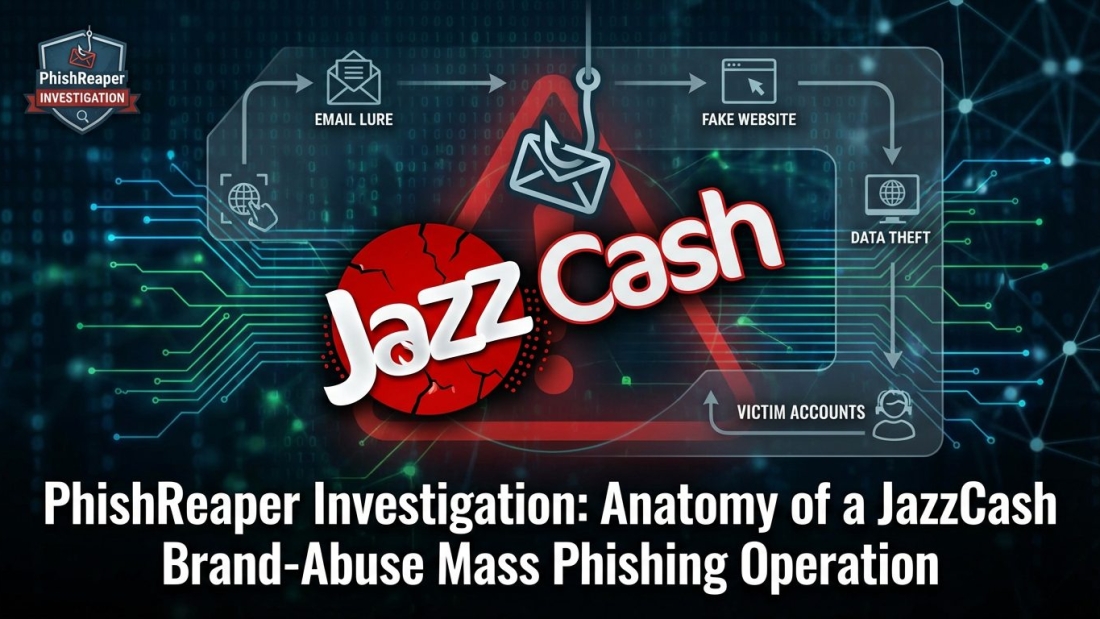
In one such investigation, PhishReaper analyzed a large-scale phishing campaign abusing the brand identity of JazzCash, a widely used mobile wallet platform in Pakistan. The campaign revealed a coordinated mass-phishing operation designed to impersonate the payment service and lure victims into fraudulent digital environments. (PhishReaper)

The Discovery: A Coordinated JazzCash Phishing Campaign

During routine threat-hunting operations, PhishReaper detected infrastructure associated with domains impersonating JazzCash services.

These malicious environments were crafted to replicate the appearance and functionality of legitimate JazzCash interfaces. Such phishing pages often encourage users to:
• Verify account information
• Update payment credentials
• Claim promotional rewards
• Authenticate their mobile wallet accounts

Once victims enter sensitive information, attackers can capture credentials and potentially gain unauthorized access to financial accounts.

The investigation revealed that the phishing activity was not limited to a single website. Instead, it appeared to be part of a coordinated mass-phishing campaign supported by multiple infrastructure components, suggesting a structured operation rather than an isolated incident. (PhishReaper)

Understanding the Infrastructure Behind the Attack

PhishReaper’s analysis examined the infrastructure supporting the JazzCash phishing ecosystem.

Several characteristics indicated an organized phishing operation:
• Domain registrations designed to mimic legitimate JazzCash branding
• Cloned login pages replicating mobile wallet interfaces
• Hosting environments capable of rapidly deploying phishing assets
• Coordinated domain clusters supporting campaign scalability

Such infrastructure allows attackers to launch multiple phishing pages simultaneously, increasing the chances that some will evade detection and reach victims.

By mapping relationships between these infrastructure components, PhishReaper was able to identify the broader phishing ecosystem supporting the campaign.

This infrastructure-level intelligence provides security teams with deeper visibility into how phishing campaigns operate behind the scenes.

Why Mobile Payment Platforms Are Attractive Targets

Digital payment platforms such as JazzCash represent highly attractive targets for cybercriminals.

These platforms handle:
• Financial transactions
• Personal identification information
• Mobile authentication credentials
• Linked bank accounts and wallets

Because users frequently interact with these platforms via SMS messages, mobile notifications, and web links, phishing campaigns can easily exploit these communication channels.

Attackers often create phishing pages that mimic account alerts, payment confirmations, or reward campaigns, messages that encourage users to interact quickly without verifying authenticity.

This social engineering tactic significantly increases the success rate of phishing attacks.

Why Traditional Security Systems Often Miss These Campaigns

Many traditional cybersecurity solutions rely on reactive detection mechanisms that depend on known indicators of compromise.

These systems typically detect phishing threats only after:
• Victims report suspicious links
• Security researchers identify malicious pages
• Domains appear on public blocklists

Such detection models introduce delays between the launch of a phishing campaign and its eventual discovery.

In large-scale phishing campaigns like the JazzCash operation, attackers may exploit this delay to distribute malicious links widely before detection systems respond.

As phishing infrastructure becomes more automated and scalable, reactive detection alone is increasingly insufficient.

PhishReaper’s Infrastructure-Level Threat Hunting

PhishReaper approaches phishing detection through intent-driven infrastructure analysis.

Instead of waiting for phishing pages to be reported, the platform analyzes signals that indicate a domain was created specifically for malicious purposes.

This includes examining:
• Suspicious domain naming patterns
• Brand token abuse
• Infrastructure relationships between domains
• Attacker deployment patterns

By identifying these signals early, PhishReaper can detect phishing infrastructure before it becomes widely visible across traditional threat-intelligence channels.

In the JazzCash case, this proactive analysis enabled investigators to identify a broader phishing ecosystem rather than focusing on isolated malicious pages.

Strategic Implications for Fintech and Telecom Ecosystems

Phishing campaigns targeting mobile payment services pose significant risks for both organizations and their customers.

Brand-abuse attacks can lead to:
• Theft of financial credentials
• Unauthorized transactions
• Identity theft
• Reputational damage for payment platforms

For fintech providers and telecom operators operating mobile wallet ecosystems, early detection of phishing infrastructure is essential to protecting users and maintaining trust.

Proactive threat-hunting platforms such as PhishReaper allow organizations to identify phishing campaigns earlier and respond before large-scale fraud occurs.

Moving Toward Proactive Cyber Defense

The JazzCash phishing operation highlights a broader trend within the cybersecurity landscape: phishing campaigns are evolving into structured, scalable operations.

Rather than deploying a single malicious website, attackers now build infrastructure capable of supporting mass-phishing activity across multiple channels.

To counter this threat, organizations must adopt proactive detection strategies capable of identifying malicious infrastructure before campaigns reach widespread distribution.

Such technologies provide:
• Earlier visibility into phishing operations
• Stronger protection against brand impersonation
• Deeper understanding of attacker infrastructure
• Enhanced threat-intelligence capabilities for SOC teams

This shift from reactive detection to proactive threat hunting represents a critical step in modern cybersecurity defense.

Conclusion

The JazzCash brand-abuse campaign uncovered by PhishReaper demonstrates how phishing operations targeting digital payment platforms can evolve into large-scale, coordinated attacks.

By analyzing the infrastructure supporting the campaign, PhishReaper’s threat-hunting technology was able to illuminate a mass-phishing ecosystem designed to impersonate a trusted financial service.
This investigation reinforces the importance of proactive phishing detection and infrastructure-level threat intelligence.

Through its collaboration with PhishReaper, LogIQ Curve remains committed to helping organizations identify phishing campaigns before they escalate into major cyber incidents.

Learn More About PhishReaper

Organizations interested in evaluating the PhishReaper phishing detection platform can contact LogIQ Curve to learn how this technology can strengthen enterprise security operations.
📧 security@logiqcurve.com

LogIQ Curve works with:
• Banks
• Telecom operators
• Government organizations
• Enterprises
• SOC teams
to identify phishing infrastructure before attacks, reach users.

Research Attribution

This analysis is based on the original threat-intelligence research conducted by PhishReaper. LogIQ Curve republishes these findings for its global audience as the Exclusive OEM Partner of PhishReaper in Pakistan, helping organizations gain early visibility into emerging phishing threats. (PhishReaper)

Description

PhishReaper uncovers a mass-phishing campaign abusing the JazzCash brand. Discover how proactive threat hunting exposed the infrastructure behind this large-scale fintech phishing operation.

#PhishReaper #LogIQCurve #CyberSecurity #PhishingDetection #ThreatIntelligence #ThreatHunting #CyberDefense #EnterpriseSecurity #SOC #AIinCybersecurity #DigitalSecurity #CyberResilience #FintechSecurity #MobileWalletSecurity #InfoSec #SecurityOperations #CyberThreats #PakistanCyberSecurity #CyberInnovation #SafwanKhan #HaiderAbbas #NajeebUlHussan #MumtazKhan #CISO #CTO #SecurityLeadership

AI Sovereignty: Why Businesses Are Moving Toward Private, Offline AI

AI Sovereignty: Why Businesses Are Moving Toward Private, Offline AI

Understanding AI Sovereignty

What AI Sovereignty Really Means

Let’s keep it simple. AI sovereignty is about control. Not partial control, not shared control—full control. When a business owns its AI systems, data pipelines, and infrastructure, it doesn’t have to rely on external platforms to function. Think of it like owning your own office instead of renting a co-working space. You decide the rules, the security, and who gets access.

This idea has become incredibly important as AI moves from being a “nice-to-have” to a core business engine. Companies are no longer experimenting—they are building entire operations around AI. That means the risks are higher too. If your AI depends on external providers, then your business is indirectly dependent on them as well. That’s a risky position to be in.

AI sovereignty also extends beyond just where your data sits. It includes how your data is processed, how your models are trained, and who can interact with them. It’s about building a system that you fully understand and fully control from end to end. For many businesses, this is no longer optional—it’s becoming a strategic necessity.

Evolution from Cloud AI to Sovereign AI

A few years ago, cloud-based AI was the obvious choice. It was fast to deploy, easy to scale, and didn’t require heavy upfront investment. Companies could plug into APIs and start building right away. It felt like the perfect solution.

But over time, cracks started to appear. Businesses began noticing issues like unpredictable costs, limited customization, and concerns around data exposure. The convenience of the cloud came with trade-offs, and those trade-offs became harder to ignore as AI workloads grew.

Now, the trend is shifting. Instead of relying entirely on cloud providers, companies are building their own AI environments or combining cloud with private infrastructure. This shift reflects a deeper realization: when AI becomes central to your operations, outsourcing control can create long-term risks. As a result, businesses are moving toward sovereign AI models that offer more stability, security, and independence.


The Shift Toward Private and Offline AI

What is Private AI Infrastructure

Private AI infrastructure means running your AI systems in an environment that you own or fully control. This could be on-premise servers, dedicated data centers, or private cloud environments that are not shared with other organizations. The key idea is exclusivity—your data and models are not mixed with anyone else’s.

This approach gives businesses a sense of ownership that public cloud solutions often cannot match. When everything runs within your own environment, you don’t have to worry about external access points or shared vulnerabilities. It’s like having a private vault instead of a shared storage unit.

Another major advantage is flexibility. With private infrastructure, companies can fine-tune their systems according to their specific needs. They are not limited by the constraints of a third-party provider. This level of customization is especially valuable for industries that rely on highly specialized data and workflows.

What is Offline (Air-Gapped) AI

Offline AI, often called air-gapped AI, takes security to the next level. These systems are completely disconnected from the internet. There is no external access, no cloud synchronization, and no risk of data leakage through online channels.

This might sound extreme, but for certain industries, it makes perfect sense. Think about defense organizations, financial institutions, or healthcare providers handling sensitive patient data. In these environments, even a small breach can have serious consequences.

Running AI in an offline environment ensures that data stays exactly where it belongs. It never leaves the system, and it is never exposed to external threats. While this approach requires more effort to maintain, it provides a level of security that is hard to achieve with connected systems.


Key Drivers Behind AI Sovereignty

Data Privacy and Security Concerns

Data is one of the most valuable assets a company has. Protecting it is not just a technical issue—it’s a business priority. As cyber threats become more advanced, companies are looking for ways to minimize their exposure.

Keeping data within a controlled environment significantly reduces the risk of breaches. When businesses rely on external platforms, they introduce additional points of vulnerability. By bringing AI systems in-house, they can limit access and maintain tighter control over sensitive information.

Rising Cloud Costs

Cloud services are often marketed as cost-effective, but that’s not always the case in the long run. As AI workloads grow, so do the costs associated with storage, computation, and data transfer. What starts as an affordable solution can quickly become expensive.

Private AI offers a different cost structure. While the initial investment may be higher, the ongoing costs are more predictable. For companies running large-scale AI operations, this can lead to significant savings over time.

Regulatory and Compliance Pressure

Governments and regulatory bodies are becoming stricter about how data is handled. Many regions now require companies to store and process data within specific geographic boundaries. This adds another layer of complexity for businesses using global cloud services.

Private AI makes compliance easier. When you control your infrastructure, you can ensure that your systems meet local regulations without relying on external providers to do it for you. This level of control simplifies compliance and reduces legal risks.

Control Over Intellectual Property

AI models are often trained on proprietary data that gives businesses a competitive edge. If that data is exposed or misused, it can have serious consequences. Public platforms may introduce risks related to data sharing or unintended exposure.

By using private AI systems, companies can protect their intellectual property. They can ensure that their models and data remain confidential and are not accessible to outside parties. This is especially important for organizations that rely on unique datasets to differentiate themselves in the market.


Benefits of Private, Offline AI

Enhanced Security and Data Protection

Security is the most obvious benefit of private AI. When systems are isolated and controlled, the risk of unauthorized access is significantly reduced. Data stays within the organization, and there are fewer entry points for potential attackers.

This level of protection is critical for industries that handle sensitive information. It allows businesses to operate with confidence, knowing that their data is secure.

Reduced Latency and Faster Processing

When AI systems run locally, they don’t need to send data to remote servers for processing. This reduces latency and improves performance. In many cases, the difference can be noticeable, especially for applications that require real-time responses.

Faster processing can lead to better user experiences and more efficient operations. It also allows businesses to make decisions more quickly, which can be a significant advantage in competitive environments.

Cost Optimization Over Time

While private AI requires upfront investment, it can be more cost-effective in the long run. Companies avoid ongoing subscription fees and reduce their reliance on external services. This makes budgeting easier and eliminates unexpected cost spikes.

Customization and Domain-Specific Intelligence

Private AI allows businesses to build models that are tailored to their specific needs. Instead of relying on generic solutions, they can create systems that understand their data and workflows in depth.

This leads to more accurate insights and better performance. It also gives companies a competitive advantage, as their AI systems are designed specifically for their industry and use cases.


Challenges of Moving to Sovereign AI

Infrastructure Complexity

Building and maintaining private AI infrastructure is not simple. It requires expertise in hardware, networking, and software development. Companies need to invest in the right tools and systems to make it work effectively.

Talent and Skill Gaps

There is a growing demand for professionals who understand AI infrastructure. Finding the right talent can be challenging, especially for organizations that are new to this space.

Initial Setup Costs

The upfront cost of setting up private AI systems can be significant. This includes hardware, software, and implementation expenses. However, many businesses view this as a long-term investment rather than a short-term cost.


Private AI vs Public Cloud AI

FeaturePrivate AIPublic Cloud AI
Data ControlFull controlLimited control
SecurityHighModerate
Cost (Long-term)LowerHigher
ScalabilityModerateHigh
ComplianceEasierComplex

Real-World Use Cases

Healthcare

In healthcare, data privacy is critical. Private AI systems allow hospitals to analyze patient data without exposing it to external networks. This helps maintain confidentiality while still benefiting from advanced analytics.

Finance and Banking

Financial institutions use private AI to detect fraud and manage transactions securely. By keeping data in-house, they reduce the risk of breaches and ensure compliance with strict regulations.

Manufacturing and Industry

Manufacturing companies use AI to monitor equipment and predict failures. Running these systems locally allows for faster responses and more reliable operations.


The Role of Edge AI and Small Language Models

Rise of Small Language Models

Large AI models are powerful, but they require significant resources. Smaller models offer a practical alternative. They are easier to deploy, faster to run, and well-suited for private environments.

These models make it possible for more businesses to adopt AI without relying on massive cloud infrastructure.

Edge Computing and Local Processing

Edge AI brings computation closer to where data is generated. This reduces the need for data transfer and improves efficiency. It also aligns perfectly with the idea of AI sovereignty, as processing happens within a controlled environment.


Hybrid AI: The Middle Ground

Combining Cloud and Private AI

Not every workload needs to be private. Many companies are adopting hybrid approaches that combine the flexibility of the cloud with the control of private systems. This allows them to balance performance, cost, and security.

Hybrid AI offers a practical path forward for organizations that want to transition gradually without giving up the benefits of cloud services entirely.


Growth of Sovereign AI Investments

Investment in sovereign AI is increasing rapidly. As more companies recognize the importance of control and security, they are allocating resources to build private AI capabilities.

AI as Critical Infrastructure

AI is becoming as essential as electricity or the internet. Businesses rely on it for decision-making, automation, and innovation. Treating AI as critical infrastructure means prioritizing reliability, security, and control.


Conclusion

AI sovereignty represents a major shift in how businesses think about technology. It’s no longer just about using AI—it’s about owning it. Private and offline AI systems give companies the control they need to operate securely and efficiently.

This shift is not without challenges, but the benefits are clear. Businesses that invest in sovereign AI are better positioned to protect their data, reduce costs, and build systems that truly serve their needs. As AI continues to evolve, control will become even more important, making sovereignty a key factor in long-term success.

Open-Source AI vs. Proprietary Models: Which Should Your Business Choose? this is title of my blog give me featured image for this article

Open-Source AI vs. Proprietary Models: Which Should Your Business Choose?

Understanding the AI Landscape in 2026

Why AI Adoption is Exploding Across Industries

Artificial intelligence has shifted from being an experimental tool to a core business driver. Companies across industries are using AI to automate workflows, enhance customer experience, and make faster, data-driven decisions. The demand is no longer limited to tech companies. Retail, healthcare, finance, and even small startups are embracing AI to stay competitive in a rapidly evolving market.

One of the biggest reasons behind this surge is efficiency. Businesses are under constant pressure to do more with less. AI helps reduce manual work, cut costs, and improve accuracy. Instead of relying on guesswork, companies can now predict trends, understand customer behavior, and optimize operations with precision. This creates a powerful advantage that is hard to ignore.

Another factor driving adoption is accessibility. AI tools are no longer restricted to large enterprises with massive budgets. Today, even smaller businesses can access powerful AI capabilities through APIs or open-source frameworks. This democratization of AI has opened the door for innovation at every level.

As organizations adopt AI, they face a critical decision early on. Should they rely on open-source solutions or invest in proprietary platforms? This choice shapes everything from cost structure to scalability, making it one of the most important strategic decisions in modern business.

The Rise of Hybrid AI Strategies

Instead of choosing one approach over the other, many companies are blending both open-source and proprietary AI models. This hybrid strategy allows businesses to take advantage of the strengths of each approach while minimizing their weaknesses.

For example, a company might use proprietary AI for general tasks like customer support or content generation. These tools are easy to implement and require minimal setup. At the same time, the same company could use open-source models for specialized applications that require customization, such as internal analytics or domain-specific automation.

This combination offers flexibility. Businesses can scale quickly with proprietary tools while maintaining control over critical systems using open-source models. It also helps reduce dependency on a single vendor, which is a growing concern in today’s market.

The rise of hybrid strategies reflects a broader trend in technology adoption. Companies are no longer looking for one-size-fits-all solutions. Instead, they are building ecosystems that align with their unique goals, resources, and challenges.


What is Open-Source AI?

Key Characteristics of Open-Source Models

Open-source AI refers to models and frameworks that are publicly available for anyone to use, modify, and distribute. This openness creates a collaborative environment where developers and researchers contribute to continuous improvement. It also allows businesses to adapt these models to their specific needs.

One of the defining features of open-source AI is transparency. Users can examine how the model works, understand its limitations, and make adjustments if needed. This level of visibility is especially important for organizations that prioritize data privacy and compliance.

Another important aspect is flexibility. Businesses are not restricted by licensing agreements or vendor limitations. They can host the models on their own infrastructure, integrate them into existing systems, and customize them as required. This makes open-source AI particularly appealing for companies with unique or complex requirements.

However, this flexibility comes with responsibility. Organizations need the technical expertise to manage and maintain these systems. Without the right skills, the benefits of open-source AI can quickly turn into challenges.

Open-source AI has grown significantly in recent years, with several powerful models gaining widespread adoption. These models are designed for a variety of use cases, including natural language processing, image recognition, and data analysis.

What makes these models stand out is their rapid evolution. Because they are developed by global communities, improvements happen quickly. New features, optimizations, and bug fixes are constantly being introduced, making open-source AI a dynamic and fast-moving field.

Another advantage is specialization. Many open-source models are designed for specific industries or tasks. This allows businesses to choose solutions that align closely with their needs, rather than relying on general-purpose tools.


What are Proprietary AI Models?

How Proprietary AI Works

Proprietary AI models are developed and owned by companies. These models are not publicly accessible, and users interact with them through APIs or software platforms. The underlying code and training data remain confidential, which is why they are often referred to as closed systems.

This approach simplifies the user experience. Businesses do not need to worry about setting up infrastructure, training models, or managing updates. Everything is handled by the provider, allowing companies to focus on using the technology rather than building it.

Proprietary AI is designed for convenience and performance. These models are typically optimized using large datasets and advanced techniques, resulting in high accuracy and reliability. They are also regularly updated to keep up with evolving industry standards.

However, this convenience comes at a cost. Businesses must rely on the provider for access, updates, and support. This dependency can create challenges, especially if pricing or policies change over time.

Leading Proprietary AI Providers

Several major companies dominate the proprietary AI space, offering a wide range of tools and services. These providers focus on delivering high-performance models that can be easily integrated into business workflows.

What sets these providers apart is their investment in research and development. They continuously improve their models, ensuring that users have access to cutting-edge technology. They also provide support, documentation, and integration tools, making it easier for businesses to get started.

For organizations that prioritize speed and simplicity, proprietary AI offers a compelling solution. It allows them to deploy advanced capabilities without the need for in-house expertise or infrastructure.


Core Differences Between Open-Source and Proprietary AI

Transparency vs. Control

One of the biggest differences between open-source and proprietary AI is transparency. Open-source models allow users to see how they work, making it easier to understand and trust their outputs. Proprietary models, on the other hand, operate as black boxes, where the internal processes are hidden from users.

Control is another key factor. Open-source AI gives businesses full control over how the model is used and modified. Proprietary AI limits this control, as users must operate within the constraints set by the provider.

Cost Structures Compared

The cost structure of each approach is very different. Open-source AI often has low initial costs because there are no licensing fees. However, businesses must invest in infrastructure, development, and maintenance.

Proprietary AI typically involves subscription fees or usage-based pricing. While this can be more expensive over time, it reduces the need for upfront investment and technical resources.

Customization Capabilities

Customization is where open-source AI truly shines. Businesses can modify the model to fit their exact needs, making it ideal for specialized applications. Proprietary AI offers limited customization, usually through configuration settings or APIs.

Ease of Deployment

Proprietary AI is designed for quick and easy deployment. Businesses can integrate it into their systems with minimal effort. Open-source AI requires more time and expertise, as it involves setup, configuration, and ongoing management.


Advantages of Open-Source AI for Businesses

Flexibility and Customization

Open-source AI provides unmatched flexibility. Businesses can tailor models to their specific needs, whether it involves training on custom data or optimizing for particular tasks. This level of control allows companies to create solutions that are highly aligned with their goals.

Customization also leads to innovation. Companies can experiment with different approaches, test new ideas, and develop unique capabilities that set them apart from competitors. This is especially valuable in industries where differentiation is key.

Cost Efficiency Over Time

While open-source AI may require an initial investment, it can be more cost-effective in the long run. Businesses are not tied to recurring licensing fees, and they have control over resource usage.

This makes open-source AI an attractive option for organizations that plan to scale their operations. As usage increases, the cost savings become more significant compared to proprietary solutions.


Disadvantages of Open-Source AI

Technical Complexity

Open-source AI requires a high level of technical expertise. Businesses need skilled professionals to set up, manage, and maintain the system. Without the right team, implementation can become challenging and time-consuming.

Infrastructure Requirements

Running open-source AI models often involves significant infrastructure. This includes servers, storage, and data pipelines. For smaller businesses, these requirements can be a barrier to entry.


Advantages of Proprietary AI Models

Ease of Use and Integration

Proprietary AI models are designed to be user-friendly. Businesses can integrate them into existing systems without extensive technical knowledge. This makes them ideal for companies that want quick results.

High Performance and Support

Proprietary AI often delivers high performance due to advanced optimization and large datasets. Additionally, providers offer support and regular updates, ensuring reliability and continuous improvement.


Disadvantages of Proprietary AI

Vendor Lock-in Risks

Using proprietary AI can create dependency on a single provider. Switching to another platform can be difficult, especially if systems are deeply integrated.

Long-Term Costs

Subscription fees and usage-based pricing can add up over time. For businesses with high usage, this can become a significant expense.


Businesses are increasingly adopting hybrid approaches, combining open-source and proprietary AI to meet their needs. This trend reflects the growing understanding that no single solution fits all scenarios.


How to Choose the Right AI Strategy for Your Business

Choosing the right AI strategy depends on your business goals, resources, and technical capabilities. Companies should evaluate their needs carefully and consider factors such as cost, scalability, and customization.


Conclusion

The choice between open-source and proprietary AI is not about which is better, but which is more suitable for your business. Each approach has its strengths and challenges, and the best solution often involves a combination of both.

A threat intelligence report based on research conducted by PhishReaper and presented by LogIQ Curve

PhishReaper Investigation: Google’s New Year Phishing Hellscape, Detected on Day-1

Introduction

The start of a new year often brings new innovations in technology, but unfortunately, it also introduces new waves of cyber threats. Among the most dangerous of these are phishing campaigns that exploit globally trusted brands to lure victims into revealing sensitive data or downloading malicious software.

As the Exclusive OEM Partner of PhishReaper in Pakistan, LogIQ Curve is pleased to present the latest threat-intelligence insights uncovered by the PhishReaper research team. Through this strategic partnership, LogIQ Curve brings the powerful phishing-detection capabilities of the PhishReaper platform to enterprises, financial institutions, telecom operators, and government organizations seeking to proactively defend their digital ecosystems.

Organizations interested in identifying phishing infrastructure before attacks escalate are invited to contact our cybersecurity specialists at security@logiqcurve.com.

In a recent investigation, PhishReaper identified a cluster of Google-impersonating domains that had begun appearing in the wild early in 2026. These domains were part of a broader phishing ecosystem designed to evade conventional detection systems through techniques such as redirect laundering, dormant infrastructure staging, and abuse of trusted cloud platforms. (PhishReaper)

The Discovery: A Network of Google-Impersonation Domains

PhishReaper’s threat-hunting platform detected multiple domains impersonating Google services shortly after they were registered.

Examples included domains such as:
• Protected-google[.]com
• Helps-google[.]com
• Accountrecover-google[.]com

Some of these domains appeared harmless because they simply redirected visitors to legitimate Google websites. However, this behavior was intentionally designed to evade automated security scanners that check only the homepage of a domain before classifying it as benign. (PhishReaper)

This technique, known as reputation laundering, allows attackers to disguise malicious infrastructure behind legitimate redirects while preparing the domain for future phishing activity.

PhishReaper’s early detection revealed that these domains were part of a coordinated infrastructure cluster rather than isolated incidents.

Dormant Infrastructure: The “Inactive” Domains That Are Not Inactive

One particularly revealing example identified during the investigation was a domain that appeared inactive when scanned.

For most security systems, such a domain would appear harmless because it returned a hosting error page. However, PhishReaper’s analysis indicated that the infrastructure was pre-positioned phishing infrastructure, not an abandoned website.

These domains may display no active content yet still possess key operational components:
• Active DNS configuration
• Valid TLS certificates
• Prepared hosting infrastructure
• Domain reputation that improves over time

Attackers often stage such domains months in advance so they can activate phishing campaigns instantly when needed.

PhishReaper’s detection methodology identifies these patterns even when the infrastructure appears dormant.

Fake Software Distribution: Chrome Look-Alike Payload

Another domain identified during the investigation served what appeared to be a Google Chrome download page.

However, deeper inspection revealed that the binary distributed through the site was not legitimate software.

At the time of discovery:
• The payload was undetected by common antivirus engines
• The hosting infrastructure appeared clean
• No signature-based detection systems triggered alerts

This scenario represents a particularly dangerous form of phishing infrastructure because it combines brand impersonation with malware delivery, enabling attackers to distribute malicious software under the appearance of trusted downloads. (PhishReaper)

Abuse of Trusted Platforms

The investigation also uncovered phishing surfaces hosted on legitimate cloud infrastructure.

One example involved a Flutter web application deployed via Google Cloud infrastructure, built using the FlutterFlow platform.

Key observations included:
• Deliberate instructions preventing search engine indexing
• Legitimate cloud hosting infrastructure
• Dynamic content rendering typical of modern applications

Because the hosting platform itself is trusted, many security systems hesitate to classify such environments as malicious.

However, from a threat-intelligence perspective, a Google-branded application deployed outside of Google’s official infrastructure represents a clear signal of potential brand abuse.

PhishReaper’s detection systems flagged these signals immediately.

Why Traditional Security Tools Failed to Detect the Campaign

The investigation revealed a broader weakness within the global phishing-detection ecosystem.

Many traditional security tools rely on:
• Static reputation scoring
• Blocklists
• Signature-based malware scanning
• Basic redirect checks

Modern attackers have adapted to these mechanisms by building infrastructure designed specifically to evade them.

The Google phishing infrastructure identified in this investigation demonstrated several advanced evasion techniques, including:
• Staged infrastructure deployment
• Conditional payload delivery
• Cloud platform abuse
• Redirect reputation laundering

These techniques allow phishing infrastructure to remain undetected even when publicly accessible.

PhishReaper’s Agentic AI Threat Hunting

PhishReaper approaches phishing detection from a fundamentally different perspective.

Instead of asking whether a domain is already known to be malicious, the platform analyzes why the domain exists at all.

The platform’s Agentic AI examines signals such as:
• Large-scale brand token abuse
• Suspicious domain naming patterns
• Infrastructure staging behaviors
• Redirect deception strategies
• Hosting semantics and framework misuse

By focusing on intent rather than reputation, PhishReaper can detect phishing infrastructure immediately after it appears, without waiting for victims or external reports.

This approach allowed the platform to detect the Google impersonation infrastructure on the first day of its appearance. (PhishReaper)

Strategic Implications for Enterprises

Phishing campaigns that impersonate globally trusted brands such as Google present significant risks for organizations and their users.

These risks include:
• Credential theft
• Malware infection
• Account takeover
• Data exfiltration
• Reputational damage

The investigation highlights the importance of detecting phishing infrastructure before campaigns reach their distribution phase.

Organizations that rely solely on reactive detection models may remain exposed during the early stages of sophisticated phishing operations.

Moving Toward Proactive Cyber Defense

The Google phishing infrastructure uncovered by PhishReaper demonstrates how phishing campaigns are evolving into highly structured cybercrime ecosystems.

To defend against these threats, organizations must adopt technologies capable of identifying malicious infrastructure before it becomes widely visible.

Proactive threat-hunting platforms provide organizations with:
• Early visibility into emerging phishing campaigns
• Stronger protection against brand impersonation attacks
• Deeper understanding of attacker infrastructure
• Enhanced threat-intelligence capabilities for security teams

By shifting toward proactive cyber defense, enterprises can significantly reduce the impact of phishing operations.

Conclusion

The Google impersonation campaign identified by PhishReaper illustrates how modern phishing infrastructure can operate in plain sight while evading traditional detection systems.

By analyzing attacker intent and infrastructure behavior, PhishReaper’s Agentic AI detected the campaign immediately, without waiting for user reports, malware callbacks, or external threat intelligence feeds.

This early detection highlights the importance of proactive threat hunting in modern cybersecurity strategies.

Through its collaboration with PhishReaper, LogIQ Curve remains committed to helping organizations identify phishing infrastructure before it escalates into large-scale cyber incidents.

Learn More About PhishReaper

Organizations interested in evaluating the PhishReaper phishing detection platform can contact LogIQ Curve to learn how this technology can strengthen enterprise security operations.
📧 security@logiqcurve.com

LogIQ Curve works with:
• Banks
• Telecom operators
• Government organizations
• Enterprises
• SOC teams

to identify phishing infrastructure before attacks, reach users.

Research Attribution

This analysis is based on the original threat-intelligence research conducted by PhishReaper. LogIQ Curve republishes these findings for its global audience as the Exclusive OEM Partner of PhishReaper in Pakistan, helping organizations gain early visibility into emerging phishing threats.

Description

PhishReaper uncovers a Google-impersonation phishing infrastructure detected on Day-1. Learn how AI-driven threat hunting exposed redirect laundering, fake Chrome downloads, and staged phishing domains.

#PhishReaper #LogIQCurve #CyberSecurity #PhishingDetection #ThreatIntelligence #ThreatHunting #CyberDefense #EnterpriseSecurity #SOC #AIinCybersecurity #DigitalSecurity #CyberResilience #GooglePhishing #BrandProtection #InfoSec #SecurityOperations #CyberThreats #CISO #CTO #PakistanCyberSecurity #CyberInnovation #SafwanKhan #HaiderAbbas #MumtazKhan
#NajeebUlHussan #SecurityLeadership

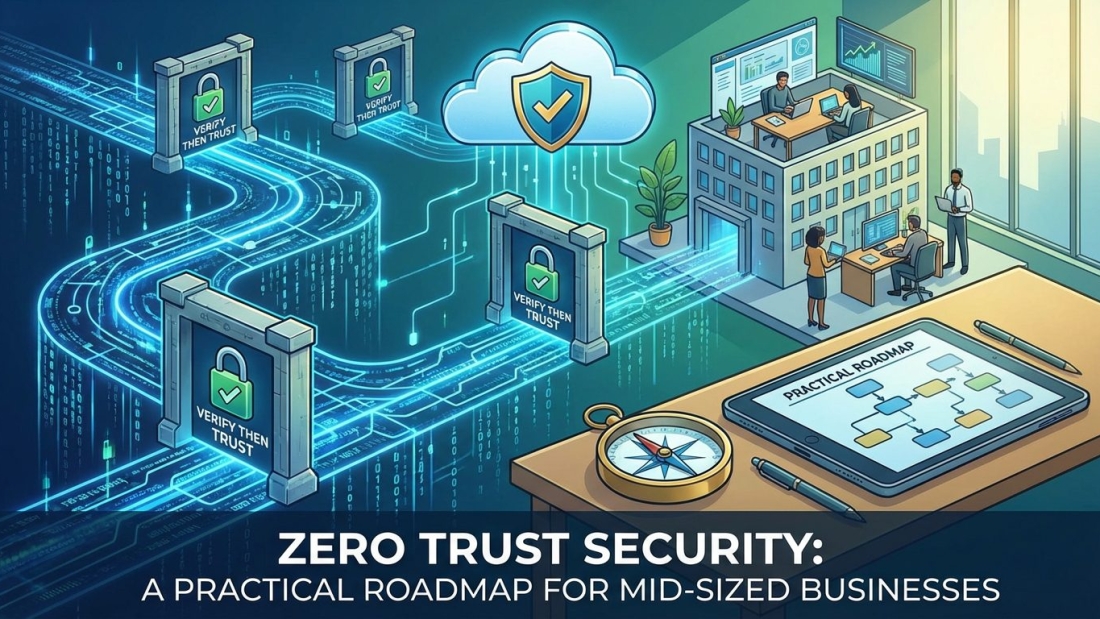
Zero trust security: A practical roadmap for mid-sized businesses

Zero trust security: A practical roadmap for mid-sized businesses

Understanding Zero Trust Security

What Zero Trust Really Means

Let’s cut through the buzzwords—Zero Trust security isn’t about trusting nothing; it’s about verifying everything.

In traditional security models, once someone gets inside your network, they’re often trusted by default. That’s like letting someone into your house and assuming they’ll behave perfectly just because they’re inside. Sounds risky, right?

Zero Trust flips that idea completely. It works on a simple rule: never trust, always verify. Every user, device, and application must prove its legitimacy—every single time.

This approach doesn’t just secure the perimeter. It secures everything inside it too. And in today’s world, where threats can come from anywhere—even inside your organization—that mindset is critical.

Why Traditional Security Models Fail

Old-school security was built for a different era—when everything lived inside one office network. Firewalls and VPNs were enough back then.

But today? Businesses are spread across cloud platforms, remote teams, and mobile devices. The “perimeter” has basically disappeared.

Here’s the problem: once attackers breach the outer layer, they can move freely inside. That’s exactly what Zero Trust is designed to stop.

It’s not about building higher walls—it’s about locking every door inside the building.


Why Mid-Sized Businesses Need Zero Trust Now

Rising Cyber Threats

Cyberattacks are no longer targeting just big corporations. Mid-sized businesses are now prime targets because they often have valuable data but weaker defenses.

Hackers know this—and they exploit it.

From ransomware to phishing attacks, the threats are growing more sophisticated. And without a strong security model, even a single breach can cause serious damage—financially and reputationally.

Remote Work and Cloud Adoption

Let’s face it—work isn’t tied to an office anymore.

Employees are logging in from home, coffee shops, and different countries. At the same time, companies are moving data and applications to the cloud.

This creates a complex environment where traditional security simply can’t keep up.

Zero Trust is built for this new reality. It secures access no matter where users are or what device they’re using.


Core Principles of Zero Trust

Verify Explicitly

Every access request must be verified using multiple data points—identity, location, device health, and more.

It’s like a security checkpoint that checks your ID, your ticket, and even your behavior before letting you through.

Least Privilege Access

Users should only have access to what they absolutely need—nothing more.

This minimizes risk. Even if an account is compromised, the damage stays limited.

Assume Breach Mindset

Zero Trust assumes that breaches will happen. Instead of hoping for the best, it prepares for the worst.

This mindset ensures that systems are always monitored and threats are quickly contained.


Key Components of a Zero Trust Architecture

Identity and Access Management

Identity is the new perimeter.

Strong authentication methods like multi-factor authentication (MFA) ensure that only verified users gain access. This is the foundation of Zero Trust.

Device Security

Not all devices are safe. Some may be outdated or compromised.

Zero Trust checks device health before granting access. If something looks suspicious, access is denied.

Network Segmentation

Instead of one big open network, Zero Trust divides it into smaller segments.

This prevents attackers from moving freely if they gain access. It’s like having multiple locked rooms instead of one big hall.

Data Protection

Data is the most valuable asset—and it needs strong protection.

Encryption, access controls, and monitoring ensure that sensitive information stays secure at all times.


Step-by-Step Zero Trust Implementation Roadmap

Step 1: Assess Current Security Posture

Start by understanding where you stand.

Identify vulnerabilities, existing tools, and gaps in your current security setup. You can’t fix what you don’t see.

Step 2: Define Critical Assets

Not all data is equal.

Focus on protecting your most important assets—customer data, financial records, and intellectual property.

Step 3: Implement Strong Identity Controls

Introduce MFA and identity verification systems.

Make sure every user is authenticated before accessing any resource.

Step 4: Segment Networks and Limit Access

Break your network into smaller zones and control access between them.

This reduces the risk of lateral movement in case of a breach.

Step 5: Monitor and Continuously Improve

Security isn’t a one-time task.

Continuously monitor activity, detect anomalies, and update policies as needed. Zero Trust is an ongoing process.


Benefits of Zero Trust for Mid-Sized Businesses

Zero Trust offers several advantages that make it ideal for mid-sized organizations.

  • Stronger Security: Reduced risk of breaches
  • Better Visibility: Clear insights into user activity
  • Flexibility: Supports remote and cloud environments
  • Cost Efficiency: Prevents expensive security incidents

It’s not just about protection—it’s about control and confidence.


Challenges and Common Pitfalls

Adopting Zero Trust isn’t always easy.

One common challenge is complexity. Implementing new systems and processes can feel overwhelming.

There’s also resistance to change. Employees may find new security measures inconvenient at first.

And then there’s cost. While Zero Trust saves money in the long run, the initial investment can be a hurdle.

But here’s the thing—doing nothing is often more expensive.


Best Practices for Successful Adoption

To make Zero Trust work, businesses need a clear strategy.

Start small. Focus on critical areas first instead of trying to do everything at once.

Educate your team. Security is everyone’s responsibility, not just IT’s.

And most importantly, keep improving. Zero Trust isn’t a destination—it’s a journey.


Future of Zero Trust Security

Zero Trust is quickly becoming the standard for modern cybersecurity.

As threats evolve, businesses need smarter, more adaptive defenses. Zero Trust provides exactly that.

In the future, we’ll see more automation, AI-driven threat detection, and seamless security experiences.

The goal? Strong security without slowing down business operations.


Conclusion

Zero Trust security isn’t just a trend—it’s a necessity.

For mid-sized businesses, it offers a practical way to protect data, reduce risks, and adapt to modern work environments.

The journey may seem challenging, but the payoff is worth it. With the right approach, Zero Trust can transform your security from reactive to proactive.

And in today’s digital world, that’s exactly what you need.

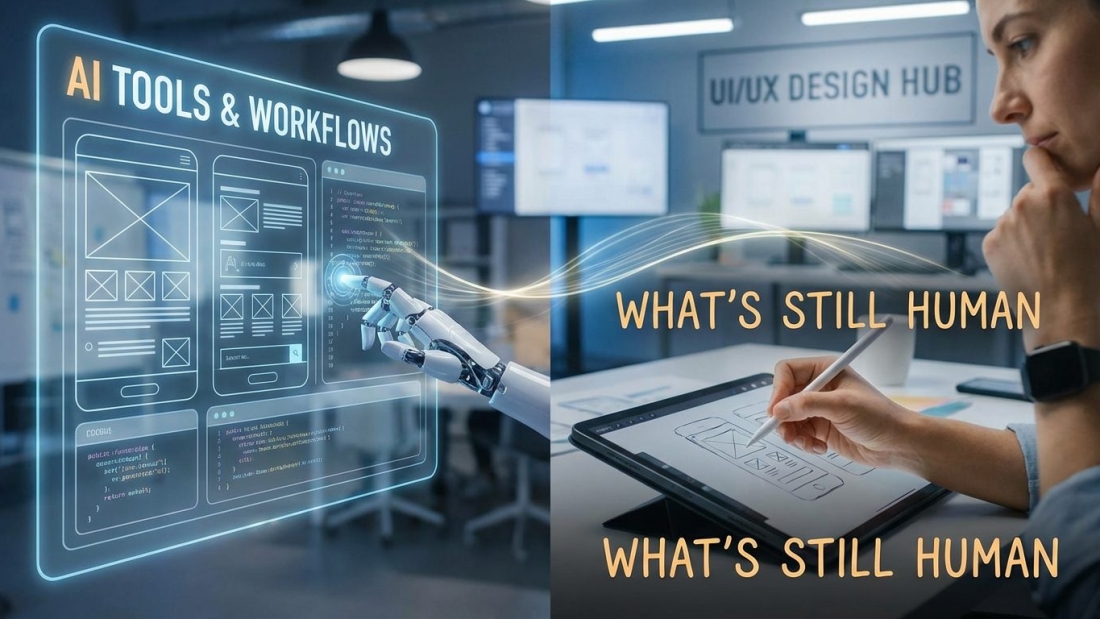
How AI is changing UI/UX design: Tools, workflows, and what's still human

How AI is changing UI/UX design: Tools, workflows, and what’s still human

How AI is Changing UI/UX Design

The Rise of AI in Design

Why AI Became Essential in 2026

Let’s be real—UI/UX design has gone through a serious glow-up. Not long ago, designers were stuck doing repetitive work: adjusting pixels, building wireframes manually, and running endless usability tests. It was slow, sometimes frustrating, and definitely time-consuming.

Now enter AI—and everything changed.

In 2026, AI isn’t just a helpful add-on; it’s deeply embedded into the design process. From research to final delivery, AI acts like a supercharged assistant that speeds things up and reduces the heavy lifting. It helps designers skip the boring parts and focus on what actually matters—creating meaningful user experiences.

Think of AI like a high-performance engine. It doesn’t decide where to go, but it gets you there faster. Designers are still in control—they just have better tools now.

Key Statistics Driving Adoption

The shift toward AI in UI/UX isn’t just hype—it’s backed by real momentum. A huge percentage of design teams worldwide are already using AI tools in their daily workflows. That means AI isn’t the future anymore—it’s the present.

Here’s what’s pushing this change:

  • Faster product development cycles
  • Growing demand for personalized user experiences
  • Pressure to deliver more with fewer resources

And honestly, once teams start using AI, there’s no going back. Tasks that used to take hours—like building layouts or testing variations—can now be done in minutes. It’s like switching from a bicycle to a sports car.


Core Ways AI is Transforming UI/UX

AI-Powered Personalization

Have you ever opened an app and felt like it just gets you? That’s not magic—that’s AI.

AI-powered personalization allows interfaces to adapt based on user behavior. Instead of showing the same layout to everyone, apps now change dynamically depending on what users click, how long they stay, and what they prefer.

This creates a more engaging experience. Users feel understood, and that leads to better retention and satisfaction. It’s like walking into a store where everything is already tailored to your taste.

Generative Design Systems

This is where things get really interesting. AI can now generate entire UI designs from simple text prompts.

Imagine typing, “Design a clean mobile app for fitness tracking,” and instantly getting multiple layout options. That’s the power of generative design systems.

Designers are no longer starting from scratch. Instead, they’re guiding AI, refining outputs, and adding creative direction. It’s a shift from doing everything manually to collaborating with intelligent systems.

Predictive UX Optimization

AI doesn’t just react—it predicts.

By analyzing user data, AI can identify where users might struggle or drop off. It can suggest improvements before problems even happen. That’s a game-changer for UX.

Instead of fixing issues after users complain, designers can proactively improve the experience. It’s like having a crystal ball for usability.


AI Tools Designers Are Using Today

AI Design Assistants

Modern design tools now come with built-in AI features that assist with layout creation, component generation, and design consistency.

These assistants can:

  • Suggest design improvements
  • Automatically create variations
  • Maintain consistent styles across projects

It’s like having a teammate who never gets tired and always follows the design system perfectly.

UI Generation Tools

Prompt-based design tools are becoming incredibly popular. These platforms allow designers to create wireframes and UI screens simply by describing what they want.

No sketching. No dragging elements for hours. Just type—and watch the design come to life.

This doesn’t replace designers—it empowers them to move faster and explore more ideas.

Research & Testing Tools

AI has completely changed how research works in UX.

Instead of manually analyzing feedback or data, AI tools can process massive amounts of information in seconds. They can identify patterns, highlight user pain points, and even suggest solutions.

This frees up designers to focus on insights rather than getting stuck in spreadsheets.


The New AI-Driven Workflow

Research Phase with AI

Research used to be one of the slowest parts of the design process. Gathering data, conducting interviews, analyzing results—it all took time.

Now, AI speeds up everything. It can analyze user behavior, summarize feedback, and uncover trends almost instantly.

But here’s the important part: AI gives you data, not meaning. Designers still need to interpret the results and decide what actions to take.

Ideation and Wireframing

Staring at a blank screen? That’s becoming a thing of the past.

AI helps generate multiple design concepts quickly, giving designers a starting point. Instead of one idea, you get ten. That means more creativity and better outcomes.

Designers can experiment freely without worrying about time constraints.

Prototyping and Iteration

Iteration is where great design happens—and AI makes it faster than ever.

Designers can test multiple variations, refine layouts, and improve usability in real time. Some tools even simulate user interactions, giving a preview of how users will experience the product.

This leads to better designs with fewer mistakes.

Handoff and Development

The gap between designers and developers is shrinking.

AI tools can now convert design files into code, making the handoff process smoother. This reduces miscommunication and speeds up development.

The result? Faster launches and fewer revisions.


Benefits of AI in UI/UX Design

AI brings a ton of advantages to the table, and it’s easy to see why designers are embracing it.

  • Speed: Work gets done faster than ever
  • Efficiency: Less manual effort, more focus on creativity
  • Consistency: Design systems stay uniform
  • Scalability: Easier to handle large projects
  • Innovation: New possibilities emerge

AI doesn’t just improve the process—it expands what’s possible in design.


Challenges and Limitations

Of course, AI isn’t perfect.

One major issue is that AI-generated designs can feel generic. When everyone uses similar tools, designs start to look the same. Creativity can take a hit if designers rely too heavily on automation.

There’s also the problem of quality. AI can produce visually appealing layouts, but they don’t always work well from a usability standpoint.

And then there’s trust. Users can sense when something feels off. AI still struggles to capture the subtle human touch that makes designs truly engaging.


What Still Requires Human Creativity

Emotional Intelligence in Design

Design is about more than just visuals—it’s about emotion.

AI can analyze behavior, but it doesn’t truly understand how people feel. It can’t experience frustration, excitement, or confusion.

Designers bring empathy into the process. They understand users on a deeper level and create experiences that connect emotionally.

Ethical Decision-Making

AI doesn’t have a moral compass.

Designers must make important decisions about privacy, data usage, and fairness. These aren’t technical challenges—they’re ethical ones.

Without human oversight, AI-driven design could easily cross boundaries.

Strategic Thinking

AI can generate ideas, but it doesn’t think strategically.

Designers define goals, align with business needs, and create long-term visions. They decide what to build and why it matters.

AI supports the process—but humans lead it.


The future of UI/UX design is exciting—and a little unpredictable.

We’re moving toward more adaptive interfaces, where designs change in real time based on user behavior. Voice interactions and invisible interfaces are also becoming more common.

AI will continue to evolve, becoming more integrated into every stage of the design process. But one thing is clear: human creativity isn’t going anywhere.

The best designs will come from a combination of human insight and AI efficiency.


Conclusion

AI is transforming UI/UX design at every level. It’s making workflows faster, smarter, and more efficient. But it’s not replacing designers—it’s redefining their role.

Designers are now collaborators with AI, using it to enhance their creativity rather than replace it. The real value comes from blending human intuition with machine intelligence.

That’s where the magic happens.

RAG_vs_Fine-Tuning_202603312148

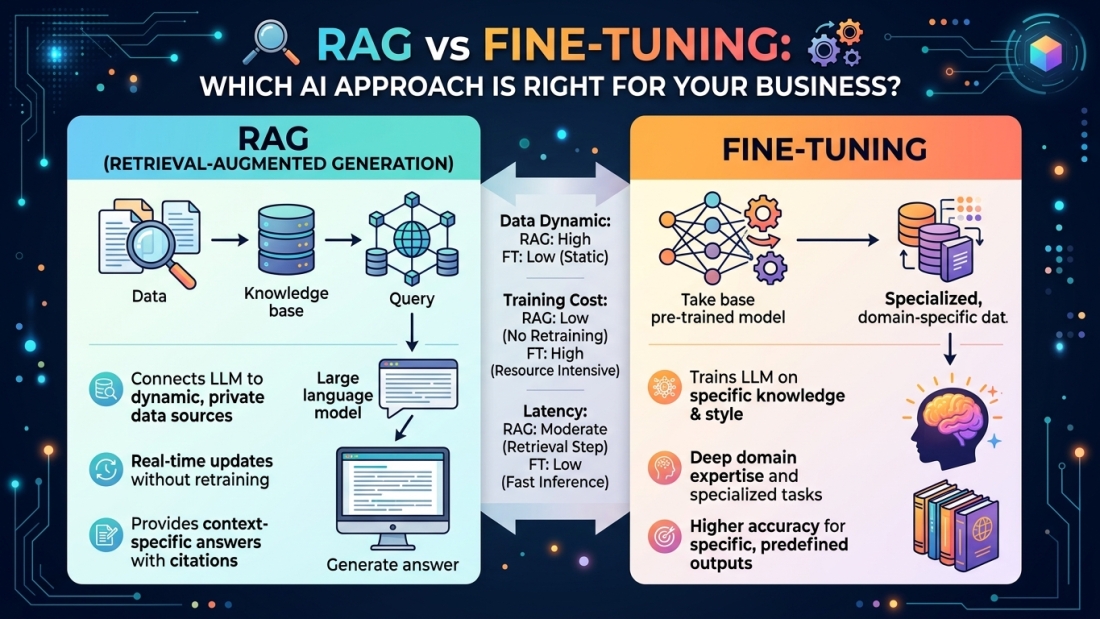
RAG vs Fine-Tuning: Which AI Approach Is Right for Your Business?

Every business leader exploring AI eventually hits the same wall. The general-purpose AI model you have access to is impressive — but it does not know your products, your policies, your customers, or your industry-specific language. It gives generic answers when you need precise ones.

Two methods have emerged as the most powerful ways to close that gap: Retrieval-Augmented Generation (RAG) and fine-tuning. Both make AI smarter for your specific context. But they work very differently, cost very differently, and suit very different situations.

Here is a plain-English breakdown to help you make the right call.


What Is RAG?

Think of a general-purpose AI model as a highly intelligent new hire on their first day. They are sharp, well-read, and quick — but they have never seen your internal documentation, pricing sheets, or customer history.

RAG is the equivalent of handing that employee a live, searchable library of everything your business knows. Instead of relying solely on pre-trained knowledge, a RAG system retrieves relevant content from internal sources — such as documents, databases, or proprietary systems — and uses that context to inform its responses at the moment a question is asked. Glean

The model itself does not change. Its knowledge is extended at runtime through retrieval. This means your data stays current, and the AI’s answers reflect what is actually true today — not what was true when the model was last trained.

RAG works especially well for:

  • Customer support bots that pull live product documentation and policies
  • Legal and compliance teams that need responses grounded in the latest regulations
  • Internal knowledge assistants that search across internal wikis, reports, and HR documents
  • Any use case where your data changes frequently

What Is Fine-Tuning?

Fine-tuning takes a different approach entirely. Rather than giving the model external context at query time, fine-tuning involves training a pre-trained LLM on a specific dataset to adapt its behaviour, knowledge, or style — modifying the model’s internal weights through additional training cycles. Is4

The analogy here is less “give the employee a library” and more “put them through a specialist training programme.” After fine-tuning, the model has genuinely internalised your domain — its terminology, its reasoning patterns, its preferred output format.

Fine-tuning works especially well for:

  • Consistent brand voice and tone across all AI-generated content
  • Specialised tasks with a predictable format — structured reports, code generation, classification
  • Medical, legal, or financial use cases where domain jargon and reasoning precision are non-negotiable
  • High-volume applications where response latency matters, since no retrieval step is needed

The Real Differences That Drive the Decision

FactorRAGFine-Tuning
Data freshnessAlways up-to-dateFrozen at training time
Cost to implementLower upfrontHigher — requires GPU compute and labelled data
Technical complexityData engineering skillsML engineering skills
TransparencyCan cite sourcesOutputs from internal weights — harder to trace
SpeedSlight latency from retrievalFaster at query time
FlexibilityUpdate the knowledge base anytimeRequires retraining to update

RAG is generally better for most enterprise use cases because it is more secure, scalable, and cost-efficient. It allows for enhanced data privacy, reduces compute resource costs, and provides trustworthy results by pulling from the latest curated datasets. Monte Carlo

That said, fine-tuning has a clear edge when consistent behaviour and deep domain specialisation are the primary requirements — and when your underlying data is stable enough to justify the investment.


The Answer Most Businesses Eventually Reach: Both

The RAG vs fine-tuning debate is often framed as a binary choice. In practice, the most capable enterprise AI systems use both together.

Leading AI practitioners increasingly combine RAG and fine-tuning to leverage their complementary strengths — fine-tuning a model for domain-specific style and terminology, then layering RAG on top for dynamic factual information. This approach delivers consistent, on-brand responses with up-to-date information. Is4

A practical example: fine-tune your model to communicate in your company’s tone and understand your industry’s terminology, then use RAG to pull live product data, customer records, or regulatory updates at the point of need. You get the style consistency of fine-tuning and the factual accuracy of retrieval — without having to choose between them.


So Which One Should You Start With?

For most businesses — particularly those in the GCC, UK, and USA markets that are earlier in their AI journey — RAG is the faster, safer first step. For most organisations starting their AI journey, RAG offers the fastest path to value with lower risk. It is forgiving of mistakes, easy to iterate on, and does not require deep ML expertise. Is4

As your AI use cases mature and your data becomes more structured and stable, you can layer in fine-tuning for the specific applications where it earns its cost.

The wrong move is treating this as a purely technical decision. The right approach depends on your data volatility, your team’s capabilities, your budget, and how frequently your business context changes. Get those factors clear first, and the architecture choice becomes obvious.


At LogIQ Curve, we help businesses across the GCC, USA, and UK design and implement AI systems that are built for real operational needs — not just proof-of-concept demos. Whether you are exploring your first RAG implementation or ready to fine-tune a domain-specific model, our AI and Generative AI team can help you build it right.

Talk to our AI team →


Published by LogIQ Curve | AI & Generative AI Services | Serving UAE, Saudi Arabia, Qatar, USA, and UK

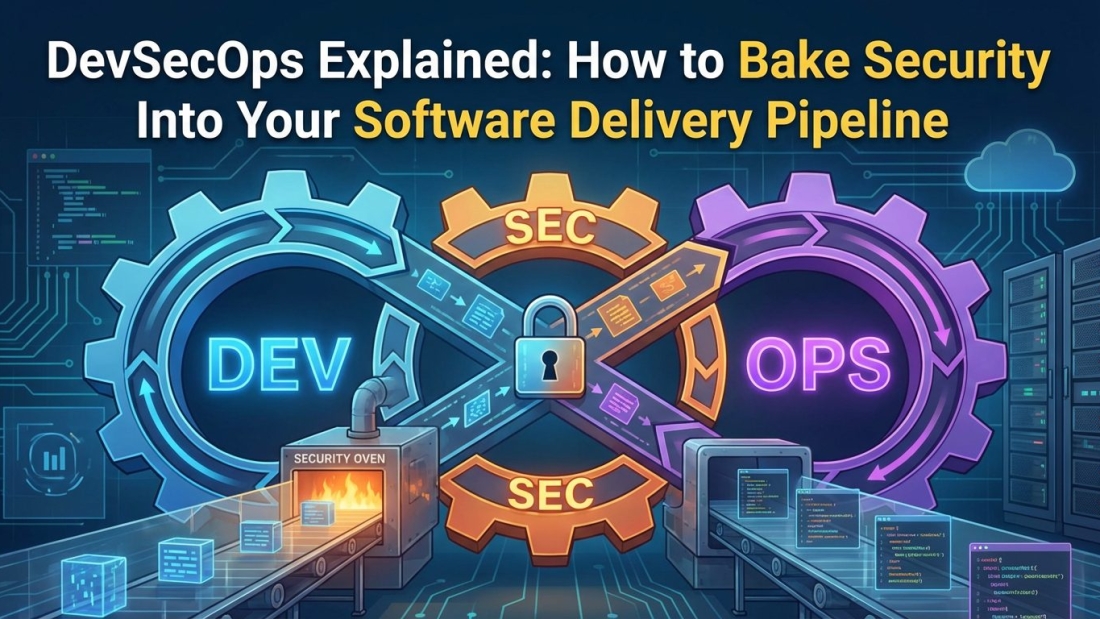
How to Bake Security into Your Software Delivery Pipeline

DevSecOps Explained: How to Bake Security into Your Software Delivery Pipeline

What is DevSecOps?

Breaking Down the Term DevSecOps

Let’s break it down in the simplest way possible. DevSecOps stands for Development, Security, and Operations—three critical pillars of modern software delivery. But here’s the twist: instead of treating security as something you tack on at the end, DevSecOps blends it into every step of the process. Think of it like baking sugar into a cake rather than sprinkling it on top afterward. The result? A smoother, more consistent outcome.

In older workflows, developers would build features quickly, then hand everything over to security teams just before release. This created delays, stress, and often a long list of vulnerabilities that were expensive to fix. DevSecOps flips this model by making security everyone’s responsibility from day one. Developers write secure code, operations teams maintain secure environments, and security experts guide the process rather than block it.

This shift doesn’t just improve security—it transforms how teams work together. Instead of operating in silos, everyone collaborates in real time. Issues are caught early, fixes are faster, and releases happen with confidence. It’s not about slowing things down—it’s about building smarter from the start.

Why DevSecOps Matters in 2026

Software development today is all about speed. Teams push updates multiple times a day, and users expect instant improvements. But here’s the catch: the faster you move, the easier it is to overlook security gaps. That’s exactly why DevSecOps has become so important in 2026.

Modern applications rely heavily on third-party libraries and open-source components. While these speed up development, they also introduce hidden risks. Without continuous security checks, vulnerabilities can slip into production unnoticed. And once they’re live, fixing them becomes much harder—and more expensive.

DevSecOps solves this by embedding security checks directly into the pipeline. Every code commit, every build, and every deployment is automatically scanned for risks. This creates a safety net that operates continuously in the background. It’s like having a security system that never sleeps, always watching for potential threats.

Organizations that adopt DevSecOps are seeing major improvements—not just in security, but also in efficiency and reliability. It’s no longer a luxury or a trend. It’s becoming the standard way to build software in a world where threats evolve just as fast as technology.


The Evolution from DevOps to DevSecOps

Traditional Software Development Challenges

Before DevOps, software development was slow and fragmented. Teams worked in isolation—developers focused on writing code, testers checked for bugs, and operations handled deployment. Security was usually the last step, which created a huge bottleneck.

This approach led to a number of problems. For one, vulnerabilities often went unnoticed until the final stages of development. Fixing them at that point was not only time-consuming but also expensive. Imagine building an entire house and then realizing the foundation is weak—you’d have to tear everything down to fix it.

Even with the introduction of DevOps, which improved collaboration and speed, security still lagged behind. Teams prioritized rapid delivery, sometimes at the expense of safety. This created a risky environment where software was released quickly but wasn’t always secure.

The need for a better solution became clear. Organizations needed a way to maintain speed without compromising security. That’s where DevSecOps stepped in.

Shift-Left Security Concept

One of the core ideas behind DevSecOps is shift-left security. This simply means moving security practices earlier in the development process. Instead of waiting until the end, teams start thinking about security right from the planning and coding stages.

This approach has a huge impact. When vulnerabilities are identified early, they’re much easier to fix. Developers can address issues while the code is still fresh in their minds, reducing the chances of errors slipping through the cracks.

Shift-left security also encourages better coding habits. Developers become more aware of potential risks and learn to avoid them proactively. Over time, this leads to cleaner, more secure codebases.

It’s a mindset shift as much as a technical one. Security is no longer a checkpoint—it’s a continuous process that evolves alongside the software.


Core Principles of DevSecOps

Automation First Approach

Automation is the backbone of DevSecOps. Without it, integrating security into fast-paced development cycles would be nearly impossible. Imagine manually reviewing every line of code for vulnerabilities—it would slow everything down to a crawl.

With automation, security checks happen instantly. Tools scan code, analyze dependencies, and monitor environments without human intervention. This not only saves time but also ensures consistency. Every build goes through the same rigorous checks, leaving no room for oversight.

Automation also reduces the burden on teams. Developers can focus on writing code, while automated systems handle repetitive security tasks. It’s like having a tireless assistant who works 24/7, catching issues before they become problems.

The beauty of automation lies in its scalability. Whether you’re managing a small project or a large enterprise system, automated security processes adapt to your needs without slowing you down.

Continuous Security Integration

DevSecOps is not a one-time setup—it’s an ongoing process. Security is integrated into every stage of the pipeline, from coding to deployment and beyond. This ensures that vulnerabilities are detected and addressed continuously.

Continuous integration means that every change is tested for security risks. If an issue is found, developers receive immediate feedback and can fix it right away. This prevents problems from piling up and becoming harder to manage later.

Over time, this creates a culture of accountability. Teams become more proactive about security, and best practices become second nature. The result is a smoother, more efficient workflow where security is always part of the conversation.


Key Benefits of DevSecOps

Faster Deployment Cycles

It might sound surprising, but adding security can actually speed things up. By catching issues early, teams avoid the delays caused by last-minute fixes. This leads to smoother releases and faster deployment cycles.

Instead of halting progress for security reviews, pipelines run seamlessly with built-in checks. Developers can push updates with confidence, knowing that security is already taken care of.

Reduced Security Risks

DevSecOps significantly reduces the risk of vulnerabilities making it into production. Continuous testing and monitoring ensure that potential threats are identified and addressed before they can cause damage.

This proactive approach minimizes the chances of breaches and reduces the impact of any issues that do occur. It’s about staying one step ahead rather than reacting after the fact.

Improved Collaboration

One of the biggest advantages of DevSecOps is improved collaboration. Teams that once worked in silos now communicate and collaborate more effectively.

Developers, security experts, and operations teams share responsibility for the entire lifecycle. This leads to better decision-making, faster problem-solving, and a stronger sense of ownership.


DevSecOps Pipeline Explained

Code Stage Security

Security begins at the coding stage. Developers use tools to scan their code for vulnerabilities, enforce best practices, and detect sensitive data like passwords or API keys.

This ensures that insecure code never enters the pipeline, reducing risks from the very beginning.

Build Stage Security

During the build phase, tools analyze dependencies and libraries. Since many applications rely on third-party components, this step is crucial for identifying vulnerabilities in external code.

Test Stage Security

Testing is where applications are thoroughly evaluated for security issues. Techniques like static and dynamic testing simulate real-world attacks and identify weaknesses.

Deploy & Monitor Security

After deployment, continuous monitoring ensures that applications remain secure. Systems track activity, detect anomalies, and respond to potential threats in real time.


Essential DevSecOps Tools

Static & Dynamic Testing Tools

These tools analyze both the code and the running application to identify vulnerabilities. They are essential for maintaining security throughout the development lifecycle.

Container & Cloud Security Tools

As more applications move to the cloud, specialized tools are needed to secure containers and cloud environments. These tools monitor configurations, detect threats, and ensure compliance.


Best Practices to Implement DevSecOps

Integrating Security Early

Start incorporating security from the very beginning of the development process. This reduces risks and makes it easier to manage vulnerabilities.

Building a Security Culture

Technology alone isn’t enough. Teams need to adopt a security-first mindset. Training, awareness, and collaboration play a key role in making DevSecOps successful.


Challenges in DevSecOps Adoption

Tool Complexity

With so many tools available, choosing and integrating the right ones can be overwhelming. Without a clear strategy, teams may struggle to manage their workflows effectively.

Cultural Resistance

Changing the way teams work is never easy. Developers may see security as a hurdle, while security teams may find it hard to adapt to faster processes. Overcoming this requires strong leadership and clear communication.


AI in Security Automation

Artificial intelligence is playing a growing role in DevSecOps. It helps detect threats faster, automate responses, and even predict vulnerabilities before they occur.

Cloud-Native Security Evolution

As cloud computing continues to grow, DevSecOps will evolve to address new challenges. Secure pipelines and automated compliance will become standard practices.


Conclusion

DevSecOps is reshaping the way software is built and delivered. By integrating security into every stage of the pipeline, organizations can achieve both speed and safety without compromise. It’s not just about tools or processes—it’s about a cultural shift that prioritizes collaboration and proactive thinking.

Teams that embrace DevSecOps are better equipped to handle the complexities of modern development. They release faster, respond to threats more effectively, and build systems that users can trust. In a world where security risks are constantly evolving, DevSecOps provides a solid foundation for sustainable growth.

Responsible AI: What the EU AI Act means for GCC and global businesses

Responsible AI: What the EU AI Act means for GCC and global businesses

Understanding the EU AI Act

What is the EU AI Act?

Artificial intelligence is no longer a futuristic concept. It is already shaping hiring decisions, financial approvals, healthcare diagnostics, and even public opinion. With this level of influence, the need for structured regulation becomes obvious. The EU AI Act is the first major legal framework designed to regulate artificial intelligence systems comprehensively, ensuring that innovation does not come at the cost of human rights and safety.

The law officially entered into force in 2024 and is expected to be fully enforced by 2026. Unlike traditional regulations that apply only within a region, this Act has a much broader scope. If your business develops or uses AI systems that interact with individuals or markets in the European Union, you are required to comply. This global reach makes the EU AI Act one of the most influential regulatory frameworks in modern technology.

The Act introduces a structured approach that categorizes AI systems based on their risk level. Instead of applying the same rules to all technologies, it differentiates between low-risk tools and high-impact systems. This allows businesses to innovate while maintaining accountability. In simple terms, the more risk your AI poses, the stricter the rules you must follow.

Why the EU Created the AI Act

The rise of AI has brought both incredible opportunities and serious concerns. Systems have been shown to produce biased hiring decisions, manipulate public opinion through deepfakes, and make critical decisions without transparency. These risks pushed the European Union to act before the situation escalated further.

The primary goal of the AI Act is to protect individuals while encouraging responsible innovation. It aims to ensure that AI systems are transparent, fair, and accountable. The focus is not on limiting progress but on guiding it in a direction that benefits society as a whole.

Another important reason behind this regulation is global leadership. By introducing strict and clear standards early, the EU positions itself as a leader in ethical AI development. Just as data privacy laws influenced global practices, this Act is expected to shape how AI systems are built and deployed worldwide.


Timeline and Implementation

Key Dates Businesses Must Know

Understanding the timeline of the EU AI Act is critical for businesses planning their compliance strategy. The law follows a phased rollout, giving companies time to adjust while gradually introducing stricter requirements.

  • The Act entered into force in August 2024
  • Certain prohibited practices become illegal by early 2025
  • Rules for general-purpose AI systems are introduced in 2025
  • Full enforcement begins in 2026
  • High-risk systems face complete regulatory requirements by 2027

These milestones are not just deadlines; they represent stages of transformation. Businesses need to align their operations, technology, and governance structures with each phase.

Phased Rollout Explained

The phased implementation is designed to balance urgency with practicality. Early stages focus on banning harmful practices and increasing awareness, while later stages introduce detailed compliance requirements for more complex systems.

This approach allows businesses to adapt gradually rather than facing immediate, overwhelming changes. However, the time window should not be seen as an excuse for delay. Companies that start preparing early will have a significant advantage, both in compliance and in building trust with their users.


Risk-Based Approach Explained

The Four Risk Categories

One of the most important aspects of the EU AI Act is its risk-based classification system. This system divides AI technologies into four categories based on their potential impact.

Risk LevelDescriptionRegulation Level
UnacceptableHarmful or manipulative AICompletely banned
High RiskSystems affecting safety or rightsStrict compliance
Limited RiskModerate impact toolsTransparency rules
Minimal RiskLow-impact applicationsMinimal regulation

This framework ensures that regulation is proportional. It prevents overregulation of simple tools while maintaining strict control over systems that can significantly affect people’s lives.

Examples of Each Risk Level

To understand this better, consider real-world scenarios. A social scoring system that ranks citizens based on behavior would fall under unacceptable risk and is banned. AI used in recruitment or credit decisions is considered high risk and must meet strict requirements. Chatbots that interact with customers fall into limited risk and require transparency. Meanwhile, simple recommendation engines used in entertainment platforms are classified as minimal risk.

This structured approach gives businesses clarity. Instead of guessing their obligations, they can easily identify where their systems stand and what actions are required.


Prohibited AI Practices

What AI Uses Are Banned

Some AI applications are considered too dangerous to be allowed under any circumstances. The EU AI Act clearly defines these prohibited practices to prevent misuse of technology.

Banned uses include systems that manipulate human behavior in harmful ways, social scoring mechanisms that evaluate individuals based on personal data, and certain types of biometric surveillance in public spaces. These restrictions are designed to protect fundamental rights and prevent abuse.


High-Risk AI Systems

Compliance Requirements

High-risk AI systems are subject to the strictest regulations under the Act. These systems have the potential to significantly impact individuals’ lives, which is why they must meet detailed compliance requirements.

Organizations must implement risk management systems to identify and mitigate potential issues. They need to use high-quality datasets to reduce bias and ensure fairness. Documentation must be thorough, covering every aspect of the system’s design and operation. Human oversight is also essential, ensuring that decisions are not left entirely to machines.

Security is another critical requirement. High-risk systems must be resilient against cyber threats and capable of maintaining reliability under different conditions. These measures ensure that AI systems operate safely and predictably.

Industries Affected Most

Several industries are heavily impacted by these regulations. Healthcare systems using AI for diagnosis, financial institutions relying on algorithms for credit decisions, and companies using AI for recruitment all fall into the high-risk category.

In these sectors, the consequences of errors can be severe, making compliance even more important. Businesses operating in these areas must prioritize regulatory readiness as part of their overall strategy.


Transparency and Accountability

Disclosure Obligations

Transparency is a key principle of the EU AI Act. Users have the right to know when they are interacting with AI systems. This requirement applies to chatbots, automated decision-making tools, and even synthetic media such as deepfakes.

Businesses must clearly disclose the use of AI and provide understandable information about how these systems operate. This is not just about legal compliance; it is about building trust. When users understand how AI works, they are more likely to accept and rely on it.

Accountability also plays a crucial role. Organizations must take responsibility for their AI systems, ensuring they operate within ethical and legal boundaries. This shift encourages companies to prioritize long-term trust over short-term gains.


Penalties and Enforcement

Fines and Business Risks

The penalties for non-compliance under the EU AI Act are significant. Fines can reach up to 35 million euros or a substantial percentage of global annual turnover, depending on the severity of the violation.

However, financial penalties are not the only risk. Authorities have the power to remove non-compliant AI systems from the market. This can disrupt operations, damage reputations, and result in lost revenue.

For businesses, the message is clear. Compliance is not optional. It is a critical component of risk management and long-term success.


Global Reach of the EU AI Act

Why Non-EU Companies Must Care

The EU AI Act has a global impact because of its extraterritorial scope. It applies not only to companies based in the European Union but also to those whose AI systems affect individuals within the region.

This means that businesses in the GCC, Asia, and other parts of the world must comply if they want to operate in the European market. The Act effectively sets a global standard for AI regulation.

Ignoring these requirements can result in restricted access to one of the world’s largest markets. On the other hand, compliance can open doors to international opportunities and partnerships.


Impact on GCC Businesses

Regulatory Alignment in the Gulf

GCC countries are rapidly advancing in artificial intelligence, investing heavily in innovation and digital transformation. Aligning with the EU AI Act can strengthen their position in the global market.

By adopting similar standards, businesses in the Gulf can enhance their credibility and attract international collaborations. It also simplifies entry into European markets, reducing regulatory barriers.

This alignment is not just about compliance. It is about positioning the region as a leader in responsible AI development.

Opportunities for Innovation

While regulation often feels restrictive, it can actually drive innovation. The EU AI Act encourages businesses to develop systems that are not only powerful but also ethical and trustworthy.

For GCC companies, this creates an opportunity to differentiate themselves. By focusing on responsible AI, they can build stronger relationships with customers and partners.

Innovation within a structured framework leads to more sustainable growth. It ensures that technological advancements benefit society while minimizing risks.


Strategic Actions for Businesses

How to Prepare for Compliance

Preparing for the EU AI Act requires a proactive approach. Businesses should start by conducting a thorough assessment of their AI systems to determine their risk categories.

Developing internal governance structures is essential. This includes creating policies, assigning responsibilities, and ensuring proper documentation. Training employees on AI ethics and compliance is equally important.

Organizations should also invest in transparency mechanisms, ensuring that users are informed about AI interactions. Regular audits and updates can help maintain compliance as regulations evolve.

Taking these steps early not only reduces risk but also provides a competitive advantage. Companies that adapt quickly will be better positioned in a rapidly changing regulatory environment.


Conclusion

The EU AI Act represents a significant shift in how artificial intelligence is regulated. It introduces clear rules that prioritize safety, transparency, and accountability while still allowing innovation to thrive.

For businesses in the GCC and around the world, this is both a challenge and an opportunity. Those who ignore the regulation risk facing penalties and losing access to key markets. Those who embrace it can build stronger, more trustworthy systems and gain a competitive edge.

The future of AI is not just about what technology can do. It is about how responsibly it is used. The EU AI Act sets the tone for this future, shaping the way businesses develop and deploy artificial intelligence for years to come.

PhishReaper Investigation Mastercard Phish (Aug 2025) Now Operating as an AI Knowledge Platform

PhishReaper Investigation: Mastercard Phish (Aug 2025) Now Operating as an AI Knowledge Platform

Introduction

Phishing campaigns continue to evolve rapidly as cybercriminals adopt increasingly sophisticated tools, automation, and artificial intelligence to deceive victims. In this constantly shifting cybersecurity environment, early detection of phishing infrastructure has become critical for organizations seeking to protect their digital ecosystems and customer trust.


As the Exclusive OEM Partner of PhishReaper in Pakistan, LogIQ Curve is pleased to share the latest threat-intelligence findings produced by the PhishReaper research team. Through this partnership, LogIQ Curve brings the advanced capabilities of the PhishReaper phishing-detection platform to enterprises, financial institutions, telecom operators, and government organizations in Pakistan and beyond.
Organizations interested in proactively identifying phishing infrastructure and strengthening their cybersecurity posture are invited to connect with our security team at security@logiqcurve.com.
In a recent investigation, PhishReaper uncovered a phishing campaign impersonating Mastercard that had evolved beyond a simple phishing page. Instead, the malicious environment had transformed into a sophisticated platform functioning almost like a knowledge system for cybercriminal operations, demonstrating how phishing campaigns can mature into long-running operational ecosystems.

The Discovery: From Phishing Page to Operational Platform

During its threat-hunting operations, PhishReaper detected phishing infrastructure impersonating the global payments brand Mastercard.
At first glance, the malicious site appeared similar to many other brand-impersonation phishing pages. However, deeper investigation revealed that the infrastructure supporting the campaign was significantly more advanced.
Instead of serving only a single phishing function, the platform appeared to operate as a long-running operational environment where attackers could manage, reuse, and potentially scale phishing activities.
This discovery suggests that modern phishing campaigns are increasingly evolving into structured cybercrime platforms rather than isolated fraudulent websites.
Such environments allow threat actors to maintain campaigns for extended periods while adapting their infrastructure to avoid detection.

Understanding the Infrastructure Behind the Attack

PhishReaper’s investigation examined the infrastructure supporting the Mastercard-themed phishing operation and identified several structural characteristics associated with persistent phishing ecosystems.
These included:
• Domains crafted to resemble legitimate Mastercard-related services
• Phishing interfaces designed to capture sensitive financial information
• Infrastructure capable of hosting multiple operational components
• Persistent hosting environments enabling long-term campaign operation
This structure indicated that the attackers were not merely launching temporary phishing pages but building an infrastructure designed for continued use and operational scalability.
By analyzing the relationships between these infrastructure elements, PhishReaper was able to map the broader phishing ecosystem supporting the campaign.

Why Traditional Security Systems Often Miss These Threats

Many legacy cybersecurity tools rely on reactive detection models that focus primarily on known malicious indicators.
These systems often depend on:
• Previously reported malicious URLs
• Known indicators of compromise
• Manual reporting by victims or researchers
While effective against previously known threats, these mechanisms often struggle to identify newly created phishing infrastructure.
Modern phishing operations increasingly leverage automation and artificial intelligence to evolve rapidly, allowing attackers to modify infrastructure and evade detection mechanisms.
As phishing campaigns become more complex, relying solely on reactive threat intelligence leaves organizations vulnerable during the early stages of attacks.
Research across the cybersecurity industry shows that AI-driven techniques are increasingly being used in both attacks and defensive tools, further accelerating the evolution of phishing campaigns. (SaaS Alerts)

PhishReaper’s Proactive Threat Hunting Approach

PhishReaper approaches phishing detection differently by focusing on intent-driven infrastructure discovery.
Instead of waiting for phishing domains to appear in threat-intelligence feeds, the platform actively searches for suspicious infrastructure patterns associated with phishing campaigns.
This approach includes analysis of:
• Domain registration patterns
• Infrastructure relationships
• Behavioral indicators associated with phishing intent
• Attacker operational patterns
By analyzing these signals, PhishReaper can detect phishing infrastructure during the early stages of campaign development.
In the case of the Mastercard phishing operation, this approach allowed investigators to uncover a phishing ecosystem that had evolved into a persistent operational platform.

Strategic Implications for Financial Platforms

Phishing campaigns targeting global payment platforms pose significant risks to both organizations and their users.
Brand-impersonation attacks involving financial platforms can lead to:
• Credential harvesting
• Financial fraud
• Identity theft
• Reputational damage for targeted organizations
Because payment platforms operate within highly trusted digital ecosystems, attackers often exploit brand recognition to increase the credibility of phishing campaigns.
Detecting phishing infrastructure early is therefore essential to protecting users and preventing large-scale financial fraud.
Platforms like PhishReaper provide organizations with the visibility needed to identify malicious infrastructure before phishing campaigns reach widespread distribution.

Moving Toward Proactive Cyber Defense

The Mastercard phishing investigation illustrates a broader shift within the cyber threat landscape.
Phishing campaigns are no longer isolated events, they are increasingly becoming structured cybercrime operations supported by persistent infrastructure.
To defend against these threats, organizations must adopt proactive detection technologies capable of identifying malicious infrastructure early in its lifecycle.
Proactive threat-hunting platforms provide organizations with:
• Earlier visibility into emerging phishing campaigns
• Stronger protection against brand impersonation attacks
• Improved monitoring of attacker infrastructure
• Enhanced threat-intelligence capabilities for security teams
By shifting toward proactive cyber defense, organizations can significantly reduce the impact of phishing campaigns.

Conclusion

The Mastercard phishing operation uncovered by PhishReaper demonstrates how modern phishing campaigns are evolving into persistent operational platforms capable of supporting long-term cybercrime activity.
Through advanced infrastructure analysis and proactive threat hunting, PhishReaper was able to illuminate a phishing ecosystem that extended far beyond a single malicious webpage.
This discovery highlights the importance of identifying attacker infrastructure early and reinforces the need for organizations to adopt proactive cybersecurity technologies.
Through its collaboration with PhishReaper, LogIQ Curve is committed to helping organizations detect phishing campaigns before they escalate into large-scale threats.

Learn More About PhishReaper

Organizations interested in evaluating the PhishReaper phishing detection platform can contact LogIQ Curve to learn how this technology can strengthen enterprise security operations.
📧 security@logiqcurve.com
LogIQ Curve works with:
• Banks
• Telecom operators
• Government organizations
• Enterprises
• SOC teams
to identify phishing infrastructure before attacks, reach users.

Research Attribution

This analysis is based on the original threat-intelligence research conducted by PhishReaper. LogIQ Curve republishes these findings for its global audience as the Exclusive OEM Partner of PhishReaper in Pakistan, helping organizations gain early visibility into emerging phishing threats.

Description

PhishReaper uncovers a Mastercard-themed phishing operation that evolved into a persistent AI-driven platform for cybercrime infrastructure. Discover how proactive threat hunting exposes hidden phishing ecosystems.

Hashtags

#PhishReaper #LogIQCurve #CyberSecurity #PhishingDetection #ThreatIntelligence #ThreatHunting #CyberDefense #EnterpriseSecurity #SOC #AIinCybersecurity #DigitalSecurity #CyberResilience #FinancialSecurity #PaymentsSecurity #InfoSec #SecurityOperations #CyberThreats #PakistanCyberSecurity #CyberInnovation #SafwanKhan #HaiderAbbas #NajeebUlHussan #MumtazKhan #CISO #CTO #SecurityLeadership