
Understanding Shadow AI
Definition of Shadow AI
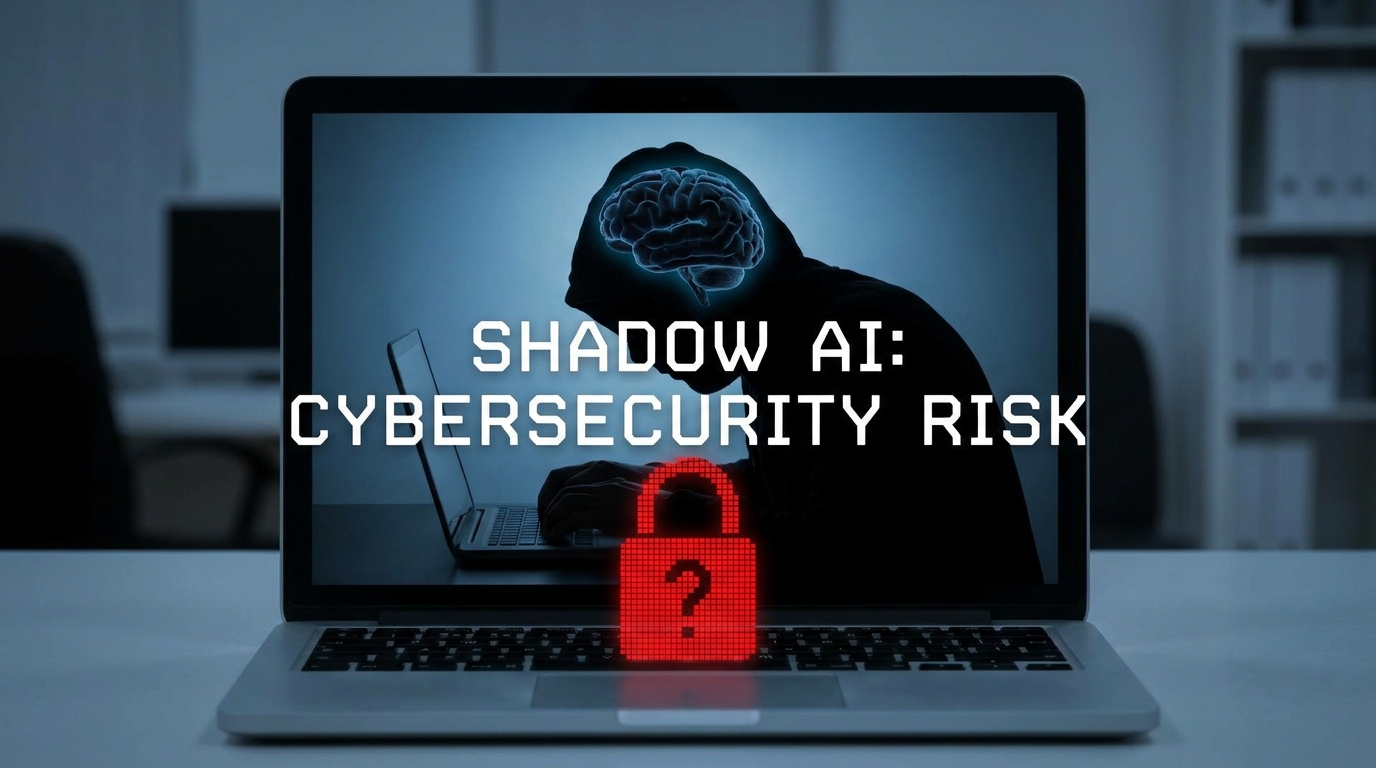
Shadow AI is a term that’s quickly becoming a big deal in cybersecurity, and for good reason. In simple words, Shadow AI refers to the use of artificial intelligence tools by employees without approval from their organization’s IT or security teams. These tools can include chatbots, writing assistants, code generators, or even AI-powered analytics platforms. The tricky part is that employees usually don’t use them with bad intentions. They’re just trying to save time, improve productivity, or make their work easier.
Now imagine this scenario. An employee copies sensitive company data into an AI tool to generate a report faster. It feels harmless at the moment. But what happens next? That data might be stored, processed, or even reused by the tool in ways the company cannot control. This is where the risk begins to grow. Shadow AI works quietly in the background, often without any visibility, which makes it even more dangerous than traditional threats.
The biggest issue is not just the usage of AI itself, but the lack of oversight. Organizations lose control over how data is handled, where it is stored, and who might access it. That’s why Shadow AI is often described as a hidden risk that operates under the radar, slowly building up potential damage until it becomes a serious problem.
How Shadow AI Differs from Shadow IT
Many people confuse Shadow AI with Shadow IT, but there’s a clear difference between the two. Shadow IT refers to the use of unauthorized software, hardware, or services within an organization. For example, using a personal cloud storage account for work files without approval would fall under Shadow IT. It’s risky, but usually limited to storage or communication.
Shadow AI, however, takes things to another level. AI tools don’t just store data. They analyze it, learn from it, and generate new outputs based on it. This means the risk is not just about data exposure, but also about data transformation and intelligence leakage. AI can process large volumes of information quickly and extract patterns that could reveal sensitive business insights.
Here’s a simple comparison to understand the difference better:
| Aspect | Shadow IT | Shadow AI |
|---|---|---|
| Function | Stores and transfers data | Analyzes and generates insights |
| Risk Level | Moderate | High |
| Data Exposure | Limited | Large-scale and complex |
| Speed | Human-paced | Machine-speed |
Because of this ability to learn and scale, Shadow AI can amplify risks much faster than Shadow IT. A small mistake can turn into a massive problem within seconds.
The Rapid Rise of Shadow AI in Modern Workplaces
Why Employees Use Unapproved AI Tools
Let’s be honest. People naturally look for ways to work faster and smarter. AI tools make that incredibly easy. With just a few clicks, employees can draft emails, write reports, analyze data, or even generate code. It feels like having a personal assistant available 24/7.
This convenience is exactly why Shadow AI is spreading so quickly. Employees don’t want to wait for approvals or go through complicated processes when they can get instant results. They see AI as a shortcut to better performance, and in many cases, it actually works.
But here’s the problem. While employees focus on speed and efficiency, they often ignore the risks involved. They may not realize that the data they input into AI tools could be stored externally or used in ways they cannot control. This gap between convenience and awareness is what fuels the growth of Shadow AI.
Another factor is the lack of clear policies. Many organizations have not yet defined rules around AI usage. Without guidance, employees make their own decisions, which leads to inconsistent and risky behavior. It’s not about negligence; it’s about the absence of structure.
Growth Statistics and Trends
The rise of Shadow AI is not just a theory. It is backed by strong trends and data. A significant portion of employees now use AI tools without informing their organizations. This shows how widespread the issue has become.
Surveys indicate that a large percentage of workers admit to sharing work-related data with AI tools to improve productivity. Even more concerning is the number of organizations that lack proper governance around AI usage. This creates a perfect storm where powerful technology is being used without proper controls.
Another important trend is the increasing cost of data breaches linked to AI misuse. Organizations are not just dealing with security risks; they are also facing financial consequences. The more Shadow AI grows, the harder it becomes to manage these risks effectively.
All of this points to one clear reality: Shadow AI is no longer a small issue. It is a growing challenge that organizations must address before it gets out of control.
How Shadow AI Works Behind the Scenes
Common Tools and Platforms Used
Shadow AI does not require technical expertise. That’s what makes it so widespread. Anyone with internet access can use AI tools instantly. These tools are often browser-based, easy to use, and free or low-cost, which makes them even more attractive to employees.
Common examples include AI chatbots for writing, tools for generating images or videos, and platforms that analyze data or automate tasks. These tools are powerful and can handle complex operations within seconds. From a user’s perspective, they feel like a huge productivity boost.
However, the simplicity of these tools hides a deeper issue. Many of them operate on external servers, meaning the data entered into them leaves the organization’s secure environment. This creates a gap in security that is difficult to track.
Lack of Visibility and Governance
One of the biggest challenges with Shadow AI is the lack of visibility. When employees use approved systems, IT teams can monitor activity, track data usage, and enforce security policies. But with Shadow AI, all of this visibility disappears.
It’s like having blind spots in your security system. You don’t know what tools are being used, what data is being shared, or where that data is going. This makes it nearly impossible to detect risks in real time.
Without governance, organizations cannot enforce rules or ensure compliance. This leads to inconsistent practices across teams, increasing the chances of mistakes. Over time, these small gaps can add up and create serious vulnerabilities.
Key Cybersecurity Risks of Shadow AI
Data Leakage and Exposure
Data leakage is one of the most serious risks associated with Shadow AI. When employees input sensitive information into AI tools, that data may be stored or processed externally. This creates a risk of exposure that organizations cannot control.
The problem becomes even more complicated when free AI tools are involved. These tools often have unclear data policies, making it difficult to understand how information is handled. Once data leaves the organization, it becomes much harder to protect.
Compliance and Legal Risks
Organizations must follow strict data protection regulations. Shadow AI makes this challenging because it operates outside official systems. If sensitive data is exposed, the organization is still responsible, even if the exposure was unintentional.
This can lead to legal penalties, fines, and long-term compliance issues. It also makes audits more difficult because there is no clear record of how data was used.
Increased Attack Surface
Every unauthorized AI tool introduces a new potential entry point for attackers. These tools may not have strong security measures, making them easier to exploit. This increases the overall attack surface of the organization.
Intellectual Property Loss
Shadow AI can also lead to the loss of valuable business information. This includes trade secrets, internal strategies, and proprietary data. Once this information is exposed, it can be used by competitors or malicious actors.
Real-World Incidents and Warning Signs
AI-Powered Cyberattacks
Cyberattacks are becoming more advanced, and AI is playing a major role in this evolution. Attackers are now using AI to automate processes, identify vulnerabilities, and scale their operations. This makes attacks faster and more effective.
Case Studies of Data Breaches
There have been multiple cases where organizations faced data breaches due to improper use of AI tools. In many of these cases, employees unknowingly shared sensitive information, leading to serious consequences. These incidents highlight the importance of awareness and control.
Why Shadow AI is More Dangerous Than You Think
AI’s Ability to Amplify Risk
AI has the ability to process large amounts of data quickly. This means that even a small mistake can have a big impact. Instead of exposing a single file, AI can analyze entire datasets and generate insights that reveal critical information.
Speed and Scale of Threats
AI operates at a speed that humans cannot match. This allows risks to grow rapidly. By the time an issue is detected, significant damage may already have been done.
Impact on Businesses and Organizations
Financial Losses
Cybersecurity incidents can be expensive. Organizations may face costs related to recovery, legal actions, and lost business. Shadow AI adds to these costs by increasing the complexity of incidents.
Reputation Damage
Trust is a key factor in business success. When customers lose confidence, it can be difficult to recover. Shadow AI incidents can damage reputation and affect long-term growth.
How to Detect Shadow AI in Your Organization
Monitoring and Visibility Tools
To manage Shadow AI, organizations need better visibility. This includes monitoring tools that track AI usage, data flow, and employee behavior. Without visibility, it is impossible to address the problem effectively.
Strategies to Manage and Control Shadow AI
Governance Policies
Organizations should define clear policies for AI usage. This includes approved tools, data handling rules, and access controls. Policies provide structure and reduce uncertainty.
Employee Awareness and Training
Employees play a key role in managing Shadow AI. Training programs can help them understand risks and make better decisions. Awareness is one of the most effective ways to reduce risk.
Future of Shadow AI and Cybersecurity
Shadow AI is expected to grow as AI technology becomes more accessible. Organizations will need to adapt by improving their security strategies and implementing better controls. Those that act early will be better prepared to handle future challenges.
Conclusion
Shadow AI is a hidden risk that can have serious consequences for organizations. It operates quietly, often without detection, and can lead to data breaches, financial losses, and compliance issues. The challenge is not just about technology, but also about behavior and awareness.
Organizations need to balance innovation with security. By implementing policies, improving visibility, and educating employees, they can reduce risks and use AI safely. Ignoring Shadow AI is not an option, as its impact will only continue to grow.