
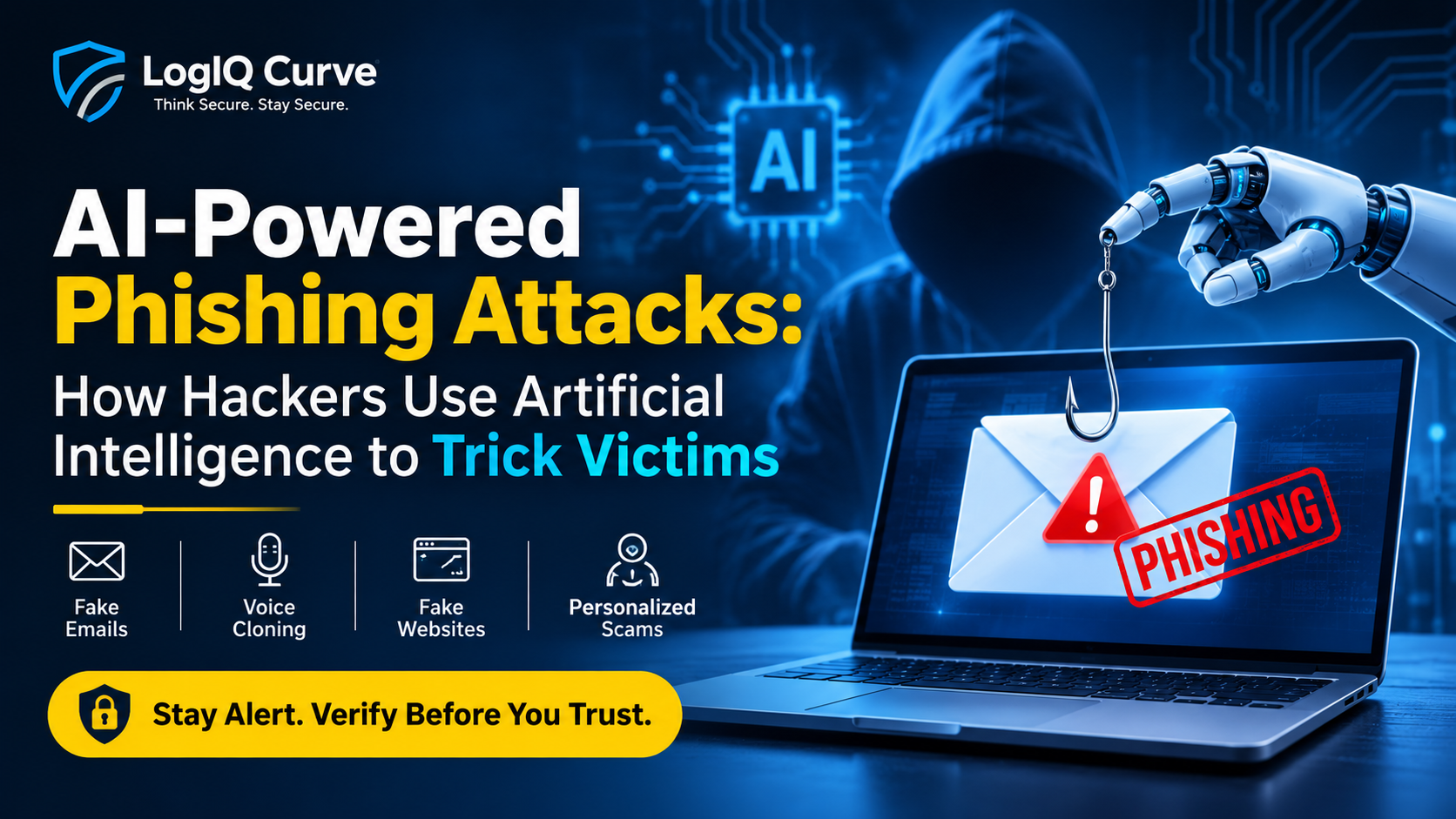
Artificial Intelligence (AI) is transforming the digital world, but it is also creating new opportunities for cybercriminals. One growing concern is AI-powered phishing, where attackers use artificial intelligence to create convincing fraudulent emails, messages, websites, and even voice recordings to deceive unsuspecting victims.
Traditional phishing attacks often contained spelling mistakes, suspicious links, and poorly written messages. Today, AI allows cybercriminals to produce professional-looking communications that closely resemble legitimate messages from banks, companies, colleagues, and trusted organizations.
Understanding how these attacks work is essential for protecting your personal information and digital identity.
What Is AI-Powered Phishing?
AI-powered phishing is a cyberattack technique in which criminals use artificial intelligence tools to improve the creation, personalization, and distribution of fraudulent communications.
Instead of sending generic messages, attackers can use AI to analyze publicly available information and generate targeted messages that appear relevant to specific individuals or organizations.
These messages may attempt to steal passwords, financial information, verification codes, or access to online accounts.
How Hackers Use AI for Phishing Attacks
1. Creating Convincing Phishing Emails
AI can generate professionally written emails that imitate banks, service providers, and business communications. These messages may contain convincing language, realistic branding, and urgent requests designed to encourage immediate action.
2. Personalized Social Engineering
Cybercriminals can use publicly available information from social media and professional platforms to create targeted phishing messages. Personal details make fraudulent communications appear more trustworthy.
3. AI Voice Cloning
Voice cloning technology can imitate someone’s voice using audio samples. Criminals may use this technique to impersonate business executives, employees, or family members and request urgent payments or confidential information.
4. Fake Websites and Brand Impersonation
AI can help criminals generate website content and create convincing brand impersonation pages. These fraudulent websites may imitate legitimate login portals to capture usernames, passwords, and financial details.
5. Automated Phishing Campaigns
AI can help attackers generate multiple variations of phishing messages and personalize communications at scale, making fraudulent campaigns more difficult to identify through traditional warning signs.
7 Ways to Protect Yourself from AI-Powered Phishing
Protecting yourself requires awareness and consistent security practices.
- Verify unexpected messages: Confirm unusual requests through official communication channels.
- Check website URLs: Carefully inspect website addresses before entering sensitive information.
- Never share OTPs: Legitimate organizations should never ask you to disclose your verification codes.
- Enable MFA: Use multi-factor authentication to strengthen account security.
- Be cautious with urgent requests: Verify unexpected payment, password reset, or account verification requests.
- Avoid suspicious attachments: Never open unexpected files from unknown or unverified senders.
- Report phishing attempts: Notify the relevant organization or security team when you encounter suspicious communications.
Final Thoughts
Artificial Intelligence is changing how cybercriminals conduct phishing attacks. Messages that once looked suspicious can now appear professional, personalized, and convincing.
The most important defense is not simply recognizing poor grammar or suspicious spelling. It is developing the habit of verifying identities, checking links, and questioning unexpected requests.
Remember: Just because a message looks genuine or a voice sounds familiar does not mean it can be trusted.
At LogIQ Curve, we believe cybersecurity begins with awareness, prevention, and responsible use of technology. Stay informed, remain cautious, and protect your digital identity.