
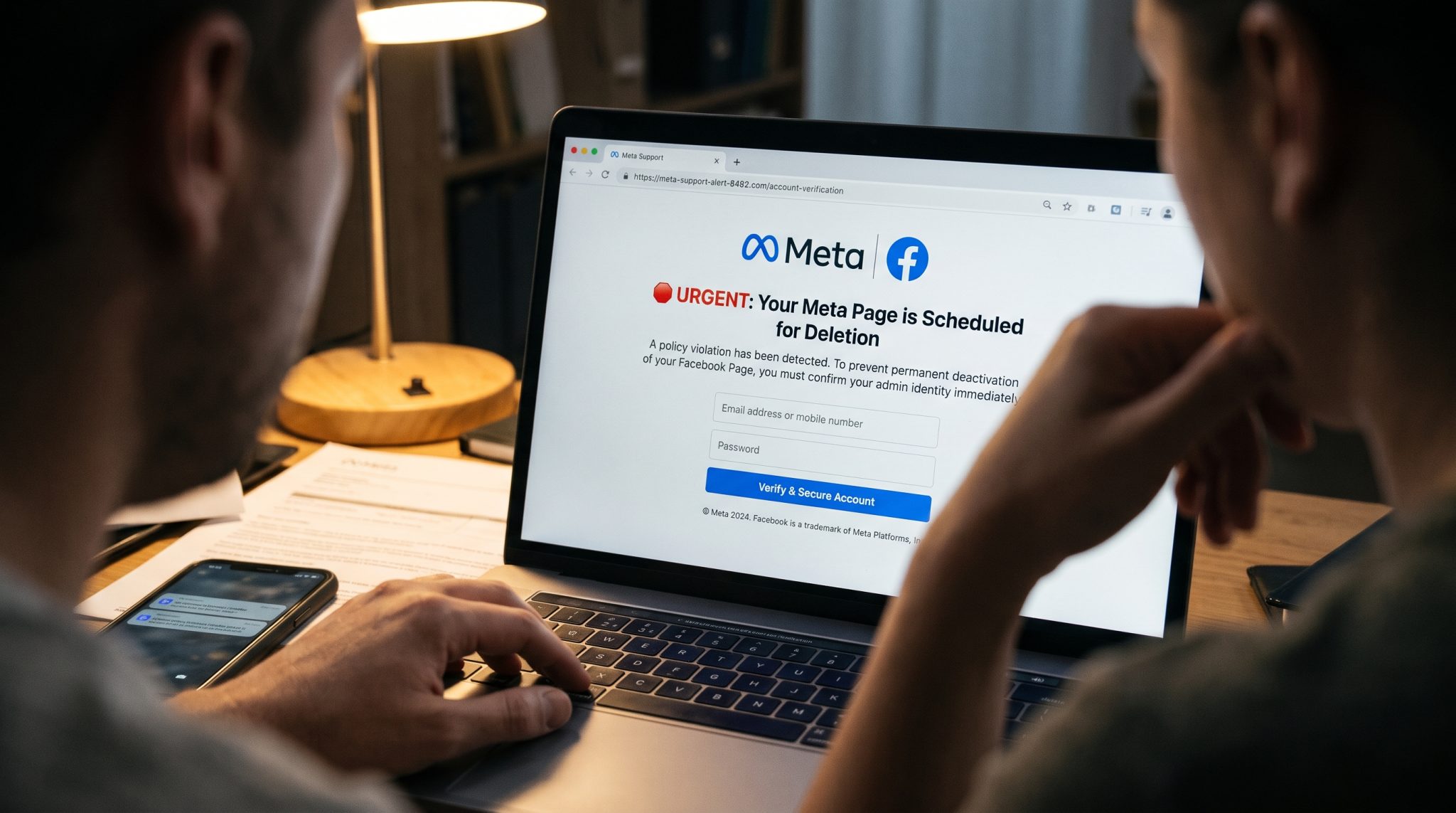
Meta is one of the world’s most recognised technology companies, with billions of people using its platforms, including Facebook, Instagram, WhatsApp and Messenger. However, its global popularity has also made the company a frequent target of cybercriminals who exploit its brand identity to deceive users, steal account credentials and distribute malicious content.
Meta brand impersonation is a form of online fraud in which attackers create fake websites, misleading advertisements, fraudulent login pages and deceptive social media profiles that imitate Meta’s official services. These websites are often designed to look legitimate, using familiar logos, colours, layouts and terminology to convince visitors that they are interacting with an authentic Meta platform.
How Cybercriminals Exploit Meta’s Identity
One of the most common techniques involves registering domain names that contain words associated with Meta, Facebook or its services. Attackers may use combinations such as “Meta Security”, “Facebook Support”, “Meta Business” or “Facebook Verification” to make fraudulent websites appear trustworthy.
Some domains also use misleading extensions, additional keywords or subtle spelling variations to make their addresses look similar to legitimate Meta websites. Unsuspecting users may not notice these differences, particularly when accessing links through advertisements, emails, SMS messages or messaging applications.
Fraudulent websites frequently imitate Facebook’s login and security verification pages. Visitors may receive messages claiming that their account has violated community standards, is scheduled for suspension, or requires immediate verification. The provided links direct users to fake login pages where their email addresses, passwords and other sensitive information can be captured.
Common Tactics Used in Meta Impersonation Campaigns
Cybercriminals rely on several psychological techniques to increase the success of these campaigns:
- Account Suspension Warnings: Users receive fake notifications claiming their Facebook accounts will be disabled unless they complete an immediate verification process.
- Copyright Violation Claims: Fraudulent messages accuse Facebook page administrators of copyright infringement and direct them to malicious appeal forms.
- Business Account Verification: Attackers target advertisers and business owners with fake Meta Business Support notifications.
- Security Alerts: Fake websites claim suspicious login activity has been detected and request account credentials.
- Advertising and Marketplace Scams: Fraudulent pages imitate Meta advertising services or Facebook Marketplace to redirect users to malicious destinations.
These techniques exploit urgency, fear and trust in a recognised brand. Once attackers obtain login credentials, they may take control of accounts, access private conversations, impersonate victims, launch fraudulent advertisements or target their contacts.
How Users Can Protect Themselves
Users should carefully inspect website addresses before entering account information. Official Meta services should be accessed through recognised domains and the company’s official applications.
Avoid clicking suspicious links claiming to offer account recovery, security verification or advertising support. Never share passwords, authentication codes or recovery information through unsolicited messages.
Enable two-factor authentication, use unique passwords and regularly review active login sessions. Business owners should also restrict administrative access and monitor unexpected changes to their advertising accounts.
The Importance of Identifying Fraudulent Domains
Meta brand impersonation is not simply a matter of misleading website design. It represents a broader cybersecurity threat involving phishing, credential theft, financial fraud and unauthorised account access.
Identifying suspicious domains, reporting fraudulent websites and raising public awareness are essential steps in reducing these risks. Users, businesses and cybersecurity professionals must remain alert to websites that misuse trusted brand identities.
A familiar logo does not guarantee a legitimate website. Always verify the domain before trusting a page or entering your credentials.