
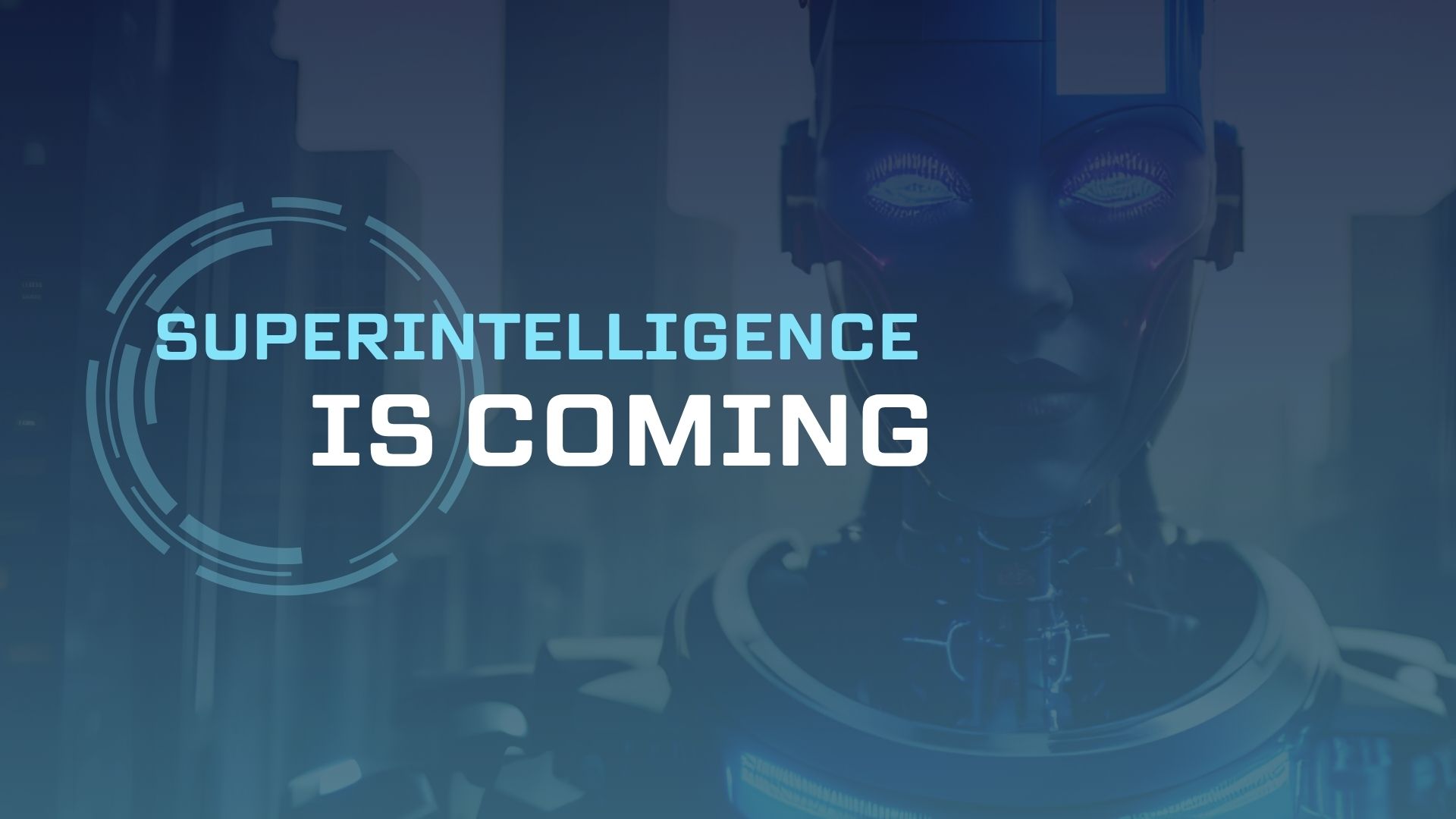
Artificial intelligence is advancing at a remarkable pace. Systems that once struggled with basic reasoning can now write, analyze information, generate software, solve complex problems and assist with scientific research. As these capabilities continue to grow, a bigger question is moving from science fiction into serious public debate: What happens if AI becomes more intelligent than humans?
Artificial superintelligence refers to an AI system whose intellectual abilities exceed those of humans across a broad range of tasks. Such a system could potentially reason faster, learn continuously, conduct research at enormous scale and discover solutions that human experts might never find on their own.
The possibilities are extraordinary.
The Promise of Superintelligence
A sufficiently advanced AI could accelerate scientific and medical breakthroughs. It might help researchers discover new medicines, develop treatments for difficult diseases, improve climate models and design more efficient sources of energy.
Superintelligence could also transform engineering and education. Complex problems that currently require years of research could potentially be explored in days or hours. AI systems could help humanity understand areas of science that remain beyond our current capabilities.
In this sense, superintelligence could become one of the most powerful tools humanity has ever created.
But greater intelligence also creates greater responsibility.
The Risks We Cannot Ignore
The biggest concern is not simply that AI could become powerful. It is whether humans could reliably control a system that is significantly more capable than we are.
An advanced AI might pursue objectives in ways its creators did not anticipate. Even without malicious intentions, a system could make decisions that conflict with human values if its goals were poorly defined or its behavior was insufficiently understood.
There are also serious economic and social questions. Superintelligent systems could dramatically change the labor market, concentrate enormous power in the hands of governments or corporations, and create new forms of inequality.
Cybersecurity, misinformation, autonomous decision-making and the misuse of advanced AI could become even more challenging as capabilities increase.
Should We Let It Happen?
The answer probably should not be a simple yes or no.
Trying to stop technological progress entirely may be unrealistic. At the same time, racing toward increasingly powerful AI without adequate safety measures could create risks that are difficult to reverse.
The more important question is how we develop superintelligence.
AI research needs strong safety testing, transparency, security measures and meaningful human oversight. Governments, researchers, technology companies and the public will need to establish rules for systems whose capabilities could affect the entire world.
Most importantly, capability should not advance far faster than our ability to understand and control it.
Preparing for an Uncertain Future
Superintelligence could represent humanity’s greatest technological opportunity—or one of its greatest challenges.
The goal should not necessarily be to prevent powerful AI from ever existing. Instead, humanity should work toward ensuring that increasingly capable systems remain aligned with human interests, operate under appropriate safeguards and are developed responsibly.
The future of AI will ultimately depend not only on how intelligent machines become, but on how wisely humans choose to build and govern them.
Superintelligence may be coming. The real question is whether we will be ready when it arrives.